The Brooklyn Law School logo

BLS Library Blog

Showing 10 of 17 Results

11/25/2009
profile-icon BLS Reference Desk

The near unanimous 6-1 ruling by the NY Court of Appeals upholding the Atlantic Yards Brooklyn condemnation in Goldstein vs. New York State Urban Development Corporation comes on the same day that the prospective major tenant at the complex, the New Jersey Nets, extended its losing streak to 14 to begin the 2009 to 2010 season. The petition alleged two essential claims: that the proposed taking was not for a “public use” but for the benefit of a private party in violation of NY law and that the condemnation proceeding was illegal as the project it sought to advance was not limited in occupancy to persons of low income, despite begin financed with state loans or subsidies. The respondent sought dismissal of the petition on the grounds it was time barred. In May of 2009, the Second Department of the Appellate Division issued a ruling, reported at 64 AD3d at 168, in favor of respondent on the merits. 

Chief Judge Jonathan Lippman’s majority opinion upheld the condemnation on the grounds that the area containing the private parcels was “blighted” and subject to condemnation under the state Constitution, acknowledging that the need to redefine the definition of urban blight. Judges Susan P. Read and Eugene F. Pigott Jr. issued a concurring opinion upholding the dismissal of the petition on the grounds that it was filed too late.

Last year, this site had a post about the 2nd Circuit Court of Appeals affirming the dismissal of a complaint challenging eminent domain action on the grounds that it violated the Public Use Clause of the Fifth Amendment. This latest case may end legal challenges to the proposed development by opponents from the surrounding Brooklyn neighborhood although activists like Develop Don’t Destroy Brooklyn say otherwise. A Volokh Conspiracy post suggests that the Goldstein case may lead to more backlash against unfettered public takings with restrictive definitions of “public use” economic development takings of the kind upheld in Kelo v. City of New London, 545 U.S. 469 (2005).

A recent WSJ article reports that, four years after the Kelo case, Pfizer Inc., the private developer, announced that it has abandoned its plans for a hotel and offices and will close its research and development headquarters in New London, Connecticut. For further reading on the Kelo case, the Brooklyn Law School Library has Little Pink House: a True Story of Defiance and Courage by Jeff Benedict (Call #KF229.K45 B46 2009) telling the story of how Susette Kelo and fourteen neighbors fought the corporate giant and the city government to save their homes as the city decided to exercise its power of eminent domain to condemn them.

This post has no comments.
11/24/2009
profile-icon BLS Reference Desk

Thanksgiving Week means many things but it also means that Brooklyn Law School Finance Office will only be open Monday – Wednesday (11/21 – 11/24). Students needing to add money to their printing/copying accounts need to get to the Finance Office before 4PM on Wednesday.
From 4PM on Wednesday (11/24) until 9AM on Monday (11/30) , students will be need to:
• Go to the Library Reference Desk
• Limit their daily adds to $5.00, cash only.


This post has no comments.
11/23/2009
profile-icon BLS Reference Desk

An interesting paper on the history and future of the mortgage interest deduction (MID) is now available on SSRN thanks to University of California Davis School of Law Professor Dennis J. Ventry, Jr. This past summer, Prof. Ventry spoke at Brooklyn Law School’s Fourth Annual Jr. Tax Scholars Workshop on The American Nightmare: Tax Subsidies for Home Ownership. His new article, The Accidental Deduction: A History and Critique of the Tax Subsidy for Mortgage Interest, tells the history of the MID from the first federal income tax law, the Revenue Act of 1913 (38 Stat. 114) which while not explicitly providing for an MID contained a general offset for “all interest paid within the year by a taxable person on indebtedness”. Prof. Ventry tells of several unsuccessful reform efforts that sought to eliminate the MID including the Tax Reform Act of 1969 (83 Stat. 487) and the Tax Reform Act of 1986 (100 Stat. 2085). The 1986 statute ended the deductibility of interest on credit card and other consumer loans but left the mortgage interest deduction in place.

The article also includes criticisms of the subsidy from two generations of tax reformers and tax policymakers that are more applicable today than at any time during the deduction’s nearly 100-year history including The Hidden Welfare State: Tax Expenditures And Social Policy in the United States by Christopher Howard (Call # HJ2381 .H684 1997) where the author identifies the MID, Social Security and Medicare as the three members of the “Holy Trinity of U.S. social programs”.

Prof. Ventry appeared on All Things Considered this past weekend to discuss the paper in a segment Is Tax Deduction For Home Mortgages A Bad Idea? A transcript of the interview is available at the site along with an audio file for the interview. Any effort to eliminate or even modify the deduction for mortgage interest is likely to generate strong opposition from real estate interests, like the National Association of Realtors and the National Association of Home Builders. History shows that with President Reagan and the Tax Reform Act of 1986 and with President Bush when his tax-reform advisory panel unsuccessfully urged restricting the MID. The issue will likely remain the “third rail” of tax reform as President Obama attempts to cap mortgage interest deductions on “higher income” households in his proposed budget. The Congressional Budget Office in its Overview of Federal Support for Housing estimates that the MID accounts for an estimated revenue loss of $80 billion in 2009. Members of Congress have already introduced bills and resolutions expressing opposition to efforts to modify the MID: Rep Leonard Lance (NJ-7) introduced H. Con. Res.130 expressing support for the current standards of the Federal mortgage interest tax deduction and Rep. Zach Wamp (TN-3) introduced H.R. 1805 to make the deduction for mortgage interest a permanent part of the tax code.

This post has no comments.
11/23/2009
profile-icon BLS Reference Desk

Blogging has skyrocketed in the past few years as a means for people to share their experiences and their opinions. In the past few years, Brooklyn Law School  has hosted a series of blogs and bloggers with legal subject expertise in a variety of subject areas.  All  have different backgrounds and perspectives. eff_bloggers2

Brooklyn Law School (BLS) Bloggers’ Roundtable connects faculty, staff and student bloggers and online journalists with each other.  The Roundtable provides training and resources to enhance blogger skills.

We encourage active faculty bloggers  (but are not limited to): Minna Kotkin, Derek Bambauer, Victoria Szymczak and Bill Araiza to join us.  If you are a student blogger, let us know who you are and give us the URL to your blog.

Within BLS Library, we are proud of  this blog and two other blogs authored by:  Harold O’Grady and Rosemary Campagna. Both Harold and Rosemary will be assisting in the training.

Come join us at the BLS Bloggers’ Roundtable, share tips and learn some new ones on December 2, 2009.  We will be discussing  RSS feed readers and news aggregators.  For more information contact Karen Schneiderman, Emerging Technologies Librarian

  • These tools let you follow news and blogs easily, comfortably and efficiently in a dedicated program, on a web site or in your email program.
  • These tools provide either just the blog headlines or the headline and a short description (or even the whole text) of each item. Some readers use a Web interface, some are a desktop program, separate from your web browser. Some readers let you easily post what you’re reading to your own weblog .

Some people call these tools  feed aggregators, they are also known as a feed readers, RSS readers, news readers or simply aggregators.  Technically, it requires a client software or a Web application to aggregate syndicated web content such as news headlines, blogs, podcasts, and vlogs in a single location for easy viewing.

Here are some resources about RSS Readers:

This post has no comments.
11/21/2009
profile-icon BLS Reference Desk

A NY Times article, Ohio Sues Rating Firms for Losses in Funds, reports that the Ohio attorney general has filed suit against the three major rating agencies, Moody’s Investors Service, Standard & Poor’s and Fitch, to recoup losses on its state retirement fund. The state’s complaint is that the agencies gave inflated ratings to mortgage-backed securities to boost profits and that their bad ratings cost the state $457 million when securities it purchased lost value. This type of litigation is now part of a growing trend of challenges to the actions of credit rating agencies which have successfully defended their actions on First Amendment grounds claiming their ratings of securities were constitutionally protected opinion.

That defense may no longer work especially when the complaint against the credit rating agency sounds in fraud or negligence. Consider the October 2009 ruling in Abu Dhabi Commercial Bank and King County, Washington v. Morgan Stanley by Judge Shira Scheindlin of the Southern District of New York. That decision forced the defendants, which included rating giants S&P and Moody’s to respond to fraud charges in a class-action by investors claiming the raters hid the risks of securities linked to subprime mortgages. Judge Scheindlin’s ruling, dismissing all but one of the eleven claims against Moody’s, stated that the First Amendment does not provide a defense where the rating agency comments were distributed privately to a select group of investors and not to the general public and “if the speaker does not genuinely and reasonably believe it or if it is without basis in fact.”

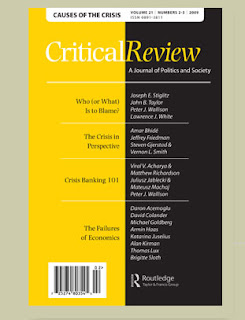
Brooklyn Law School Library’s catalog, SARA, , has reading on the topic. In addition to BLS Professor of Law David J. Reiss’ article Subprime Standardization: How Rating Agencies Allow Predatory Lending to Flourish in the Secondary Mortgage Market in 33 Fla. St. U. L. Rev. 985 (2006), there is Special Issue: Causes of the Financial Crisis (Call # HB3722 .S73 2009) with a series of articles on the financial crisis including one by Lawrence J. White titled Credit Rating Agencies and the Subprime Debacle. The abstract for that article reads:

 

By means of the high ratings that they awarded to subprime mortgagebacked bonds, the three major rating agencies—Moody’s, Standard & Poor’s, and Fitch—played a central role in the current financial crisis. Without these ratings, it is doubtful that subprime mortgages would have been issued in such huge amounts, since a major reason for the subprime lending boom was investor demand for high-rated bonds—much of it generated by regulations that made such bonds mandatory for large institutional investors. And it is even less likely that such bonds would have become concentrated on the balance sheets of the banks, for which they were rewarded by capital regulations that tilted toward high-rated securities. Why, then, were the agencies excessively optimistic in their ratings of subprime mortgage-backed securities? A combination of their fee structure, the complexity of the bonds that they were rating, insufficient historical data, some carelessness, and market pressures proved to be a potent brew. This combination was enabled, however, by seven decades of financial regulation that, beginning in the 1930s, had conferred the force of law upon these agencies’ judgments about the creditworthiness of bonds and that, since 1975, had protected the three agencies from competition.

This post has no comments.
11/21/2009
profile-icon BLS Reference Desk

On Friday, November 13th, Brooklyn Law School Library learned from several users that the proxy server which provides you with access to many of our subscription services (such as Hein, BNA, JSTOR) was not working properly with the new BLS web site.

BLS Building
RIP Old Web Site

A website response team quickly moved into action.

Phil Allred, BLS’ Chief Information Officer, has created a work around until the web site developers can address this issue.

Maria Okonska, BLS Library’s Manager of Bibliographic Operations, developed easy-to-follow instructions to assist you in enabling the proxy server.

Thanks Phil and Maria!

To enable the proxy server, you need to make some adjustments to your web browser. BLS Library has posted detailed instruction for accessing the proxy server and they are located on our web site here.

BLS Library apologizes for your inconvenience.

BLS Library reminds its users to let us know about any problems you may be having  access our resources.  Contact us at refdesk@brooklaw.edu

This post has no comments.
11/20/2009
profile-icon BLS Reference Desk

An article in the LA Times reports that Judge Stephen Reinhardt of the Ninth Circuit US Court of Appeals issued an Order in the Matter of Brad Levenson that seems to declare unconstitutional that part of the 1996 Defense of Marriage Act (DOMA) that declares that a same-sex marriage cannot be a marriage under federal law or for purposes of granting federal benefits. The plaintiff in the case is a deputy federal public defender who has had a same-sex partner for 15 years. After legally marrying in California in 2008 prior to passage of Proposition 8, the plaintiff tried to add his spouse to his health insurance, but was turned down by his employer, the Office of the Federal Public Defender, citing DOMA. The plaintiff then took the matter up for resolution by a circuit judge.

In an earlier ruling, Judge Reinhardt concluded that the plaintiff and his spouse were entitled to their benefits, but the federal government still refused. Judge Reinhardt’s recent Order awards the plaintiff money to compensate him for the cost of the additional insurance. The Order, in dicta, states that marriage, traditionally regulated by state law, is a fundamental right and for the case at hand, the judge “need determine only whether same-sex spouses who have been legally married under the laws of the relevant state may, because of the sex or sexual orientation of the couple, be denied federal benefits that are afforded to other spouses legally married under such laws.” The conclusion on page 16 of the order speaks in broad terms:
 

In sum, to the extent that the application of DOMA serves to preclude the provision of health insurance coverage to a same-sex spouse of a legally married federal employee because of the employee’s and his or her spouse’s sex or sexual orientation, DOMA, as applied, contravenes the Fifth Amendment to the United States Constitution and is therefore unconstitutional.

In addition, the Ninth Circuits Chief Judge Alex Kozinski entered a similar Order in the Matter of Karen Golinski on behalf of another federal employee who had legally married her same-sex partner but denied benefits given to opposite-sex married couples. He also ordered published his previous Order, from January 2009, which initially ordered that her spouse be granted federal benefits.
In New York, the Court of Appeals on Thursday dismissed a complaint in Godfrey v. Spano by taxpayer plaintiffs challenging directives by county officials that recognized out-of-state same-sex marriages for purposes of public employee health insurance coverage stating on page 4 of the opinion “Although the federal Defense of Marriage Act (DOMA) authorizes the states to pass so-called “mini-DOMAs” . . . New York has not, and the Legislature has enacted no other law expressly forbidding the recognition of same-sex marriages performed in other jurisdictions or expressing any legislative intent that such marriages be voided.”
The Brooklyn Law School Library has a number of related items in its collection. See What’s the Harm?: Does Legalizing Same-Sex Marriage Really Harm Individuals, Families, or Society? edited by Lynn D. Wardle (Call # KF539 .W53 2008).


See also Same-sex marriage and the Constitution by Evan Gerstmann (Call # KF539 .G47 2008) with chapters that include Reason and prejudice: is the heterosexual monopoly on marriage rational? — Looking for stricter scrutiny: sexism, heterosexism, and class-based equal protection — The fundamental right to marry — Same-sex marriage and the fundamental right to marry — Should courts create new rights?

See also Same Sex, Different States: When Same-Sex Marriages Cross State Lines by Andrew Koppelman (Call # KF539 .K67 2006) including these chapters: Marriage, choice of law, and public policy — Miscegenation in the conflict of laws — Against blanket nonrecognition — Choice of law rules: the options — When to (and when not to) recognize same-sex marriages — The irrelevance of full faith and credit and the Defense of Marriage Act — The difference the mini-DOMAs make.

This post has no comments.
11/19/2009
profile-icon BLS Reference Desk

Google Scholar has garnered a great deal of attention for its new Case Law service, some flattering and others critical. See the WSJ Law Blog post News You Can Use: On Google’s Adding Caselaw to ‘Scholar’ and the Resource Shelf’s post Legal Info Now Part of Google Scholar Database; Federal and State Legal Opinions and Patents, Law Journals Also Part of the Mix both of which raise questions about the new service. While it permits free access to full text legal opinions from U.S. federal and state district, appellate and supreme courts, it also contains citation features. In its blog entry about the new service, Google Scholar states that the “Cited by” and “Related articles” links will help the average citizen understand the impact of a given opinion. For example, a search for Roe v. Wade will yield not only the text of the decision but all 22,841 citing documents including cases and articles that cite to it. It is questionable whether an experienced legal researcher, let alone the average citizen, will be able to process that much information.
 
There is a separate patent search interface in addition to the legal opinions and journals which the searcher can choose to add to the search results. In order to search content from all 50 states (and DC) at one time, the search must check each “state” box on the advanced search page.

The addition of free access to the “laws that govern us” along with the emergence of Bloomberg Law to the world of legal information is likely to get the attention of LexisNexis and Westlaw, the two main commercial online databases which lawyers and legal research scholars use to search for this material. The ABA has recently launched its Media Alerts on Federal Courts of Appeals Website summarizing federal court opinions and upcoming cases for its audience of lawyers and other legal professionals. However, with so much information available on the web, whether for free or for fee, it is important to remember the distinction between search and research. As stated in this Westlaw video “Our Salute to Law Librarians” featuring UCLA Prof. Bob Berring, NYU Prof. Arthur Miller and Linda Will, Law Librarian Consultant, industry leaders reflecting on the invaluable work of law librarians “There’s a difference between research and search.”

This post has no comments.

This post has no comments.
11/12/2009
profile-icon BLS Reference Desk

The two decades of the Warren Court (1950s and 1960s) saw a decidedly liberal American constitutional jurisprudence with landmark cases like Brown v. Board of Education, 347 U.S. 483 (1954), Gideon v. Wainwright, 372 U.S. 335 (1963), Miranda v. Arizona, 384 U.S. 436 (1966), and Loving v. Virginia, 388 U.S. 1 (1967). With the Warren Court, constitutional law became more conservative aided in large part by Roe v. Wade, 410 U.S. 113 (1973) and the subsequent rise of the Federalist Society. Since the 1970s, with conservatism dominating American politics, constitutional law has shifted from a forward looking progressive jurisprudence to one that looks to past precedent and the plain language of the founders.

The shift from a conservative constitutional jurisprudence to a liberal, progressive one is the subject of The Constitution in 2020 by Jack Balkin and Reva Siegel (KF4550 .C576 2009) in the BLS Library collection. Inspired by a 2005 Yale Law School conference sponsored by the American Constitution Society and other progressive groups, the book seeks to define a progressive constitutional agenda for the coming century. The conference followed with a website with a blog, book reviews, sample chapters, related news items, bios of the authors, and related readings. 

The editors, two of America’s leading constitutional scholars, provide a framework for addressing the most important constitutional issues of the future featuring a collection of 27 brief essays by notable “progressive” scholars of law and politics – Cass Sunstein, Bruce Ackerman, Robert Post, Harold Koh, Larry Kramer, Noah Feldman, Pam Karlan, William Eskridge, Mark Tushnet, Yochai Benkler and Richard Ford, and others. In addressing a wide range of issues, from the challenge of new technologies, presidential power, international human rights, religious liberty, freedom of speech, voting, reproductive rights, and economic rights, the book calls on liberals to articulate their constitutional vision to gain the confidence of ordinary Americans. Whether the “democratic constitutionalism” Balkin and Siegel offer will in fact lead to a new generation of liberal lawyers to counter the strict-constructionist conservative lawyers of the Federalist Society who dominated the federal courts in the Nixon, Reagan, Bush 41 and Bush 43 eras is uncertain.

A central idea of the book is that courts should pursue similar social justice ends as the Warren Court by using more modest, less activist means and acting with progressive political movements. It suggests that the courts are not the only players to promote social progress. “Decisions made by legislatures and executive officials about our rights are just as important” as judicial decisions, if not more so, Balkin and Siegel write in the introduction. They also state: “This book contests the conservative belief that we should cleanse constitutional law of contemporary understandings and restore the Constitution to an imagined past, a time when we obeyed the founders . . . We think the past several decades of conservative judging have often departed from the best understandings of the Constitution, as the contributors of this book explain in detail. But the goal of constitutional interpretation is not only restorative – it is also redemptive. Our Constitution is not only a bond with the past; it is a bond with the future, expressing commitments that the American people have yet fully to achieve.” The book, with the most provocative constitutional thought of the progressive movement, is certainly worth reading for anyone interested in politics or constituional law.

This post has no comments.
Field is required.