

The end of the semester is a stressful time for every law student. If you need a break, watch The Oath, the latest documentary produced by Professor Kaplan. The Oath presents the story of two brothers-in-law, Abu Jandal, Osama bin Laden’s former bodyguard, and his most famous recruit, Salim Hamdan, who is on trial for terrorism. The film delves into Abu Jandal’s daily life as a taxi driver in Yemen and Hamdan’s military tribunal in Guantanamo Bay prison. The Oath premiers in New York City on May 7 and runs through May 20 at the IFC Center. The IFC Center is located on 6th Avenue and West 3rd Street in Manhattan.
If after seeing the documentary and finishing exams you want to read more about Hamdan or the Guantanomo trials, check out the books below from the Brooklyn Law School Library.
The Challenge : Hamdan v. Rumsfeld and the Fight Over Presidential Power, by Jonathan Mahler
The description below is provided by the publisher.
In November 2001, Salim Ahmed Hamdan, a 31-year-old Yemeni, was captured and turned over to U.S. forces in Afghanistan. After confessing to being Osama bin Laden’s driver, Hamdan was transferred to Guantánamo Bay, and was soon designated by President Bush for trial before a special military tribunal. The Pentagon assigned a military defense lawyer to represent him, a 35-year-old graduate of the Naval Academy, Lieutenant Commander Charles Swift. No one expected Swift to mount much of a defense. The rules of the tribunals, America’s first in over fifty years, were stacked against him–assuming he wasn’t expected to throw the game altogether. Instead, with the help of a young constitutional law professor at Georgetown, Neal Katyal, Swift sued the Bush Administration over the legality of the tribunals. In 2006, Katyal argued the case before the Supreme Court and won. This is the inside story of what may be the most important decision on presidential power and the rule of law in the history of the Supreme Court.
Honor Bound: Inside the Guantanamo Trials, by Kyndra Rotunda.
The description below is provided by the publisher.
Honor Bound is an intriguing book that explains the law of war and the inside story of military commissions. The author is a former JAG lawyer who served on the prosecution team, worked in Guantanamo Bay, and was legal advisor to an elite team of war crimes investigators. Through a series of entertaining vignettes, Rotunda discusses and analyzes the laws governing the war on terror, the Geneva Conventions, and the laws related to detainees held in Cuba.
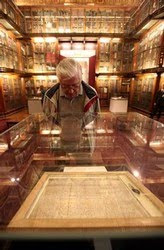 The flight delays had an impact on this side of the Atlantic for the original manuscript of Magna Carta on display at the Morgan Library & Museum. This important document came to New York for a special event for Oxford University but the volcanic ash cloud delayed its return to Britain. The
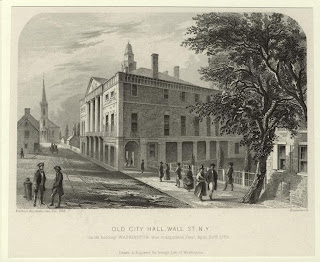
 News reports feature two distinguished Brooklyn Law School graduates being appointed to prominent positions. ArtDaily.org has an
  A
A  For more on the topic of child sexual abuse by clergy, the Brooklyn Law School Library has in its collection
  The Library recently added to its collection
 The BLS Library has in its collection several items on the subject of animal rights including
In a victory for the plaintiff shareholders, the US Supreme Court unanimously ruled in Merck & Co., Inc. v. Reynolds that the statute of limitations actions brought under §10(b) of the Securities Exchange Act of 1934 begins to run upon “discovery of the facts constituting the violation.” The Court held “facts showing scienter are among those that ‘constitut[e] the violation.’” Justice Breyer, writing for the Court ruled that, due to delayed discovery of the claim, the two-year statute of limitations did not bar the investors from bringing a securities fraud action. The decision stated:
Now the shareholders may pursue their claims that Merck & Co. Inc. violated federal securities law by misrepresenting the safety and commercial viability of Vioxx, a pain reliever ultimately withdrawn from the market. The Court affirmed the Third Circuit Court of Appeal’s decision In re Merck & Co. Securities, Derivative & ERISA Litigation, 543 F.3d 150 (3d Cir. 2008), which held that the statute of limitations does not begin to run until the plaintiff has information suggesting defendant’s scienter. The Third Circuit decision reversed the judgment of dismissal entered by the US District Court for the District of New Jersey, which ruled that the claims were barred by the statute of limitations because the plaintiffs “were put on inquiry notice of the alleged fraud more than two years before they filed suit.” See In re Merck & Co., Inc. Securities, Derivative & “”Erisa” Litigation, 483 F.Supp.2d 407 (D.N.J. 2007).
Justice Scalia, joined by Justice Thomas, concurred in part and concurred in the judgment. Justice Scalia argued for an even more plaintiff-friendly result, stating that the statute of limitations should begin to run when a plaintiff actually discovers facts constituting the violation, rather than when a reasonably diligent plaintiff should have known such facts.
In its decision the Court rejected Merck’s proposed “inquiry notice” standard as inconsistent with the statute, which provides that “discovery” is the event that triggers the 2-year limitations period—for all plaintiffs. It noted that courts applying the traditional discovery rule have long had to ask what a reasonably diligent plaintiff would have known and that courts in at least five Circuits already ask this kind of question in securities fraud cases. Whether the interpretation of “knowledge” to include constructive knowledge will make a meaningful difference in a significant number of cases is unclear. District courts may yet find complaints untimely based on what a “reasonably diligent” investor would do.
Commenting on blog posts requires an account.
Login is required to interact with this comment. Please and try again.
If you do not have an account, Register Now.