The Brooklyn Law School logo

BLS Library Blog

Showing 10 of 12 Results

09/29/2010
profile-icon BLS Reference Desk

The American Library Association website celebrating this year’s Banned Books Week has this quote: “Imagine how many more books might be challenged—and possibly banned or restricted—if librarians, teachers, and booksellers across the country did not use Banned Books Week each year to teach the importance of our First Amendment rights and the power of literature, and to draw attention to the danger that exists when restraints are imposed on the availability of information in a free society.”

The idea of banning books seems like something from the past. Yet, it is very much alive today as shown in this report that, earlier this month, a school board in Stockton, Missouri unanimously banned the book “The Absolutely True Diary of a Part-Time Indian” by Sherman Alexie. Parents and educators objected to the book’s language and sexual content. The novel, which won the 2007 National Book Award for young people’s literature, depicts a boy who leaves his school on the Spokane Indian Reservation to attend an all-white high school.

Also this month, Judge James C. Turk of the US District Court for the Western District of Virginia wrote an opinion in Couch v. Jabe declaring Virginia’s prison policy excluding Ulysses and Lady Chatterly’s Love from the prison library unconstitutional. Judge Turk concluded that the prison book policy was not reasonable but an “exaggerated response” to prison conditions.

This year, Alaska enacted a new statute known as SB 222 which prompted the filing of a complaint in the US District Court for the District of Alaska by the American Booksellers Foundation for Free Expression, the Alaska Library Association, the American Civil Liberties Union of Alaska and other. The suit challenged Alaska’s new censorship statute, which criminalizes books “harmful to minors”, and seeks to block provisions that ban constitutionally protected speech on the Internet on topics including contraception and pregnancy, sexual health, literature, and art and also threatens retailers of books, magazines, movies and other media. More information on the Alaska challenge is available here.

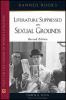
The Brooklyn Law School Library has in its collection several items on the subject of censorship including Literature Suppressed on Sexual Grounds by Dawn B. Sova (Call #PN56.E7 S68 2006) which discusses some 400 works censored, banned, or condemned because of their political, social, religious, or sexual content. 


Another item in the collection is Banned in the U.S.A.: a Reference Guide to Book Censorship in Schools and Public Libraries by Herbert N. Foerstel (Call #Z658.U5 F64 2002). It is a valuable reference tool for librarians and teachers dealing with censorship as well as patrons who want to get a better understanding of the threats to their First Amendment rights.

This video from “Don’t Know Much About…” author Kennis Davis is timely during this year’s Banned Books Week.

This post has no comments.
09/27/2010
profile-icon BLS Reference Desk

The New York Law Journal article by Noeleen G. Walder, Judge Grants Discovery of Postings on Social Media, reports that Suffolk County Supreme Court Acting Supreme Court Justice Jeffrey Arlen Spinner has granted a defendant’s motion for an Order to access the plaintiff’s current and historical Facebook and MySpace pages and accounts. Granting the Order in Romano v Steelcase Inc., Justice Spinner held that precluding defendant Steelcase Inc. from accessing plaintiff Romano’s private postings on Facebook and MySpace “not only would go against the liberal discovery policies of New York favoring pretrial disclosure, but would condone Plaintiff’s attempt to hide relevant information behind self-regulated privacy settings.” 

The judge continued: “In light of the fact that the public portions of Plaintiff’s social networking sites contain material that is contrary to her claims and deposition testimony, there is a reasonable likelihood that the private portions of her sites may contain further evidence such as information with regard to her activities and enjoyment of life, all of which are material and relevant to the defense of this action.” Saying that social networking sites are not private places for storing intimate secrets but rather fact public spaces, he said: “Indeed, as neither Facebook nor MySpace guarantee complete privacy, Plaintiff has no legitimate reasonable expectation of privacy. In this regard, MySpace warns users not to forget that their profiles and MySpace forums are public spaces, and Facebook’s privacy policy set forth, inter alia, that: ‘You post User Content . . . on the Site at your own risk. Although we allow you to set privacy options that limit access to your pages, please be aware that no security measures are perfect or impenetrable.’ “ 

Plaintiff sued for damages for personal injuries sustained after she fell off an allegedly defective desk chair while working at Stony Brook University naming the manufacturer of the chair as one of the defendants. Steelcase, the manufacture claimed it had reason to believe that the Plaintiff posted pictures and information that showed she was not suffering from a loss of enjoyment of life. Not only did the Defendant want to access the private portions of the Plaintiff’s account, but they also wanted access to any deleted information. The lesson in this ruling is simple: expect all content posted on Facebook or MySpace to be considered public information by the courts, and do not expect that self-imposed privacy settings provide protection in a court proceeding.

A post on 3 Geeks and a Law Blog tells of Ethics Opinion 843 by the New York State Bar Association on the question of accessing Facebook and MySpace Information for use in trial, The Committee concluded:
 

A lawyer who represents a client in a pending litigation, and who has access to the Facebook or MySpace network used by another party in litigation, may access and review the public social network pages of that party to search for potential impeachment material. As long as the lawyer does not “friend” the other party or direct a third person to do so, accessing the social network pages of the party will not violate Rule 8.4 (prohibiting deceptive or misleading conduct), Rule 4.1 (prohibiting false statements of fact or law), or Rule 5.3(b)(1) (imposing responsibility on lawyers for unethical conduct by nonlawyers acting at their direction).

This post has no comments.

Hornbooks Series: Hornbooks are published by West Group. These are one volume mini‐treatises that summarize explain the law on subjects like criminal law, employment discrimination, property and real estate finance. Hornbooks provide an overview of the legal doctrines, principles, and rules, focusing only on the most important issues and cases for the area of law being covered. Brooklyn Law School Library has both Hornbook series practitioner’s edition and Hornbook series student edition.

Understanding Series: The Understanding series is published by LexisNexis and written by legal scholars.  They provide straightforward, clear analysis of a particular area of law highlighting important issues and citing leading authority. Like hornbooks, the Understanding series is written with law students in mind and tend to provide the most detail on the more complex issues. The Understanding series typically provides less treatment to each topic than hornbooks, but significantly more than Nutshells.  Brooklyn Law School Library has over fifty Understanding series titles covering administrative law, bankruptcy, conflicts of laws, criminal procedure, and evidence.

Examples and Explanations Series: Examples and Explanations series are published by Aspen, a branch of Wolters Kluwer Law & Business.  Each title begins with a general introduction to a topic and a basic explanation of the major issues specific to that area of law. Also included are a series of examples and corresponding explanations that provide analysis of the examples. The examples range from the simple to the more complex to help students apply their knowledge, and thus better understand complex concepts. Brooklyn Law School Library has a growing collection of this series covering many topics including trusts and estates, evidence, torts, criminal law, and civil procedure.

Nutshells Series: The Nutshell series is published by West Group and consist of short, one volume paperbacks that present a general overview of an area of law and provide citations to leading authority. Nutshells should not be used as a source of in‐depth treatment and analysis because they give just enough information to provide students with a general understanding of major concepts, polUnderstanding Law Student Study Aidsicies and relevant rules for any given topic.  Brooklyn Law School Library has over five hundred titles in this series dating back to the 1960’s. Library users will find Nutshells on many 1L subjects and also on more advanced subjects like toxic torts, elder law, sea law, electronic discovery and international human rights.
This post has no comments.
09/24/2010
profile-icon BLS Reference Desk

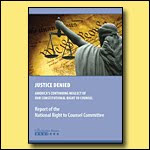
The Brooklyn Law School Library has in its collection Justice Denied: America’s Continuing Neglect of Our Constitutional Right to Counsel (Call #KF336.A3 N38 2009). This Report by the Constitution Project and the National Legal Aid & Defender Association examines how the American justice system provides counsel in criminal and juvenile delinquency cases to individuals who cannot afford lawyers. Detailing how indigent defense systems across the nation operate with far too little money, the report states that public defenders carry excessive caseloads, have inadequate access to investigative and expert assistance, and are often unable to counsel their clients effectively and in a timely manner. With defense counsel working under such circumstances, they are often unable to provide zealous representation and may even fail to satisfy their professional and ethical obligations.


There are a number of suggestions to address the inadequacy of indigent defense. One of the most interesting comes from two law professors, NYU Professor Stephen J. Schulhofer and Santa Clara University Professor David D. Friedman, proposing a voucher system for indigent criminal defense. A Cato Policy Analysis, Reforming Indigent Defense: How Free Market Principles Can Help to Fix a Broken System proposes a free market for defense services, one that would function in the same way that the existing market functions for affluent defendants who are able to retain their own counsel. It addresses the conflicts of interest in the current system where the defendant’s attorney is chosen by the state and argue that freedom of choice for the indigent defendant can produce gains for both the accused and for the public at large. The authors also discuss how to implement such a system and why it can be expected to provide a practical and effective cure for many of the major ills of indigent defense organization.


Another approach to the issue of legal representation for poor criminal defendants is a proposal for new federal legislation in an article by Cara H. Drinan, The National Right to Counsel Act: A Congressional Solution to the Nation’s Indigent Defense Crisis, 47 Harv. J. on Leg. 487 (2010). The article proposes new federal legislation to address the chronic inadequacies of public defense systems. It cites the New York litigation in Hurrell-Harring et al. v. State of New York challenging New York State’s failure to provide adequate public defense services. For more information on that lawsuit, including court documents, see the New York Civil Liberties Union webpage.

This post has no comments.
09/24/2010
profile-icon BLS Reference Desk

Listen to this episode on BrooklynWorks.

Brooklyn Law School’s Temporary Librarian Kristine Kreilick, fondly known as Kit, discusses her career as an academic librarian and as a law firm librarian in this podcast. Before coming to the BLS Library, Kit was a law librarian at Saint Louis University, Cornell University, and Fordham University. She also worked at Sullivan and Cromwell. In this conversation, Kit discusses projects on which she has worked including developing a First Year Law Student CALI lesson, Finding Statutes (registration required) for which she received an Excellence in Service Award from the American Association of Law Libraries. Kit is also active in the Law Library Association of Greater New York, the local chapter of AALL, where she serves as webmaster for the LLAGNY website.

This post has no comments.
09/20/2010
profile-icon BLS Reference Desk

A press release by the Law Librarian Association of Greater New York (LLAGNY) states that LLAGNY and the Practising Law Institute (PLI) are creating Research Training Audio Briefings for librarians. The sessions will take the place of the annual PLI program: The Law Library: Skills, Strategies & Solutions. The first briefing, An Introduction to Tax Research in the Library: The Crossroad Between Information and Practice, is scheduled for Wednesday, September 29th, from 1:00 pm-2:00 pm (EDT). The session will be free of charge. The audio webcast will cover the kinds of research requests librarians, research specialists, and attorneys might be expected to answer. Expert faculty including law librarians Jennifer A. Lawton, Tax Librarian, Dewey & LeBoeuf LLP; Russell Switzer, Tax Librarian, Paul, Weiss, Rifkind, Wharton & Garrison LLP; and tax attorney, Erin M. Collins, Manager, Tax, KPMG. will lead the event. The briefings will be chaired by Janice E. Henderson, Gitelle Seer, and Patricia Barbone. Registration for the audio is at the PLI website.

This post has no comments.
09/17/2010
profile-icon BLS Reference Desk

This week, the New Jersey Supreme Court heard arguments in G.D. v. Bernard Kenny and the Hudson County Democratic Organization on whether a criminal conviction expunged pursuant to state law still exists for purposes of establishing a defense to a defamation claim. While the issue sounds highly theoretical, the facts leading to the civil action are an interesting study in hardball politics. An article at Law.com, Case Tests Whether Circulating News About an Expunged Conviction Is Libel , lays out the arguments before the court and summarized the alleged defamation:

G.D. worked as an aide to Sen. Brian Stack, D-Hudson, during the 2007 Senate primary. The Hudson County Democratic Organization had supported West New York Mayor Silverio Vega and retained Neighborhood Research Group Corp., a political consulting firm headed by conservative activist Richard Shaftan. He learned that in 1993, G.D. had been convicted of second-degree possession of drugs with intent to distribute and sentenced to five years in prison.

The HCDO, believing that G.D. was assisting in Stack’s campaign, sent out two flyers based on that information.

The first flyer ran, “It’s the company you keep. And the sleazy crowd Brian Stack surrounds himself with says a lot about who Stack is. Coke dealers and ex-cons. [G.D.] is also a drug dealer who went to jail for five years for selling coke near a public school.”

The second flyer said, “We all know the threat that drugs and illegal guns have in our communities. But not Brian Stack. He continues to surround himself with one shady character after another — not one but two convicted drug dealers and ex-cons.”

The flyers were sent out to about 8,000 households.

The trial court addressed claims of defamation, negligent or intentional infliction of emotional distress, invasion of privacy, and civil conspiracy when the parties filed cross-motions. The HCDO and Kenny filed a motion to dismiss, the remaining defendants filed a motion for summary judgment, and plaintiff filed a motion to bar defendants from relying on the defense of truth. It denied all these motions, and the matter was heard in the Appellate Division. In a well-written and throrough opinion, the Appellate Division reversed and remanded the case to the trial court for entry of an order dismissing plaintiff’s complaint.

The NJ Supreme Court will also consider arguments by the Electronic Privacy Information Center (EPIC), an organization that works on issues involving privacy, civil liberties, and database errors. EPIC’s amicus brief urges the Court to preserve the value of expungement and allow a privacy case to go forward arguing that “data mining companies ignore judicial determinations and attempt to make conviction records live forever,” however, “after someone has been rehabilitated, having paid the prescribed debt to society, he or she should not be penalized in perpetuity.” 

EPIC has a web page on the topic of expungement which describes the four key common elements of expungement among State statutes and has sections titled “Expungement Simplified” and “State Statutes, Federal Courts, and Availability of Expungement”. For more information see Collateral Consequences of Criminal Conviction: Five-State Resource Guide compiled by Alice King for the Justice Action Center at New York Law School. In her paper, she cites an October 2006 NY Times article Expanded Criminal Records Live to Tell Tales by Adam Liptak and notes:

Expungement is becoming significantly harder to accomplish in the electronic age. Records once held only in paper form by law enforcement agencies, courts and corrections departments are now routinely digitized and sold in bulk to the private sector. Some commercial databases now contain more than 100 million criminal records. Because these databases are updated only sporadically, “expunged” records often turn up in criminal background checks ordered by employers and landlords. For the individual affected, this likely means that they will be forced to reveal at least some of the information to an inquiring party.

This post has no comments.
09/17/2010
profile-icon BLS Reference Desk

I just returned from an exciting first visit to  The Netherlands.  Brooklyn Law School offered me the wonderful opportunity to attend a course on international legal information and law at the Peace Palace in Den Haag.  The Peace Palace (shown below) houses both the International  Court of Justice and the Permanent Court of Arbitration.  One of the highlights of my course was Judge Abdul Koroma’s discussion of the ICJ’s work.  I felt like part of a “world team” when Judge Koroma stated to his audience of law librarians: “I know how much I am indebted to you” [to help the ICJ achieve its objectives].  This week, the ICJ swore in two new Members of the Court: Judge Xue Hanqin (China) and Judge Joan Donoghue (United States ).  Thus, for the first time, two women are part of the ICJ.                            

BLS graduates who are interested in international law: the Hague Academy of International Law conducts six-week summer courses in this beautiful venue.  Law school graduates from many countries attend these courses.  Noted lecturers discuss both public and private international law.  This is the program of the 2011 summer course.  A merit-based scholarship program provides assistance to about 20% of the students who attend the Hague Academy’s summer courses.  (See also the Hague Academy’s FAQs, heading: Scholarships.)  Students of the Hague Academy can use the outstanding Peace Palace Library.   

I contacted the The Hague Academy and confirmed that summer courses are conducted at the level of postgraduate in international law.  The summer courses are open to:

  • Candidates who have completed at least four years of studying at university, including subjects of international law, and who can prove to the Curatorium that they possess a sufficient knowledge of the subject.
  • Candidates holding a 3-year law degree at the opening of the session of the Academy.
  • All candidates must master one of the two working languages (French or English).

In 2004, the Hague Academy also began to conduct an annual Seminar for Advanced Studies tailored to experienced practitioners.  The theme of the January 2011 advanced seminar is: Security in the International Law of the Sea. 

Lectures from the Hague Academy’s courses are published in a series available in BLS Library:  Collected Courses of the Hague Academy of International Law/Recueil des Cours de l’Académie de Droit International de La Haye.   BLS Library owns the Collected Courses in print.  There is a free online index to this series that researchers can search by lecture topic, author or year.  I often highlight the Collected Courses to BLS students who are researching international law topics.

The Hague is an elegant historic city, which is perfect, not only to study, but also to have a  Heineken with colleagues.  If you’re not the beer-drinking type, outdoor cafes feature fresh o.j.  In the Hague, The Binnenhof (“Inner Court”) and an adjacent modern building are the meeting places of the Dutch Parliament.  On the third Tuesday of September (“Prinsjesdag”), Queen Beatrix will announce her policies for the year in an address to the members of the Dutch Parliament.    

If I haven’t hooked you yet, the Hague is a short tram ride from the beach!  Lekker (a beachfront restaurant steps from the North Sea), offered the most delicious fish I ever ate. 

All in all, the Hague offered an astonishing combination of history, great cuisine, friendly people and easy-t0-master tram and train service.  Watch for future posts about my trip!

Jean Davis, Librarian & Adjunct Professor of Law, Brooklyn Law School

This post has no comments.
09/13/2010
profile-icon BLS Reference Desk

The latest edition of Student Lawyer (Volume 38, Number 9) contains an article by Bryan A. Garner in the Legal Writing Department entitled Sense and Sensibility: a Primer on Preparing Research Memos. The article helps writers to remember and identify the top 10 writing faults to become a more effective writer and self-editor. The primer on writing research memos advises writers to:

  1. Think like a writer and keep the reader in mind. The lead-in is especially important, so waste no time in laying out your critical points. But don’t think that your supervisor is your only reader. A good memo is comprehensible to any intelligent reader on any day. Why? First, the assigning attorney, being busy, will appreciate being reoriented. Second, your readership includes the assigning attorney two years hence – not just during the week when you turn in the assignment. Third, your readership includes other lawyers who may become involved in this matter or another matter involving a similar issue. Fourth, your readership may include senior lawyers who, though not involved with the matter, make decisions that affect your career.
  2. Answer the real question which is “How can our client do this?” Keep the client’s objectives in mind rather than the academic exercise of issue-spotting and giving on-the-one hand-but-on-the-other-hand responses, as you probably did in law school. Try to approach the problem with relentless pragmatism.
  3. Work with the supervising attorney. Try to get the assignment in writing which will help your memo to be better. And learn what you can about the entire matter you’re working on; again, you’ll do better work and create a better impression. Discuss the assignment with the assigning attorney – especially if (1) you need to know more about the facts, (2) you’ve found a new line of authorities, or (3) you think the important question or questions are rather different from the ones originally posed.
  4. Research tenaciously – not superficially. Use the library and Corpus Juris Secundum and American Jurisprudence, the relevant treatises and American Law Reports annotations. Ask a reference law librarian – better yet, make friends with some good ones and get their phone numbers. Use both electronic research and through time-honored paper research. The serendipitous discoveries in print will come as you leaf through hard-copy texts that deal with the subject.
  5. Avoid the shallow one-sentence issue statement as well as the ungrammatical “whether” phrasing as in “Whether FuImer’s second marriage was outlawed by the bigamy laws”. Instead, master the art of the deep issue, a multi-sentence issue statement culminating in a question mark by the 75th word.
  6. Master the “deep issue” which will change the way you approach legal writing. Insist on giving them up front – as the very first thing the reader encounters. You’ll look like a smart, organized writer because you’re pacing the information well as it enters the reader’s consciousness. Remember the 75-word limit.
  7. Keep your facts chronological and tell the story behind the dispute. This will make it easier for the reader to follow what happened when and why. The story becomes memorable and the reader is more likely to retain a familiarity with the facts behind the question.
  8. Use informative headings. Assertive headings help the reader follow the course of your argument. A heading such as “Under California and federal law, information about a client’s fee arrangement is not generally privileged” will help the returning reader find the relevant section quickly.
  9. Address the weaknesses in your advice. To be objective, your research memos must address the possible pitfalls.
  10. Suggest the next steps. What would you do next? What’s your recommendation? Ask yourself what might be wrong with your recommendation – why the assigning lawyer might not accept it – and modify it to make it acceptable upon mature reflection.

This article can improve the research and analytical skills of memos that young lawyers write whether they are junior attorneys in a law office, interns with a court or research assistans to a law professor. The current issue of the print version of Student Lawyer is at the Brooklyn Law School Library circulation desk. An online version of the article is available through the library’s ProQuest suscription.

Another item in the library’s collection to help write better memos is Garner on Language and Writing: Selected Essays and Speeches of Bryan A. Garner with a foreward by Ruth Bader Ginsburg. One quote from this item is worth repeating: “Lega­lese is jar­gon. All pro­fes­sions have it. All pro­fes­sions use it as a subs­ti­tute for thin­king, and they all use it in a way that makes them appear to be supe­rior. Actually, they appear to be buf­foons for using it. The legal pro­fes­sion may be the worst of all pro­fes­sions in using jar­gon.”

This post has no comments.
09/09/2010
profile-icon BLS Reference Desk

This Sunday, September 12, the Brooklyn Book Festival, one of the top book festivals in the country, will hold its fifth annual event. The Festival offers an all-star literary lineup of authors in contemporary literature such as Salman Rushdie, Naomi Klein, Paul Auster, Venus Williams, Nelson George, Sarah Silverman,Gary Shteyngart, Mary Gaitskill, John Ashbery, Rosanne Cash, Paul Krugman, Colson Whitehead, Francine Prose, Dennis Lehane, Per Petterson, Esmeralda Santiago, Pete Hamill, Jennifer Egan, Russell Banks, Michael Connelly, John Hodgman, Kristen Schaal, Sam Lipsyte, Sloane Crosley, Maaza Mengiste, Paul Harding, Amy Goodman, Marlon James, Sarah MacLean, Jean Valentine, Elizabeth Nunez and many more, as well as children’s and young adult lit stars like Rebecca Stead, Sara Shepard, Jacqueline Woodson, Jon Scieszka, Jenny Han, Nina Crews, Mac Barnett, Tad Hills, Chris Raschka, MichaelRex, Matthew Reinhart and Francisco X. Stork.

You can watch Salman Rushdie and young novelist Tishani Doshi discuss Pakistani/Indian literature and culture. Hear what Paul Krugman has to say about the economy. Listen to the masterminds of modern crime fiction Michael Connelly, Dennis Lehane and Alafair Burke, meditate on the insights of yoga-convert and humorist Neal Pollack, get cooking tips from the founders of Frankies Sputino and hear Sarah Silverman, John Hodgman and Kristen Schaal opine on life and comedy. Locations include Brooklyn Borough Hall/Columbus Park, St. Francis College and the Brooklyn Historical Society. by Brooklyn Borough President Marty Markowitz, the Brooklyn Literary Council and Brooklyn Tourism sponsor the Brooklyn Book Festival. The full program is available at Brooklyn Book Festival website

This video offers more information on who will be at the event.

This post has no comments.
Field is required.