


The Library wants to hear your suggestions, comments and even constructive criticisms about Library services and policies. Beginning with the spring semster in January 2011, we will read your suggestions from SARA, our online catalog, and then not only respond to the student making the suggestion, but post our response on the Library bulletin boards if the question and answer are of general interest to the student body.
Where do you post your suggestions for the Library staff to read? In SARA, the online catalog. From the Library home page click on “Classic Sara” and at the bottom of the next page, the search page, click on “Suggestions.” Here you may type your suggestions and comments and then click on “Submit this Suggestion.”
Your suggestions will be read every Friday and answers posted on the bulletin boards the following Tuesday.
Let us hear from you!
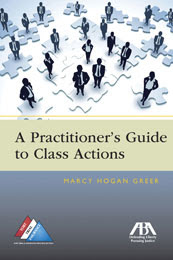 The Brooklyn Law School Library has recently added to its collection
  The BLS Library has a number of items in its collection dealing with the inequities of the tax code. See for example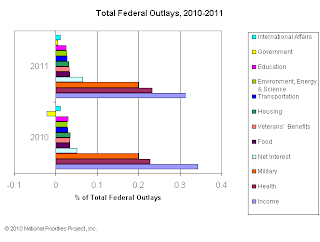
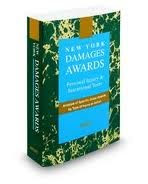 The case will go to trial with a possible large damages award on behalf of the child. Plaintiffs submitted an affidavit estimating that, based on the decedent’s age, education and $11 per hour income at the time of his death, his son suffered a pecuniary loss of income of $1.35 million.
 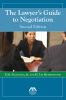 The library has in its print collection
  The BLS Library has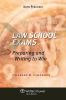

The Brooklyn Law School Library will be closed from Friday, December 24 and reopens Monday, January 3, 2011. The BLS Library Blog wishes you a Merry Christmas, a Happy Holiday, and a Happy New Year.
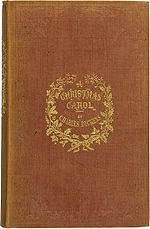 A keyword search of SARA, the BLS Library Catalog, for Christmas yields only a few hits, one of which is notable. Charles Dickens in Chancery: Being an Account of his Proceedings in Respect of the “Christmas Carol” with Some Gossip in Relation to the Old Law Courts at Westminster is available through the library’s Making of Modern Law subscription. It tells the story about Charles Dickens holiday classic, A Christmas Carol published a few days before Christmas of 1843 and the legal affair that unfolded in its aftermath. The book’s successful publication is a story all of its own. Its success led to a number of unauthorized variations in the month following publication. One of these appeared in book shops on January 6, 1844 with the title “A Christmas Ghost Story. Re-Originated from the Original by Charles Dickens, Esq., and Analytically Condensed Expressly for This Work”. Two days later Dickens’s solicitor filed for an injunction against its publisher, Peter Parley’s Illuminated Library to stop publication of this obviously plagiarized edition. The defendants argued that Dickens’s works had been “re-originated” before and Dickens had not filed suit to stop the practice. However, Vice-Chancellor Bruce found that this piracy had gone “beyond all previous instances” and ruled in Dickens’s favor.
Dickens initiated five more suits against plagiarists of his popular “little Carol” in the next four months. Because the defendants all declared bankruptcy, there were no assets to pay even the court costs Dickens incurred while trying to protect his intellectual property. While his own publisher sold thousands of copies of his classic tale, his profit was greatly reduced by his encounter with Chancery Court. For more on the Carol lawsuit, see Grafting A Christmas Carol by Michael Hancher, SEL Studies in English Literature 1500-1900, Volume 48, Number 4, Autumn 2008, pp. 813-827, available through the BLS Library subscription to Project Muse.
Dickens’ Pyrrhic victory in the Christmas Carol suit arguably led to his protest against the arrogance of law and judges in his novel Bleak House published a decade later. Consider this quote from from the opening pages of Bleak House:
Commenting on blog posts requires an account.
Login is required to interact with this comment. Please and try again.
If you do not have an account, Register Now.