

Listen to this episode on BrooklynWorks.
In this podcast, Serge Krimnus, Brooklyn Law School Class of 2010, talks about his career in patent law. He also discusses his article, The Doctrine of Foreign Equivalents at Death’s Door, 12 N.C. J.L. & Tech. 159 (2010), which he wrote with guidance from BLS Professor of Law Derek Bambauer. This semester, Brooklyn Law School offers a course in Patent Prosecution which Adjunct Assistant Professor of Law Serge Krimnus teaches. Serge talks about his work as a Patent Agent for The Farrell Law Firm located in Melville, New York. He also offers suggestions for students considering a career in patent prosecution.

 The Brooklyn Law School Library’s latest New Book List dated January 12, 2011 includes
 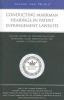 The BLS Library has related material in its collection including
The American Library Association’s Office of Intellectual Freedom designated this past Friday, January 28, 2011 as Data Privacy Day. The second annual Choose Privacy Week is scheduled for May 1-7, 2011. This website developed a resource for libraries called Data Privacy Day: Our Shared Responsibility — What Libraries Can Do, a tip sheet developed by Data Privacy Day and the National Cyber Security Alliance’s Stay Safe Online. This 23 minute film on privacy issues has “man on the street” interviews and features Neil Gaiman, Cory Doctorow, Geoffrey Stone, and ALA President Camila Alire discussing privacy.
News from the Congress and law enforcement raises concerns about data privacy as the Department of Justice has renewed calls for legislation mandating that Internet Service Providers (ISPs) retain certain customer usage data for up to two years. On Tuesday, January 25, the House Subcommittee on Crime, Terrorism, and Homeland Security’s hearing on Data Retention as a Tool for Investigating Internet Child Pornography and Other Internet Crimes chaired by Rep. James Sensenbrenner (R. WI) had testimony from Deputy Assistant Attorney General Jason Weinstein that data retention was crucial to fighting Internet crimes especially online child pornography. Current policies that only require ISPs to preserve usage data at the specific request of law enforcement authorities are just not sufficient, Weinstein said.
It is unclear if the hearing is a sign that a data retention bill is imminent, said John Morris, the general counsel for the Center for Democracy and Technology, who also testified. It is also uncertain whether only ISPs will be required to retain data, or whether services such as e-mail providers might be included, said Morris. Regardless of the scope, mandatory data retention laws raise important privacy and free speech concerns. “In the privacy realm, the bottom line is that law enforcement is talking about having a massive amount of information on 230 million presumably innocent Americans using the Internet, being tracked and retained,” he said.
Commenting on blog posts requires an account.
Login is required to interact with this comment. Please and try again.
If you do not have an account, Register Now.