The Brooklyn Law School logo

BLS Library Blog

Showing 10 of 14 Results

Listen to this episode on BrooklynWorks.

In this podcast, Brooklyn Law School Professor Lawrence Solan talks about his recent book The Language of Statutes: Laws and Their Interpretation (2010) which is on reserve as part of the BLS Library collection. The book is a balanced view of statutory interpretation and the role of the courts. It examines the jurisprudential and practical aspects of language scholarship for statutory interpretation. In the interview, Prof. Solan relates his own personal experience with the ambiguous interpretation of a statute as well as his own scholarly study of the federal bribery statute and its extensive appellate review. The book joins law, linguistics, and cognitive science to show that statutory interpretation is not in need of a major overhaul as some have suggested. He argues that when cases on the margin occur that the legislature did not foresee, judges must inevitably undertake statutory interpretation. The Language of Statutes follows Prof. Solan’s earlier work The Language of Judges and an extensive list of publications which are listed here.

This post has no comments.
04/25/2011
profile-icon BLS Reference Desk

A proposal for a “financial speculation tax” or a “financial transaction tax” (FTT) has generated support as a way to address large deficits in the US budget. The idea, which places a small tax on all financial transactions, has its roots in the Tobin Tax named for the late James Tobin who suggested it to raise money to help eradicate global poverty. Instead of raising taxes on ordinary income earners or imposing cuts in social services, the FTT looks to the financial sector to pay for the damage it caused to the economy when Wall Street speculators and large banks invested in high risk mortgage backed securities leading to the crash of 2008 and the loss of 8 million jobs. After taxpayers bailed them out, there are reports of record profits. With unemployment at record highs and states in enormous fiscal distress, budget cuts alone are inadequate to address the shortfall in tax revenue. 

The People’s Budget which the Congressional Progressive Caucus recently introduced has as part of its corporate tax reform a derivatives and speculation tax. For such a proposal to work, the unanimous support of all G20 states is needed. The likelihood of enactment of an FTT in the US is low. A Bloomberg report from 2009 has Treasury Secretary Geithner and the Obama administration opposing it as unworkable since participants would find ways to circumvent the expense and almost all Republican members of the 112th Congress have signed a pledge to vote against all new taxes.

In January of this year, the Center for Economic and Policy Research (CEPR) issued a report called The Deficit-Reducing Potential of a Financial Speculation Tax showing that a 0.25% tax on trades of stocks, options, futures and other financial instruments could generate $40 billion a year for the Treasury. The idea gained support from French President Nicolas Sarkozy who said a financial transaction tax is one of his top priorities as leader of the Group of 20 nations this year. Earlier this month, an article in the Guardian reported that a thousand economists from 53 countries urged the G20 finance ministers meeting in Washington, to adopt a “Robin Hood tax” or Tobin tax on transactions in financial markets as “an idea that has come of age” arguing that even if such a tax was levied at just 0.05%, it could raise hundreds of billions of dollars, which could be ploughed into development projects. This is the launch video for the Robin Hood Tax campaign.

The International Monetary Fund (IMF) issued a Working Paper called Taxing Financial Transactions: Issues and Evidence in March 2011. Dean Baker, co-director at CEPR and author of its report, concluded: 
 

This is not just a hypothetical; the revenue collected by the U.K. on its more narrow tax on stock trades shows that it is possible to collect large amounts of money through such taxes. Furthermore, the incidence would be almost entirely on the financial industry and those involved in very active trading.

The potential revenue from such a tax far exceeds the amount of money involved in most items that are heavily debated in Congress, such as the extension of unemployment benefits or the tax breaks going to the
wealthiest two percent of the population. The revenue from an FST also vastly exceeds the size of the projected Social Security shortfall. Given the amount of money potentially at stake and the progressivity of the tax, it is surprising that it does not feature more prominently in policy debates. It is not clear what possible downsides would be posed by such a tax, except for its negative impact on the income of people connected with the financial industry.


This post has no comments.

Among the titles in the latest New Book List of the Brooklyn Law School Library is Infringement Nation: Copyright 2.0 and You (Call #KF2994 .T44 2011) by John Tehranian, a book written 300 years after enactment the first copyright act, the Statute of Anne also called “An Act for the Encouragement of Learning”. Tracing the history of copyright law and examining its impact on the lives of ordinary individuals in the twenty-first century, the book assesses the impact of copyright law on ordinary members of society and uses its five chapters on different copyright-related contexts – the individual as an infringer of copyrighted works, as a transformer of copyrighted works, as a pure user of copyrighted works, as a creator of copyrighted works and as a reformer of copyright law – to chart the changing contours of our copyright regime and weigh its vitality in the digital age.

Drawing on his own experiences as an attorney representing prominent Hollywood, publishing, new media and technology clients in high-profile copyright, trademark, patent, right of publicity, defamation and First Amendment litigation, the author questions some of our most basic assumptions about copyright law by highlighting the shocking amount of infringement liability that an average person commits in a single day. The 188 page book is based on Infringement Nation: Copyright Reform and the Law/Norm Gap, 2007 Utah L. Rev. 537 (2007), a short 14 page article that traces the liability that a hypothetical law professor named “John” unwittingly incurs over the course of a single day engaging in ordinary behavior like singing and taking photographs that constitute copyright infringement. The imaginary professor is shown to be liable for up to $12.45 million in civil damages, as well as criminal charges, even without the use of file-sharing networks. Copyright law now affects us all as America has become a nation of copyright infringers where the average citizen violates copyright law on a daily basis. Advances in technology not only provide ordinary individuals with access to their own home printing press in their computers but also allow copyright holders to detect and enforce acts of infringement.

Both the article and the book show that there is a gap between copyright law and copyright norms. The author argues for a reexamination of our current copyright regime that threatens to make criminals of us all. His proposed copyright reforms fall into three broad categories. The first is the restoration of balance between users and creators by a series of reforms such as penalizing rightsholders who make false representations to effect the takedown of allegedly infringing content online; providing defendants with the ability to recover attorney fees; and providing defense mitigation mechanisms for innocent infringement. The second is a repeal of the registration requirement under Sec. 412 of the Copyright Act for recovery of attorney fees to help unsophisticated creators enforce their rights fully along with a cap on the amount of statutory damages with a realistic multiplier of actual damages to reduce the in terrorem effect of modern copyright litigation. The most radical proposal is the adoption of an intermediate liability proposal to encourage transformative activity, advance freedom of speech, and promote artistic innovation. Infringement Nation makes a compelling case for reforming existing doctrine and the development of a copyright 2.0 and would make an excellent addition to the reading list of any course on copyright law as it will help students understand the fundamentals of intellectual property.

This post has no comments.
04/19/2011
profile-icon BLS Reference Desk

A LexisNexis press release from earlier this month said that it signed a licensing agreement with American Lawyer Media (ALM) the owner of The National Law Journal, The American Lawyer and several other legal publications, to make its content available through LexisNexis. Starting May 1, 2011, LexisNexis will be the exclusive third party online distributor of ALM’s collection of legal content worldwide. For years, this content was available through both Lexis and Westlaw. Five years ago, ALM switched all its content from Lexis to Westlaw resulting in Westlaw’s exclusive rights. Now, it is Lexis that has the exclusive rights. In all this time, ALM’s content was available on its Law.com platform. ALM publications also include the New York Law Journal, the New Jersey Law Journal, the Texas Lawyer, the Legal Intelligencer, the Minority Law Journal, Corporate Counsel and Law Technology News and other regional and national newsletters.

From a cost perspective, this switch affects practitioners who can afford to use only a single service rather than both services. It has little meaning for law students who freely access both Westlaw and LexisNexis. Of course, Westlaw and LexisNexis are not free in law school. The Brooklyn Law School Library pays annual subscription fees, at lower rates than what firms pay, so students can access these services. Law students who prefer Westlaw will now have to use LexisNexis if they want to access ALM publications like the NY Law Journal. BLS students can also read articles from the NY Law Journal website for which the BLS Library has a paid subscription. User names and passwords are available at the reference desk.

The National Law Journal has more on the agreement at this link. In the aftermath of the agreement, Bill Pollack, the CEO of ALM, has called for new content on a post at Bill’s Blog.

This post has no comments.
04/16/2011
profile-icon BLS Reference Desk

The Brooklyn Law School Library, like many libraries, has as a standard reference tool the Statistical Abstract of the United States (Call # Z7553.C3 U559). First published in 1878, it is the authoritative and comprehensive summary of statistics on the social, political, and economic organization of the United States. Its print version and online version are an unequaled source of information for governmental, demographic, and economic statistics such as the median household income, the distribution of family debt liability, the number people in prison, the number of women holding public office, families that get food stamps, and statistics on health insurance coverage. Its use by legal professional in scholarly research is extensive. A search for “Statistical Abstract” in Westlaw’s JLR database results in more than 5000 hits. See video below from the librarians at George Washington University:

Sadly, the just released 2012 Washington budget does not include funding for the Statistical Compendia Branch which would mean the elimination of not only the Statistical Abstract, but all titles produced by that branch (State and Metropolitan Area Data Book, County and City Data Book, USA Counties, Quick Facts) meaning that no new editions would be produced in print or online. The Census Bureau Budget Estimates to Congress for FY2012 show that that termination of the Statistical Abstract will result in a decrease in spending of $2.9 million and the loss of 24 full time employees. A Library Journal article Statistical Abstract Faces an Untimely Death has more details. The American Library Association has issued an “Action Alert,” advising members to “contact appropriators and tell them to oppose the defunding of the Statistical Compendia Branch.” Readers can sign a petition to let Congress know how important it is to fund access to government collected data through this very useful resource, a favorite of librarians and researchers. Readers can also join the Save the U.S. Statistical Abstract Facebook group.

This post has no comments.
04/14/2011
profile-icon BLS Reference Desk

This year, Tax Day, usually April 15, is three days later on Monday, April 18 because federal and municipal offices in Washington DC close on Friday to observe Emancipation Day. The observance of that holiday is usually April 16 but this year it falls on a Saturday and is celebrated one day earlier. The holiday commemorates the 1862 signing of the Compensated Emancipation Act (read the document at the Library of Congress’ Century of Lawmaking site) which freed the enslaved people in Washington, DC nine months before President Abraham Lincoln issued the Emancipation Proclamation. The Internal Revenue Code (26 USC §7503) states that when the last day for “performing any act” falls on a Saturday, Sunday, or legal holiday, the performance of that act is considered timely if it is performed on the next succeeding day which does not fall on a weekend or legal holiday. “Legal holiday” includes those observed in Washington, DC. As a result, tax payers get an extra three days to file their returns this year.

Yesterday’s Remarks by the President on Fiscal Policy (read transcript) laid out a budget plan that differs sharply from one offered by the opposing party. See chart comparing the two plans at the NY Times website which shows major differences in tax policy particulary concerning the tax rates for high income earners: the Republican plan calls for lowering the top tax rate to 25%; the President’s plan calls for the expiration of the Bush tax cuts and restoring the top tax rate to 39.6%. The President stated “In the last decade, the average income of the bottom 90 percent of all working Americans actually declined. Meanwhile, the top 1 percent saw their income rise by an average of more than a quarter of a million dollars each.” His call for Congress “to reform our individual tax code so that it is fair and simple — so that the amount of taxes you pay isn’t determined by what kind of accountant you can afford” is likely to meet strong opposition.

The Tax Prof Blog has two blog posts that make clear how far apart views are on the issue of higher taxes for the wealthy. The first cites a Wall Street Journal opinion piece called Obama’s Soak-the-Rich Tax Hikes Won’t Work by Alan Reynolds. The Brooklyn Law School Library has in its collection an item written by Reynolds entitled The Microsoft Antitrust Appeal: Judge Jackson’s “Findings of Fact” Revisited (Call #KF228.U5 R48 2001).


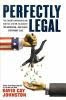
The other post cites 9 Things The Rich Don’t Want You To Know About Taxes by David Cay Johnston. The BLS Library contains a book by Johnston called Perfectly Legal: The Covert Campaign to Rig Our Tax System to Benefit the Super Rich–and Cheat Everybody Else (Call #HJ2362 .J64 2003).

This post has no comments.
04/14/2011
profile-icon BLS Reference Desk

If you are considering becoming a transactional attorney, then you should explore one of the library’s new databases, Practical Law CompanyPractical Law Company is a database that is designed specifically for transactional attorneys.  It specializes in providing straight forward information on how to complete a variety of transactions.  It is designed to help get a deal done.    PLC specializes in Corporate/Securities Law and Finance.  They are, however, branching out into other areas of law, including Labor and Employment and Intellectual Property.  Using PLC, you can learn how to form and organize a corporation, run a closing, conduct due diligence, draft a loan agreement, negotiate a merger agreement, analyze and compare deals, etc.  The database contains numerous checklists, model documents and general overviews of transactional practice areas.

The information contained on PLC is original content created by their own attorney editors who have practiced at top law firms and law departments.  The attorney editors continuously update their resources to reflect current law and practice.  A majority of AmJur 200 law firms subscribe to PLC.

One of the most useful and exciting tools on PLC is the What’s Market platform.  What’s Market allows attorneys to create custom reports which analyze, summarize, and compare public deal documents and securities filings.  For example, you can create a report which details recent merger agreements of pharmaceutical corporations.  This type of tool is not available on Westlaw or Lexis and can save attorneys inordinate amounts of time.

If you would like to request access to this database, go to the url listed below and complete the form.  You need to use your Brooklyn Law School email address in order to register.

http://us.practicallaw.com/about/lawschooltrial

If you have any questions about this resource please do not hesitate to contact one of the reference librarians at refdesk@brooklaw.edu

This post has no comments.
04/12/2011
profile-icon BLS Reference Desk

Today marks the 150th anniversary of the start of the Civil War, when the Confederates began the bombardment of Fort Sumter at 4:30 in the morning on April 12, 1861. After secession by seven Southern states, South Carolina demanded that the US Army abandon its facilities in Charleston Harbor. The Union Army commanding officer refused to surrender. The bombing lasted into the following day with New York native General Abner Doubleday (of early baseball fame) firing the first shot in defense of the fort. However, the Union Army, unable to defend the fort, surrendered and ordered an evacuation. On April 15, President Lincoln officially declared the state of insurrection when he issued Proclamation 80 – Calling Forth the Militia and Convening an Extra Session of Congress to help squash the rebellion “too powerful to be suppressed by the ordinary course of judicial proceedings.”

Another notable Union outpost in the Confederacy was Fort Monroe located near Hampton Roads, Virginia at the mouth of the Chesapeake Bay. The NY Times Magazine article How Slavery Really Ended in America by historian Adam Goodhart is a fascinating story about three slaves seeking refuge at the fort. It was there that slavery first ended in America, not by the courage of Lincoln, other politicians or Abolitionists but by the unusual expertise of a lawyer pressed into military service providing the legal argument that would free not only the three men, but an entire nation of slaves.

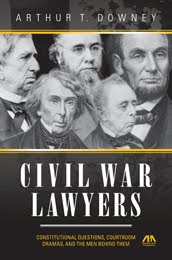
The Brooklyn Law School Library has in its collection Civil War Lawyers: Constitutional Questions, Courtroom Dramas, and the Men Behind Them by Arthur T. Downey (Call #KF366 .D69 2010) a comprehensive look at the role of the law–and of lawyers–during the Civil War. Great Constitutional issues were addressed by the Supreme Court in tense courtrooms where individual lives were at stake. Presidents struggled with the legality of their actions, including questions on habeas corpus and military commissions that still have relevance today.

The American Bar Association, publisher of the book, says that many of the lawyers prominent during the Civil War period were not only aware of each other professionally, but they had also tried cases with and against each other before the War. Jey members of Lincoln’s cabinet and diplomatic appointees were lawyers. So too were the five men who attended the Hampton Roads Peace Conference in February 1865 with Lincoln to prevent the outbreak of War. The book’s appendix contains more than 100 biographies of the lawyers of the time, a look at the cases in which the lawyers crossed paths before the War, a detailed timeline of Civil War events, and period photos and editorial cartoons.

This post has no comments.
04/08/2011
profile-icon BLS Reference Desk

Recently, a BLS student asked me how to identify graduates of both Brooklyn Law School and the University of Michigan.  (Yes, the student is an alum. of Big Blue!)  I showed the student how to search multiple sources.  With assistance from my skilled colleague, Judy Ganeles, I discovered:

  • martindale.com: This publicly-accessible database developed from the Martindale-Hubbell Law Directory.  Neither the main search box nor the advanced search template allowed me to retrieve a list of lawyers who graduated from both BLS and Big Blue.  This surprised me, because martindale.com’s lawyer profiles include the fields “University” and “Law School.”  I ran multiple  searches (experimenting with capitalization and phrase searching) using Brooklyn Law School and University of Michigan as terms in the search box on the main screen.  I did not retrieve any lawyers who had attended both institutions.
  • LexisNexis database: The Martindale-Hubbell(R) Directory:  In contrast to the free site described above, this subscription database yielded hundreds of relevant results.  (I used the largest database of Martindale-Hubbell listings, and my results did include some duplicates.)  I clicked tab: “Terms & Connectors” and ran the search:  “Brooklyn Law School” and “University of Michigan”
  • Westlaw database: PROFILER-WLD: This database provides profiles of lawyers and judges derived from West’s Legal Directory.  Since the default search template did not include search boxes for schools, I clicked tab: “Terms & Connectors” and ran the search:  “Brooklyn Law School” and “University of Michigan” I retrieved an extensive list of judges and lawyers who had graduated from the two institutions.
  • LinkedIn: This professional social network requires a subscription.  Although certain features of LinkedIn are fee-based, basic membership is free.  Using my basic membership account, I ran the search:  “Brooklyn Law School” and “University of Michigan” LinkedIn provided an extensive list of results.  At this point, the BLS student asked me to add the criterion “entertainment law” to the LinkedIn search query, and, once again, I retrieved “on point” results.
  • LexisNexis database:  The Executive Directories: This database provides biographical information about directors and executives of major corporations.  I clicked tab: “Terms & Connectors” and ran the search:  “Brooklyn Law School” and “University of Michigan” I retrieved a few relevant results.
  • Leadership Library: This subscription database is a collection of Leadership Directories.  I clicked tab: “Search by keyword” and ran the search: Brooklyn Law School University of Michigan I retrieved one relevant result.
  • LexisNexis database: Marquis Who’s Who Biographies: This database is a collection of Who’s Who publications.  I clicked tab: “Terms & Connectors” and  ran the search:  “Brooklyn Law School” and “University of Michigan” Although I did not retrieve any results, I think that this database can be useful when seeking data about professionals.

Conclusion: The most useful tools to identify graduates of both BLS and a particular university (or college) are:  LexisNexis database: The Martindale-Hubbell(R) Directory, Westlaw database: PROFILER-WLD and social network LinkedIn.

Tip: I also encourage BLS students to consult any additional resources that might be available through the  BLS Career Center.

Jean Davis, Librarian & Adjunct Professor of Law

This post has no comments.
04/07/2011
profile-icon BLS Reference Desk

During the week of April 10-16, National Library Week, the Brooklyn Law School Library is conducting a Library Survey to measure library service quality and identify best practices. BLS students and other library patrons are encouraged to take the survey and add their input to help the librarians at BLS better serve them.

National Library Week began more than 50 years ago when research showed that Americans were spending less on books and more on radios, televisions and musical instruments. The first National Library Week was observed in 1958 with the theme “Wake Up and Read!” This year, noted lawyer John Grisham, author of many legal thrillers including The Firm (Call # PS3557.R53 F57 1991), is Honorary Chair. See the video featuring him talking about libraries at the ALA Annual Conference in Washington.

To commemorate National Library Week this year, the American Association of Law Libraries’ Research Instruction and Patron Services Special Interest Section published its 19th Annual Legal Research Teach-In Kit on a variety of topics including health and medical law, animal law and Google Scholar.

This post has no comments.
Field is required.