The Brooklyn Law School logo

BLS Library Blog

Showing 10 of 13 Results

06/30/2011
profile-icon BLS Reference Desk

The Sixth Circuit Court of Appeals ruled in Thomas More Law Center v. Obama that the government can require a minimum amount of insurance for Americans. It is the first ruling by a federal appeals court on the constitutionality of the individual mandate for insurance coverage. The lead plaintiff, based in Ann Arbor, MI, argued that the “Patient Protection and Affordable Care Act” was unconstitutional and that Congress overstepped its powers when it imposed a penalty for failing to comply with the mandate. The individual plaintiffs contended that if they do not purchase health insurance and are forced to pay a tax, it would go into the general fund where it could be used to fund abortions. They object to being forced to contribute to the funding of abortions. 

The District Court for the Eastern District of Michigan at 720 F. Supp. 2d 882 (2010) dismissed the claim that the minimum coverage provision is unconstitutional. The 2-1 ruling by the Circuit Court, written by Judge Boyce F. Martin, appointed by former President Jimmy Carter, and joined by Judge James L. Graham, appointed by former President Ronald Reagan, affirmed the lower court saying “Congress had a rational basis for concluding that the minimum coverage provision is essential to the Affordable Care Act’s larger reforms to the national markets in health care delivery and health insurance.” The ruling went on to say: 
 

No matter how you slice the relevant market — as obtaining health care, as paying for health care, as insuring for health care — all of these activities affect interstate commerce, in a substantial way. Start with obtaining medical care. Few people escape the need to obtain health care at some point in their lives, and most need it regularly… Congress could reasonably conclude that the decisions and actions of the self-insured substantially affect interstate Congress.

In choosing how to regulate this group, Congress also did not exceed its power. The basic policy idea, for better or worse (and courts must assume better), is to compel individuals with the requisit income to pay now rather than later for health care…Call this mandate what you will — an affront to individual autonomy or an imperative of national health care — it meets the requirement of regulating activities that substantially affect interstate commerce…

Does the Commerce Clause contain an action/inaction dichotomy that limits congressional power? No — for several reasons. First, the relevant text of the Constitution does not contain such a limitation. To the extent “regulate,” “commerce,” “necessary” and “proper” might be words of confinement, the Court has not treated them that way, as long as the objects of federal legislation are economic and substantially affect commerce. All three methods of paying for medical care (private insurance, public insurance and self-insurance) meet this modest requirement. And if Congress may prescribe rules for some of these methods of payments, as plaintiffs seem to agree, it is difficult to see why these words prohibit it from doing the same for all three….

Second, the promise offered by the action/inaction dichotomy — of establishing a principled and categorical limit on the commerce power — seems unlikely to deliver in practice. Level of generality is destiny in interpretive disputes, and it remains unclear at what level plaintiffs mean to pitch their action/inaction line of constitutional authority or indeed whether a workable level exists.

An appeal of the ruling to the full circuit court to review the case is likely as is review before the US Supreme Court.

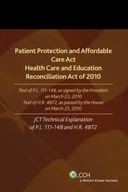
The BLS Library has in its collection Patient Protection and Affordable Care Act by CCH (Call #KF6276.6201 .A2 2010b) which has the full text of the Act. Earlier this year, Brooklyn Law School debate “Is ‘Obamacare’ Unconstitutional?” featured Professor Nelson Tebbe, an expert in constitutional law, and Ilya Shapiro, Senior Fellow in Constitutional Studies at the Cato Institute and Editor-in-Chief of the Cato Supreme Court Review.

This post has no comments.
06/28/2011
profile-icon BLS Reference Desk

The Brooklyn Law School Library is excited to announce a new and improved version of SARA, our library catalog. The new version is better suited to research in the 21st century.  For example, its search screen and search algorithm are more modern than the old version of SARA, showing book jacket images of newly acquired titles, and assuming fuzzy searching, which forgives a researcher’s typographical errors or misspellings.  After running a search, researchers can further refine their result list by values on the left hand side of the screen.  For example, they can filter their results by topic, author, or place.  They can also limit their result list to only items currently available in the library.  Another useful feature is that a researcher can subscribe to a RSS feed of the result list.  If she does so, every time the library adds a new title that meets the search parameters the item will appear in that researcher’s RSS feed.

Besides these new capabilities, users can login to view their library account.  Once logged in, users can see what items they currently have checked out, along with the items’ due dates.  This list will include overdue items.  If a user would like, they can renew any overdue item online while logged into the system. Users can also view their complete fine history, including outstanding fines and fines paid.  Finally, users can review their personal information the library has on file, including their mailing address, phone numbers, and email address.  The library staff is very excited about the new transparency the system provides for our users.  We hope you find value in it too.

This post has no comments.
06/25/2011
profile-icon BLS Reference Desk

With the enactment of the Marriage Equality Act, effective July 24, 2011, New York joins other US jurisdiction (in addition to Connecticut, Iowa, Massachusetts, New Hampshire, Vermont, and the District of Columbia) recognizing marriages without regard to whether the parties are of the same or different sex. According to the legislation, there is no residency requirement for obtaining a marriage license. For more, see statement of the Mayor of the City of New York.

Other states (Connecticut, Iowa, and Massachusetts) attained recognition of marriage equality by court decision and face potential challenges from opponents of same-sex marriage. For five months in 2008, after a ruling by the California Supreme Court, 18,000 gay couples married before voters overturned the ruling. The constitutionality of California’s ban is now before a federal appeals court. New York joins the District of Columbia, New Hampshire and Vermont in achieving marriage equality by legislation. On the federal level, the Defense of Marriage Act, which defines marriage as “the legal union of a man and a woman as husband and wife, and a spouse as a husband or wife of the opposite sex”, is at odds with New York’s new legislation. Rep. Jerrold Nadler (D-NY8) has introduced the Respect for Marriage Act with 105 cosponsors in the House. Senators Dianne Feinstein (D-CA), Patrick Leahy (D-VT), and Kirsten Gillibrand (D-NY) have introduced the Senate version of the bill which marks the first attempt by the Senate to repeal DOMA.

The Brooklyn Law School Library has in its collection When Gay People Get Married: What Happens When Societies Legalize Same-Sex Marriage by M. V. Lee Badgett (Call # K699 .B33 2009). The book examines the effects on societies that allow same-sex couples to marry and included personal stories that” link the broad abstract numbers and the cultural instituti on to the individual lives affected by the law.” It examines what happened in European societies that allow same-sex couples to marry, studies why people marry in the first place, what marriage means to both homosexuals and heterosexuals, whether allowing gays to marry changes heterosexual marriage, and whether the right to marry would change the gay community.

This post has no comments.

This year’s CALI Conference for Law School Computing is being held at Marquette University School of Law in Milwaukee, WI June 23 to June 26. The program offers new ideas to advance legal education through computer technology and includes a session in which Brooklyn Law School Director Victoria Szymczak will discuss the BLS Library’s move to an open source integrated library system. The session will review the ILS systems considered in the process, address why the library selected Koha supported by ByWater Solutions, and review the steps taken to migrate the BLS Library database successfully. During the session, there will be discussion of the challenges and joys of participating in the open source world, as well as future plans for enhancing the library system. The presentation is available at this link where you can click on Taking Your ILS on the Open (Source) Road to see it and the Power Point presentation.

Brooklyn Law School is the first US law library to adopt an open source ILS. The new catalog interface is available here.

This post has no comments.
06/20/2011
profile-icon BLS Reference Desk

Two recent cases, one from NY Supreme Court in Broome County, and one from the US Court of Appeals for the Third Circuit, have allowed defamation lawsuits brought by plaintiffs who claim to have been falsely alleged to be gay. In Yonaty v Mincolla, an unreported case from Broome County Supreme Court, Judge Phillip R. Rumsey, citing Stern v Cosby, 645 F. Supp. 2d 258 (SDNY 2009) ruled that, in the absence of a definitive ruling by the Court of Appeals, New York law still regards a “false imputation of homosexuality” as being defamatory per se. That case involved a defendant who knew the plaintiff’s girlfriend and heard that the plaintiff was gay or bisexual and was “actively engaging in homosexual conduct”. Being concerned that the plaintiff’s conduct “posed a danger” to the girlfriend, the defendant met with a third woman and asked her to tell the girlfriend’s mother, who could then warn her daughter who on hearing the rumor later terminated her relationship with the plaintiff.

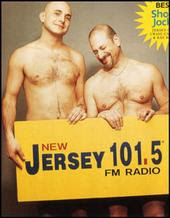
The Third Circuit case, Murphy v. Millennium Radio Group LLC, 2011 WL 2315128 (3rd Cir. 2011), dealt primarily with claims for copyright infringement and a violation of the Digital Millennium Copyright Act (“DMCA”) but also had a claim that the defendants had derogatorily and falsely inferred that the plaintiff, a heterosexual married father of three children, was a homosexual. The case arose out of the use of a photograph of two radio shock jocks that the plainitff had taken for New Jersey Monthly magazine, which named the pair as the state’s top shock jocks for a “Best of 2006” issue. For more, see the Law.com article Shock Jocks’ Homosexual Inferences Not Defamatory, Judge Rules which begins by saying “In today’s society, at least in New Jersey, homosexuality has lost its stigma, so a false statement that someone is gay isn’t slanderous, a federal judge in Trenton said Wednesday in dismissing a suit against two radio shock jocks.” The 3rd Circuit has now reversed the dismissal saying that the judge read the DCMA too narrowly and failed to allow discovery on the defamation claim. See Copyright, Defamation Suit Against N.J. 101.5 Is Reinstated on Appeal.

For more on the issue of whether calling someone gay is defamatory, see Rachel M. Wrightson (Brooklyn Law School Class of 2003), Gray Cloud Obscures the Rainbow: Why Homosexuality as Defamation Contradicts New Jersey Public Policy to Combat Homophobia and Promote Equal Protection, 10 J.L. & Pol’y 635, 640-41 (2002).

This post has no comments.
06/17/2011
profile-icon BLS Reference Desk

HeinOnline has a new database in its collection, the History of International Law Collection. Researchers at the Brooklyn Law School Library can use it to find historic books and articles on subjects such as the Law of the Sea, War and Peace, the Nuremberg Trials, International Arbitration or the Hague Conferences and Conventions, For more information, see HeinOnline’s brochure and list of titles.

This post has no comments.
06/17/2011
profile-icon BLS Reference Desk

New York City Bar Association LogoNew York City Bar and New York Law Journal hosts its annual welcoming reception in honor of summer associates, their mentors and colleagues. Guests can mingle with other summer associates and attorneys, enjoy drinks and hors d’oeuvres, and have the chance to win great door prizes. Guest must be 21+.

Thursday, June 23, 2011 6-8 pm

This event is free, register online or by calling (212) 382-6665.

For group registrations, please email your contact information and list of attendees to membershipservices@nycbar.org.

This post has no comments.
06/14/2011
profile-icon BLS Reference Desk

To follow up an earlier post on this blog, Judicial Recusal and Prejudice, readers may be interested in news that Chief US District Judge James Ware rejected arguments by supporters of the Proposition 8 same-sex marriage ban that former Chief Judge Vaughn Walker should have recused himself, or divulged his sexual orientation, before declaring the ban unconstitutional. Judge Ware’s Order, available at the website of the US District Court for the Northern District of California, stated that:

[T]he presumption that “all people in same-sex relationships think alike” is an unreasonable presumption, and one which has no place in legal reasoning. The presumption that Judge Walker, by virtue of being in a same-sex relationship, had a desire to be married that rendered him incapable of making an impartial decision, is as warrantless as the presumption that a female judge is incapable of being impartial in a case in which women seek legal relief. On the contrary: it is reasonable to presume that a female judge or a judge in a same-sex relationship is capable of rising above any personal predisposition and deciding such a case on the merits. The Motion fails to cite any evidence that Judge Walker would be incapable of being impartial, but to presume that Judge Walker was incapable of being impartial, without concrete evidence to support that presumption, is inconsistent with what is required under a reasonableness standard. 

This June, recognized as Lesbian, Gay, Bisexual, and Transgender Pride Month by Presidential Proclamation, has seen other news related to legal ramifications of same-sex marriage. An article at Law 360 (available by Brooklyn Law School Library subscription) reports that a California Bankruptcy Court issued a Memorandum of Decision that a same-sex couple may file a joint bankruptcy petition, ruling that denying their petition under the federal Defense of Marriage Act would violate the couple’s equal protection rights under the Fifth Amendment. In New York, the legislature has until June 20 to enact the Marriage Equality Act which would amend New York’s Domestic Relations Law and bring marriage equality to New York state. The Governor’s Office issued a press release to insure that “religious corporations” are “private” entities that do not have to accommodate gay marriage, meaning clergy will not be forced to marry gay couples.

This post has no comments.
06/10/2011
profile-icon BLS Reference Desk

While spring 2011 has been called the “Arab spring” because of the civil wars, uprisings and revolutions in Egypt, Libya, Syria, Tunisia, Yemen, etc., it looks like early 2011 may also be called the spring/summer/season of political scandal.  While we hate to see our brothers in humankind involved in tragic events, it’s another story if they are involved in unseemly behavior of their own making.  We are often curious about what goes on behind closed doors, but now that people can broadcast their own intimate behavior in the various social media, we can all become spectators to their peccadillos.

If now or later in the summer you need a break from your bar review study, summer school reading or whatever heavy duty reading you’re involved in, you might want to check out a book from the BLS library on “political scandals.”

Below are a few titles available in our collection.  If none of these titles wets your appetite, you may also search for other titles in WorldCat Local and make interlibrary loans request through ILLiad.

  • Burnham, David.  Above the law: secret deals, political fixes and other misadventures of the U.S. Department of Justice.  New York, Scribner, 1996.   Location:  Main KF 5107 .B87 1996
  • Chambliss, William.  On the take: from petty crooks to presidents.  Bloomington, Ind., Indiana University Press, 1988.  Location:  Main HV 6446 .C43 1988
  • Garment, Suzanne.  Scandal: the crisis of mistruct in American politics.  New York, Times Books, 1991.  Location:  Main JK 2249 .G37 1991
  • Kessler, Ronald.   Inside Congress: the shocking scandals, corruption, and abuse of power behind the scenes on Capitol Hill.   New York, Pocket Books, 1997.  Location:  Main JK 1021 .K47 1997
  • Miller, Hope R.  Scandals in the highest office; facts and fictions in the private lives of our Presidents.  New York, Random House, 1973.  Location:  Main E 176.1 .M555
  • Mitchell, Jack.  Executive privilege: two centuries of White House scandals.  New York, Hippocrene Books, 1992.  Location:  Main E 176.1 .M67 1992
  • Young, Andrew.  The politician: an insider’s account of John Edward’s pursuit of the presidency and the scandal that brought him down. New York, Thomas Dunne Books, 2010.  Location:  Main E 840.8 .E29 Y68 2010

This post has no comments.

Listen to this episode on BrooklynWorks.

In this podcast, Brooklyn Law School Professor Claire Kelly discusses her recent article, Financial Crisis and Civil Society, published in the Chicago Journal of International Law, Volume 11, Number 2, page 505 (Winter 2011). One of a series that Professor Kelly has written on international organizations and the financial crisis, the article addresses how these institutions confront demands for greater legitimacy in light of the public policy implications of their actions and the idea that greater participation by civil society may foster greater legitimacy by improving representativeness, transparency, accountability, and reasoned decision making. Prof. Kelly argues that international financial organizations should carefully calibrate civil society participation to improve their legitimacy without hampering their efforts.

Prof. Kelly has expertise in International Business Transactions, International Trade, Administrative Law and New York Practice. Her extensive writings on these topics are available here.

This post has no comments.
Field is required.