The Brooklyn Law School logo

BLS Library Blog

Showing 10 of 15 Results

09/29/2011
profile-icon BLS Reference Desk

Among the several articles included in the newly posted Lewis & Clark Law School Legal Studies Research Paper Series, part of the SSRN Legal Scholarship Network, is Think [And Practice] Like a Lawyer: Legal Research for the New Millennials. The authors are Prof. Aliza B. Kaplan, Lewis & Clark Law School (and former Brooklyn Law School Associate Professor of Legal Skills) and Access Services/Reference Librarian and Adjunct Assistant Professor of Law Kathleen N. Darvil, Brooklyn Law School. The abstract of the article reads:

It is time to heed the calls for legal education reform. In our changing economy, new attorneys need to be properly trained in law school to be competent at providing effective legal services for their employers and clients. Law schools must remain open to and interested in legal reform; they must partner with practitioners to incorporate more practical skills into the law school curriculum. Updating how we teach legal research by making it accord more with how attorneys actually conduct and use legal research in practice will help accomplish this and will also more actively engage our Millennial students. There is no question that making some timely changes to legal research instruction would better prepare new attorneys to be competent practicing lawyers and would be a win-win for students, law schools and employers.

The full article appears in Vol. 8, 2011 of Legal Communication & Rhetoric, the Journal of the Association of Legal Writing Directors.

This post has no comments.
09/29/2011
profile-icon BLS Reference Desk

The employees of Brooklyn Law School Library are committed to providing a high level of service to our community.  In addition to our librarian liaison program to faculty and to the staff of our school’s journals and moot teams, we are engaged in a number of initiatives:

1) Responding to a request made by the Technology Secretary of the SBA, there is now a printer and release station on the first floor of the library (location: alcove near the reference desk).

2) To aid clinic participants and faculty, I licensed PsycINFO database, and it will become available to patrons on October 1.  I believe that articles identified through this database will help clinic participants to better understand and represent clients who have experienced trauma.

3) A number of our librarians are currently evaluating the cost and content of databases to support the interdisciplinary research needs of our patrons.  As part of this project, Reference Librarian and Adjunct Assistant Professor of Law Sara Gras is compiling a spreadsheet of  databases available through BLS Library that  pertain to medical topics.  She will compare this list to resources available at New York Academy of Medicine Library, which accommodates members of the public by appointment.  Then, our staff will evaluate whether there are key indexes (or other sources) that are not covered by either BLS Library or NYAML.  Ms. Gras also plans to create a publicly accessible web guide to assist students in next semester’s Bioethics class.

4) In conjunction with Professor Fajans, Reference/Access Services Librarian and Adjunct Assistant Professor of Law Kathleen Darvil held a Seminar Paper Workshop on September 14, 2011.  The web guide and video of this Workshop are available at http://guides.brooklaw.edu/seminarpaper.  I will partner with Professor Fajans to reprise this popular Workshop next semester.

5)  Over the past few weeks, I have made presentations to the following classes to highlight research sources: Consumer Law; Safe Harbor Clinic; and Investor Rights Clinic.

6)  To ensure that the library responds rapidly to the increased number of requests made through the new ILLiad electronic interlibrary loan system, three librarians have received supplemental training and are now actively supporting this initiative.

I want you to know that the BLS Library staff is working very hard for you.

Jean Davis, Interim Library Director & Adjunct Professor of Law, Brooklyn Law School

This post has no comments.
09/27/2011
profile-icon BLS Reference Desk

Article 2, Section 1 of the U.S. Constitution established the Electoral College as the formal body which elects the President of the United States. The result of a compromise designed to win the votes of the states in the South, it has long been the target of criticism. The 12th Amendment effective in 1804 remains the only successful effort at altering the Electoral College. Since then, approximately 595 resolutions have been introduced proposing Electoral College reform. There have been more proposed constitutional amendments regarding Electoral College reform than on any other subject. See the CRS Report The Electoral College: An Overview and Analysis of Reform Proposals. In the current Congress, Rep Jackson, Jesse L., Jr. has proposed an amendment, H. J. Res. 36, to abolish the Electoral College and provide for the direct election of the President and Vice President by the popular vote. 

This post has no comments.
09/27/2011
profile-icon BLS Reference Desk

Lists are a new feature of our new and improved library catalog.  Lists are exactly what you would expect them to be: lists of items that are somehow related.  The library maintains several public lists (lists that are accessible to everyone) including the new book list and the course reserve list.  To access these lists simply go to the following web address: http://catalog.brooklaw.bywatersolutions.com and click on the “Lists” button.  You should see a list of all the public lists.  See screen shot below.  Selecting any of the lists will allow you to view the items in that list.  

Besides the library’s maintained lists, users can create their own lists to keep track of their library research.  To do so, you first need to login to your account with your BLS username and password.  Once logged in, click on the “Lists” button again and then click on “Manage Lists.”   See screen shot below.

At the next screen, click on the link for “New List.”  You will be prompted to create either a public list or private list.  As stated above, a public list, as its name implies, would be available to the public.  A private list can only be viewed by you when you are logged into SARA. 

To add an item to your list, simply run a search query.  Once you have identified a relevant item, click on the link “Save to Lists.”  See screen shot below.

You will then be prompted to select the list to which you wish to save the item.  We are excited about this new feature and hope it helps students and faculty members to organize and to keep track of their research.

This post has no comments.
09/23/2011
profile-icon BLS Reference Desk

After six years of litigation in the securities class action case of In re Smith Barney Transfer Agent Litigation, Judge William H. Pauley III of the Southern District of New York in the an Order dismissed the Lead Plaintiff based on the fact that it had never purchased any of the Smith Barney funds at issue. Stating that one of the foundational grounds for a motion testing the pleadings is lack of standing, the judge cited “epic failures” by the lawyers on both sides of the case, and called the effect of the error “seismic” causing the litigation to take on “Sisyphean dimensions.” 

“After six years of litigation, including extensive motion practice, an appeal to the Second Circuit, remand, more motion practice, and discovery, lead counsel learned that the lead plaintiff never purchased any of the securities at issue in this action,” Pauley wrote in today’s decision. “Lead counsel’s failure to confirm the most basic fact — that its client purchased the securities at issue in this action — has resulted in a considerable waste of time and resources,” Pauley said. Criticizing the lawyers for all of the parties in the case for failing to exercise due diligence, Pauley wrote “In retrospect, it was something so obvious that every lawyer in the case should have recognized the problem and reacted immediately. But no one did.”

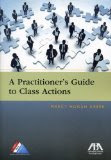
The Brooklyn Law School Library has in its collection A Practitioner’s Guide to Class Actions by Marcy Hogan Greer (Call #KF8896 .P735 2010), an ABA publication that is a comprehensive guide providing practitioners with an understanding of the intricacies of a class action lawsuit. It also has a state-by-state analysis of the ways in which the class action rules differ from the Federal Rule of Civil Procedure 23.

This post has no comments.
09/23/2011
profile-icon BLS Reference Desk

FDsys, formerly GPO Access,stands for Federal Digital System and is America’s Authentic Government Information website. This free service is funded by the Federal Depository Library Program and has grown out the Government Printing Office Electronic Information Enhancement Act of 1993.

Through FDsys, you are able to

Search for documents and publications – FDsys provides advanced search capabilities and the ability to refine and narrow your search for quick access to the information you need.

Browse for documents and publications – FDsys offers browsing by collection, Congressional committee, and date.

Access metadata about documents and publications – FDsys presents information about Government publications in standard XML formats.

Download documents and publications in multiple renditions or file formats
With FDsys, download a single file or download content and metadata packaged together in a compressed file.

The featured collections in FDsys include

This post has no comments.
09/22/2011
profile-icon BLS Reference Desk

Listen to this episode on BrooklynWorks. 

Brooklyn Law School Student Bar Association President Elliott Siebers, Class of 2012, talks about his experience before coming to BLS and his internship with an intellectual property law firm in China this past summer. He also talks about his role as President of the SBA, the umbrella organization for all student organizations at the Law School. As SBA President, Elliott and his fellow SBA officers have worked with several departments within the Law School, including the BLS Library and the bookstore, to help better serve the student body. The SBA has also worked with the search committee to have student input into the ongoing search for a new Law School Dean.

This post has no comments.
09/20/2011
profile-icon BLS Reference Desk

National Hispanic Heritage Month takes place each year September 15 to October 15. This year the U.S. Census has collected information about Hispanics in the United States on its webpage

  • The Hispanic population of the United States as of April 1, 2010 is 50.5 million, making people of Hispanic origin the nation’s largest ethnic or race minority. Hispanics constituted 16.3 percent of the nation’s total population. In addition, there are 3.7 million residents of Puerto Rico, a U.S. territory. The increase in the Hispanic population between April 1, 2000, and April 1, 2010 was 43%, making Hispanics the fastest-growing minority group.
  • The projected Hispanic population of the United States on July 1, 2050 is 132.8 million which willl constitute 30 percent of the nation’s population by that date.
  • The number of Hispanics counted during the 2000 Census was 35.3 million. The nation’s Hispanic population during the 1990 Census was 22.4 million.
  • There are number of 16 states with at least a half-million Hispanic residents 25 states in which Hispanics were the largest minority group. Thes states includ both New York and New Jersey.
  • The increase in the Hispanic population in South Carolina between April 1, 2000, and April 1, 2010 was 148%, the highest of any state.
  • The Hispanic population of Los Angeles County, CA, in 2010 was 4.7 million, the highest of any county.
  • The proportion of the population of Webb County, Texas, that was Hispanic as of 2010 was 96%, the highest proportion of any county.
  • The median income of Hispanic households in 2009 was $38,039.
  • The poverty rate among Hispanics in 2009 was 25.3%, up from 23.2 percent in 2008.
  • The percentage of Hispanics who lacked health insurance in 2009 was 32.4%, up from 30.7 percent in 2008.
  • The number of Hispanics or Latinos 18 and older who are veterans of the U.S. armed forces is 1.1 million.

This post has no comments.
09/16/2011
profile-icon BLS Reference Desk

The Brooklyn Book Festival will celebrate its 6th anniversary on September 18, 2011. The festival celebrates authors and their work by presenting challenging, provocative and thoughtful programming in the areas of fiction, non-fiction and poetry. Organized by the Brooklyn Literary Council and Brooklyn Borough President Marty Markowitz’s office, it has a reputation as the premier, free literary festival in New York City. The 2011 festival takes place next door to Brooklyn Law School at historic Brooklyn Borough Hall, outdoors on its beautiful plaza, and at St. Frances College and the Brooklyn Historical Society. Multiple outdoor stages and indoor venues will feature adult and children’s programming, panel discussions, and spoken word performances.

More information is available here. In preparation for the Book Festival, Brooklyn Public Library is hosting a librarians-only talk and reception with Marilyn Johnson on Saturday, September 17 at 4 pm. Marilyn Johnson who wrote This Book Is Overdue! How Librarians and Cybrarians Can Save us All! will discuss current issues in librarianship, such as digitization, eBooks, and the constant threat of budget cuts. The lecture will be at the Dweck Center for Contemporary Culture at Central Library, Central Library, 10 Grand Army Plaza, Brooklyn.

This post has no comments.
09/15/2011
profile-icon BLS Reference Desk

Listen to this episode on BrooklynWorks.

This conversation features Brooklyn Law School Professor of Law Susan Herman discussing her most recent book Taking Liberties: The War on Terror and the Erosion of American Democracy, published by Oxford University Press. Prof. Herman discusses Chapter One of the book “The Webmaster and the Football Player” which tells the stories of ordinary people caught in the government’s surveillance dragnet. A decade after 9/11, it is far from clear that the government’s hastily adopted antiterrorist tactics–such as the Patriot Act–are keeping us safe, but it is increasingly clear that these emergency measures in fact have the potential to ravage our lives–and have already done just that to countless Americans. Prof. Herman will be part of a Panel Discussion: Ten Years of 9/11 scheduled for Thursday, September 15, 2011 in which she will discuss her book. Other panelists are BLS Professor Derek Bambauer who will speak on the Internet, BLS Professor Maryellen Fullerton who will address immigration, and BLS Professor Nelson Tebbe who will discuss the free exercise of religion. 

This post has no comments.
Field is required.