The Brooklyn Law School logo

BLS Library Blog

Showing 10 of 15 Results

06/30/2012
profile-icon BLS Reference Desk

This past Thursday, June 28th, 2012, the U.S. Supreme Court issued its decision on the challenges to the Patient Protection and Affordable Care Act of 2010. To briefly summarize, the Court found the individual mandate, which requires that virtually all Americans either obtain health insurance or pay a penalty by 2014, to be constitutional.

SCOTUSblog has extensive coverage of the decision, including a plain-English summary and a variety of articles in an online symposium devoted to the issue. The decision has also been reported on extensively by every major news outlet, including the New York Times, the Wall Street Journal, Reuters, and Law360 (accessible via BLS proxy server or on-campus).

For additional background information about the Act, consider checking out Law, Explanation and Analysis of the Patient Protection and Affordable Care Act, available in the BLS Library. This publication provides comprehensive and practical guidance on every provision of the Act, including committee reports, the official text, and detailed analysis of each provision.

Below is a video of President Obama’s comments on the significance of the Court’s decision.


This post has no comments.
06/28/2012
profile-icon BLS Reference Desk

Today marks the 43rd anniversary of the Stonewall Riots which took place on June 28, 1969. That night a usually unremarkable event happened in New York’s Greenwich Village: the police raided a gay bar, something that occurred many times before across the US over the decades. This time, shortly after 3 a.m., at the Stonewall Inn on Christopher Street in NYC’s Greenwich Village, the largely gay and lesbian clientele fought back with aggressive retaliation. Until then, raids on gay bars were commonplace as neighbors objected to patrons of gay bars participating in sexual acts considered deviant and unacceptable. The police raided the Stonewall Inn for serving liquor without a license among other violations. As the raid progressed, the crowd on the street watched as the police arrested the bar’s employees. When three drag queens and a lesbian were forced into a paddy wagon, the crowd reacted.

Ejected customers started to throw coins at the officers, in mockery of the notorious system of payoffs – dubbed “gayola” – in which police took huge sums from gay bars, using “public morals” raids to carry out the scheme. Soon coins were followed by bottles, rocks, and other items. Cheers ran out as the prisoners in the van were liberated. Officers had to take shelter inside the bar. Two policemen were slightly injured before reinforcements arrived to disperse the mob. The protest spilled over into the neighboring streets and order was not restored until the arrival of New York’s Tactical Patrol Force (TPF), a crack riot-control squad specially trained to disperse people protesting against the Vietnam War. To this day, the Stonewall Riots are viewed as the birth of the LGBTQ rights movement. The riot lasted for the next six days of demonstrations in New York and was the impetus for the formation of the Gay Liberation Front as well as other gay, lesbian, and bisexual civil rights organizations. It is also regarded by many as history’s first major protest on behalf of equal rights for homosexuals.

The Brooklyn Law School Library recently acquired the DVD Stonewall Uprising (Call #HQ76.8.U6 S76 2011) available in the library’s AV collection. Filmmakers Kate Davis and David Heilbroner explore the event that launched a worldwide rights movement. The film revisits a time when homosexual acts were illegal throughout America, and homosexuality itself was seen as a form of mental illness. Hunted and often entrapped by undercover police in their hometowns, gays from around the US fled to New York for sanctuary. Hounded there still by an aggressive police force, they found refuge in a Mafia-run gay bar in Greenwich Village, the Stonewall Inn.

Details about the event is shown in a video, Tim Robbins reads Martin Duberman, “Stonewall”, with excerpts from Martin Duberman’s 1994 book.

This post has no comments.
06/28/2012
profile-icon BLS Reference Desk

The Supreme Court is winding down and this past week issued two eagerly awaited decisions, one of which dealt with immigration.

Arizona v. U.S. did not involve the issue of racial bias, though many civil rights groups have challenged it as such. Rather, the issue before the Supreme Court had to do with whether the Arizona law usurped the federal government’s authority to regulate immigration laws and enforcement.

If you are interested in finding out more information about immigration issues, our library has several books on this topic.   I have highlighted a few of the more recent ones below.

American Immigration: A Very Short Introduction – A fascinating and even-handed historical account, this book puts into perspective the longer history of calls for stronger immigration laws and the on-going debates over the place of immigrants in American society.  Oxford University Press


Immigration : A Documentary and Reference Guide  – Presents a history of US immigration, tracing the roots of the debate in the history of our profoundly divided and surprisingly cyclical response to foreign immigration.


In a New land : A Comparative View of Immigration – Drawing on the rich history of American immigrants and statistical and ethnographic data, In a New Land compares today’s new immigrants with the past influxes of Europeans to the United States and across cities and regions within the United States.


This post has no comments.
06/27/2012
profile-icon BLS Reference Desk

Brooklyn Law School Associate Professor of Law Robin Effron recently posted Letting the Perfect Become the Enemy of the Good: The Relatedness Problem in Personal Jurisdiction on SSRN. The article is due to appear in 16 Lewis & Clark Law Review, Issue No. 3, (2012). Here is the abstract:

The Supreme Court’s recent decision in J. McIntyre Machinery v. Nicastro had the potential to resolve nearly two decades of confusion in personal jurisdiction doctrine. Confronted with the earlier Asahi plurality opinions, which had established competing “stream of commerce” theories, the Court produced a fractured 4-2-3 opinion that resolved little beyond holding that the New Jersey courts could not exercise personal jurisdiction over the defendant in the instant case. 

In this Article, I consider one dimension the doctrinal deadlock that the Supreme Court produced in Nicastro: the concept of specific jurisdiction itself. In recent cases, most notably in Nicastro, the Court has become obsessed with the general and abstract contours of the relationship between a defendant and the forum state. However, one of the most important aspects of the distinction between general and specific jurisdiction is the relatedness between the lawsuit and the forum state. In conceptualizing relatedness at the highest level of generality, the Supreme Court has characterized the relatedness problem in a way that is nearly impossible to answer in any concrete case that comes before it. In other words, the Supreme Court has let the perfect become the enemy of the good. Instead of producing a flexible, workable, if not entirely global or perfect rule, the Court has given the lower courts hardly any rule at all.

This Article suggests that in order to break the stream of commerce stalemate, the Supreme Court should refocus specific jurisdiction doctrine so that it produces concrete answers to the two dimensions of the relatedness problem. It further argues that Justice Brennan’s stream of commerce position from Asahi remains the most viable path for specific jurisdiction analysis. The expansive scope of the Brennan position fits well with modern understandings of commerce and the domestic and international sale and distribution of goods. Moreover, in tandem with a robust fairness analysis, the stream of commerce position will allow courts to examine the two dimensions of relatedness in a useful, concrete, and doctrinally consistent manner.

This post has no comments.
06/26/2012
profile-icon BLS Reference Desk

Earlier this month, Brooklyn Law School alumni and Kings County Supreme Court Acting Justice Noach Dear ruled in People v. Figueroa, 2012 NY Slip Op 22161 that police can no longer rely on their training and experience in determining when someone is drinking alcohol in public. Prosecutors charged Figueroa with violating New York City’s Open Container Law (New York City Administrative Code § 10-125[b]) after an officer saw him with a cup and identified the liquid as beer. At the defendant’s arraignment, Judge Dear dismissed the information for facial insufficiency, noting that the charge that the liquid was beer or contained more than one half of 1 percent of alcohol was not supported by non-hearsay allegations such as a certified laboratory test. Also, the information failed to state that the drinking did not occur at a block party, feast or other function for which a permit was obtained, an exception set forth in NYC’s Open Container Law.

Judges rarely issue written decisions in such minor cases but Judge Dear examined the racial application of the law in forming his decision finding that blacks and Latinos “are being disproportionately cited” for violations of the Open Container Law. The court noted that after research it found that in April 2012 more than 85% of the open container summonses were issued to blacks and Latinos, and only 4% were issued to whites. The judge opined that blacks and Latinos in Brooklyn were being disproportionately cited, recommending that the police practice regarding enforcement of the Open Container Law be scrutinized and “immediately stopped” if it was found to be discriminatory. In his written opinion, Judge Dear said that a laboratory test would be required in order to determine that a beverage contained more than 0.5% of alcohol per volume as the law requires. Given the cost of a laboratory test, the $25 fine usually assessed makes enforcement of the law less likely.  A NY Times article, Sniff Test Does Not Prove Public Drinking, a Judge Rules, reported that “police in New York City wrote 124,498 summonses last year for drinking in public — far more than for any other violation.”

This post has no comments.
06/19/2012
profile-icon BLS Reference Desk

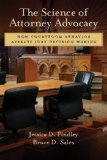
The Brooklyn Law School Library New Books List for June 19 is available on the SARA Library Catalog. Among the 70 items on the list is The Science of Attorney Advocacy: How Courtroom Behavior Affects Jury Decision Making by Jessica D. Findley and Bruce Dennis Sales (Call #KF8972 .F56 2012). This book will appeal to researchers in psychology, communications, linguistics, and other social sciences, as well as trial commentators and practicing attorneys. Lawyers, law professors, judges, and other legal commentators have offered numerous recommendations for how trial lawyers can persuade juries, including techniques in verbal and nonverbal communication, attorney demeanor, and so forth. This 304 page book published by the American Psychological Association reviews the scientific support for popular advocacy recommendations. It first summarizes trial commentators’ recommendations, then reviews the scientific support for these recommendations, and finally evaluates the recommendations in light of the scientific support. Research is culled from not only trial and simulated trial settings, but also other social and behavioral settings. Chapters include Attorney demeanor — Attorney verbal communications — Attorney paralinguistic communications — Attorney-client relationship — Attorney storytelling.

This post has no comments.
06/18/2012
profile-icon BLS Reference Desk

Today marks the bicentennial of the first US declaration of war on another nation. On June 18, 1812, the 12th Congress passed Chapter 102, an Act declaring war on Great Britain. The next day President James Madison issued a proclamation starting the War of 1812. The Annals of Congress contains the debates of Congress which show that on June 1, 1812, President Madison sent a message to Congress asking for a declaration of war against Great Britain. The House of Representatives passed the declaration on June 4 by a vote of 79 to 49. On June 17, the Senate passed the declaration by a vote of 19 to 13.

America’s least-known war arose in response Britain’s seizure of American sailors on the high seas to impress them into service with its war with France. A Smithsonian article by historians Tony Horwitz and Brian Wolly, The 10 Things You Didn’t Know about the War of 1812, says that the State Department reported that 6,257 Americans were impressed into service from 1807 through 1812. When America invaded Canada, Britain claimed that annexation of Canada was an American war goal. Lasting for nearly 2 ½ years, the war resulted in 2,260 Americans killed in battle, no change of territory or the impressment of American sailors.

The war ended with the Treaty of Ghent on Christmas Eve 1814. With some effective diplomacy, the war might have been avoided altogether. The war’s main legacy is that it was the first time Congress exercised its power to declare war. It also gave our nation Francis Scott Key’s poem, “The Defense of Fort McHenry” which became “The Star-Spangled Banner.” He wrote it watching the defeat of the British attack on Baltimore. The war led eight years later to President James Monroe issuing the Monroe Doctrine, a warning to Europe to stay out of this hemisphere’s affairs.
 
Other notable incidents included the Battle of Lake Erie with Commodore Oliver Hazard Perry’s famous pennant proclaiming “Don’t Give Up the Ship” as a small American fleet forced a British fleet of equal strength to surrender. Another memory of the War of 1812 echoes today from Sam Wilson and his brother, meatpackers from Troy, NY who supplied the army. They stamped the barrels of meat “U.S.” When workers at the arsenal joked that the “U.S.” meant the meat was Uncle Sam’s, the nickname stuck and is now part of American folklore. The war also led to the burning of the White House described in The Scorching of Washington: The War of 1812 by Alan Lloyd (Call #E354 .L55 1975) available in the Brooklyn Law School Library.

This post has no comments.
06/14/2012
profile-icon BLS Reference Desk

An ACLU report At America’s Expense: The Mass Incarceration of the Elderly says that the US, the largest incarcerator in the world, with 2.3 million people behind bars, is seeing prisoners getting older with the same ailments afflicting those of the same age who are not behind bars. Correctional facilities are becoming veritable nursing homes with taxpayers footing the bill. From 1980 to 2010, the US prison population grew over 11 times faster than the general population. During this time, the general population increased by 36%, while the state and federal prison population increased by over 400%.

The older prison population is now a national epidemic afflicting states around the country. According to the National Institute of Corrections, prisoners age 50 and older are considered “elderly” or “aging” due to unhealthy conditions prior to and during incarceration. There are 246,600 elderly prisoners behind bars across the country. In 1981, there were 8,853 state and federal prisoners age 55 and older. Today, that number stands at 124,900, and experts project that by 2030 this number will be over 400,000, amounting to over one-third of prisoners in the US. The elderly prison population is expected to increase by 4,400% over this fifty-year time span.

Evidence shows that recidivism drops dramatically with age. In New York, only 7% of prisoners released from prison at ages 50-64 returned to prison for new convictions within three years. That number drops to 4% for prisoners age 65 and older. In contrast, this number is 16% for prisoners released at age 49 and younger. Further, most aging prisoners are not incarcerated for murder, but are in prison for low-level crimes. State and federal governments spend approximately $77 billion annually to run our penal system. Over the last 25 years, state corrections spending grew by 674%, substantially outpacing the growth of other government spending, and becoming the fourth-largest category of state spending. The report finds that it costs $34,135 per year to house an average prisoner, but it costs $68,270 per year to house a prisoner age 50 and older. The report estimates that releasing an aging prisoner will save states, on average, $66,294 per year per prisoner, including healthcare, other public benefits, parole, and any housing costs or tax revenue. 

See also the Human Rights Watch report, Old Behind Bars: The Aging Prison Population in the United States with data developed from a variety of federal and state sources that document dramatic increases in the number of older US prisoners. Both reports are available in SARA, the Brooklyn Law School Libary catalog.

This post has no comments.
06/12/2012
profile-icon BLS Reference Desk

The Second Circuit Court of Appeals ruled last month in Commack Self-Service Kosher Meats v. Hooker that New York’s Kosher Law Protection Act of 2004 does not violate the US Constitution, rejecting a First Amendment challenge by the plaintiff Long Island butcher shop and delicatessen. The three-judge panel affirmed a US District Court for the Eastern District of New York rulingthat upheld the law, which replaced an earlier version the court overturned in 2002. Applying the Lemon test from Lemon v. Kurtzman, 403 U.S. 602 (1971), the court stressed the fact that “kosher food” is not primarily a religious commodity.  In deciding the “secular purpose” prong, the Court found it important that unlike the prior version, the 2004 Kosher Act does not adopt a definition, interpretation or standard for the term “kosher.”  As for endorsement, again, the Court distinguished the prior Act: there is no preference in the 2004 Act for one sacred text over another; it only requires labeling. “The Kosher Act merely requires food products marketed as kosher to be labeled as kosher” U.S. Circuit Judge Christopher Droney wrote. “The Kosher Act does not entangle the state with religion because it does not require the state to enforce laws based on religious doctrine or to inquire into the religious content or religious nature of the products sold.”

The New York State Department of Agriculture & Markets says that “Outside of Israel New York has the largest population of kosher consumers and more than 135,000 products are available on the market shelves. The Department continues to conduct kosher surveillance inspections to make sure all products are registered and all establishments that sell kosher are in compliance with the kosher laws.” The Kosher Law Protection Act of 2004 requires those who market their products as kosher to label the foods as such and to identify in a filing with the NY State Department of Agriculture the individuals certifying the food as kosher. Despite the “victory,” kosher food law inspectors who worked for the Division of Kosher Law Enforcement of the state’s Department of Agriculture were laid off in the waning days of the Paterson administration. Large-scale abuses of kosher continue in the second largest market for kosher outside of Israel. One rabbi said: “Walk into any supermarket in New York and you’ll see mislabeled products, co-mingling of kosher and non-kosher products on kosher labeled shelves, and even some products with a k or d that are problematic.”

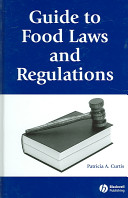
The Brooklyn Law School Library has in its collection Guide to Food Laws and Regulations by Patricia A. Curtis (Call #KF 3870.C87 2005) with a chapter titled An introction to kosher and halal food laws. For both students and experienced professionals, knowledge of US food law is the foundation that supports an understanding of all industry regulation. Based on a popular Internet course, the Guide to Food Laws and Regulations informs students on the significance, range, and background of food laws and gives tools for finding current regulations.

This post has no comments.
06/10/2012
profile-icon BLS Reference Desk

Congratulations to the Class of 2012!  After studying for and taking the July bar exam, you might want to consider looking at the titles below.  These are practical books to help you with trial preparation, note taking for lawyers, iPads for attorneys and using social media for professionals.


Coyne, Michael L., Trial Prep for the New Advocate, 2011.

The goal of this book is to bridge the gap between theory and practice and to that end it is divided into three parts.  Part one is entitled “Substantive Learning” and is an overview of evidence and litigation.  Part two, “Practical Skills,” includes investigation and interviewing, preparing pleadings and conducting discovery, mastering trial technology and trying your case.  Part three, “Working Together,” gives advice for working with supervisors and other members of the firm and includes a primer on ethics.  This book should be on every new attorney’s bookshelf.

Mighell, Tom, iPad in One Hour for Lawyers, 2011.

This book makes it easy to learn to use your iPad; presenting only the essentials that you need to get started.  Shows you how to set up mail, calendars and contacts; create folders and add files; view and manage legal documents and use your iPad to take notes and create documents.

Mighell, Tom, iPad Apps in One Hour for Lawyers, 2012.

This title covers apps essential for any law practice.  Includes apps for getting organized and being productive: calendars, attending meetings, making calls, brainstorming and note taking.  Also includes time & billing and litigation apps.

Schorr, Ben M., Microsoft One Note in One Hour for Lawyers,  2012.

This new book discusses how Microsoft One Note allows you to take notes more effectively, as well as to search and share notes.  You can  even add audio and video to your notes with this product.

Kennedy, Douglas, LinkedIn in One Hour for Lawyers, 2012.

This book shows you how to set up an account and complete a basic profile and includes tips for making a more dynamic profile. Covers how to build connections and use the search function.  Advanced topics included are how to use LinkedIn in the hiring process and creating company pages.

This post has no comments.
Field is required.