

Brooklyn Law School’s OUTLaws will hold its 2nd Annual Alumni Dinner and Community Awards Banquet on Tuesday, April 16 from 7:00 to 9:00 pm at the Forchelli Conference Center, 205 State Street Brooklyn, NY. The theme of this year’s event is “Sea Change: A Year in LGBTQ Rights” recognizing the accomplishments of the gay and lesbian community in the past year. The event also celebrates the launch of OUTLaws’ first-ever pro bono project, the gay and lesbian Brooklyn Legal Assistance Project. BLS alumni, faculty, staff, students, and the general public are invited to attend. Those who want to attend can RSVP by completing the form at this link.
The event’s keynote speaker will be civil rights attorney, educator, radio host, small business owner and 2013 NYC City Council candidate Yetta Kurland, BLS Class of 1997. OUTLaws will present its Alumni Achievement Award to Carol Buell, Class of 1980. Buell is a partner in the Manhattan law firm of Weiss, Buell & Bell. Brad Snyder, Executive Director of the LGBT Bar Association of Greater New York (LeGaL), is the invited guest speaker for the event. In 2012, LeGal in partnership with the Brooklyn Community Pride Center and OUTLaws launched of a pro bono legal clinic devoted to serving the gay and lesbian community of Brooklyn. The clinic is hosted at the BLS offices at 1 Boerum Place in Downtown Brooklyn and meets on alternate Wednesdays.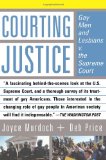 With this week’s US Supreme Court arguments on the constitutional challenges to California’s ban on same-sex marriage in Hollingsworth v. Perry and the Defense of Marriage Act in United States v. Windsor which began in the Southern District of New York, the way in which books discuss gay and lesbian rights has changed over the years. The WSJ Law Blog post When the Supreme Court First Wrestled With Gay Rights states that in 1958 the Supreme Court issued a 62-word ruling in One, Inc. v. Olesen reversing a ruling in One, Inc. v. Olesen, 241 F. 2d 772 where the Ninth Circuit found a magazine to be “morally depraving and debasing” singling out an article titled “Sappho Remembered” about a lesbian’s influence on a young woman coping with married life. The Circuit Court called the article “nothing more than cheap pornography calculated to promote lesbianism.” In Courting Justice: Gay Men and Lesbians v. the Supreme Court (Call # HQ76.8.U5 M87 2002) by Joyce Murdoch and Deb Price, the authors write that the decision was close, decided only after Justice Tom Clark changed his position and Justice Charles Evans Whittaker agreed to be the fifth vote.
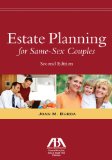 That discussion of legal issues on gay and lesbian rights stands in stark contrast to that in recent items in the BLS Library collection. See Estate Planning for Same-Sex Couples (Call # KF750 .B87 2012) by Joan M. Burda. The book is a tool for lawyers handling legal issues for gays and lesbians. Chapters include information on wills and trusts, children, estate planning, and dealing with senior gay and lesbian clients.

In a recent decision, Barry v. City of New York, Eastern District of New York Magistrate Judge Cheryl L. Pollak invalidated the NYC Metropolican Transportation Authority ID Rule, 21 N.Y.C.R.R. §1050.6(d)(3), that requires transit riders to carry identification. Finding the rule to be unconstitutionally vague, the court granted summary judgment in a 2011 lawsuit brought on behalf of plaintiffs Steve Barry and Michael Burkhart, who were taking photographs in a subway station in Queens while waiting for the arrival of a vintage subway train operated by the New York Transit Museum. When the two objected to a police officer who told them they could not take pictures, the officer asked them to produce identification. Burkhart showed the officers a Pennsylvania driver’s license, but Barry, a New Jersey resident, did not, according to the ruling. Barry was charged with violating the MTA ID Rule which requires persons in a “facility or conveyance” of the transit authority to “provide accurate, complete and true information or documents” to NYPD or transit personnel.
The complaint, which the New York Civil Liberties Union filed on behalf of the plaintifffs, claimed that the MTA ID rule was unconstitutionally vague because it did not specify when and under what circumstances an officer can ask a person to turn over documents, or what type of documents would satisfy the rule. The NYCLU says that police have issued 6,542 summonses in the last 10 years to people who failed to provide identification under the ID rule. Citing Kolender v. Lawson, 461 U.S. 352 (1983), the court ruled that the ID Rule is “a criminal law that reaches a substantial amount of constitutionally protected conduct and vests almost unlimited discretion in the NYPD officers charged with enforcement of the ID Rule.”
Commenting on blog posts requires an account.
Login is required to interact with this comment. Please and try again.
If you do not have an account, Register Now.