The Brooklyn Law School logo

BLS Library Blog

Showing 10 of 10 Results

05/31/2013
profile-icon BLS Reference Desk

Brooklyn Law School Professor Lawrence Solan has posted Intuition versus Algorithm: The Case of Forensic Authorship Attribution on SSRN. The article, which will appear in an upcoming edition of the Brooklyn Journal of Law and Policy, originated in the Authorship Attribution Workshop held last October at Brooklyn Law School. The program for the workshop stated “It is not unusual for a legal case to depend on who wrote a particular document. The question has arisen in many high-profile cases, such as identifying the author of the Unabomber Manifesto, and the ransom notes in the JonBenét Ramsey murder case and the Lindburgh baby kidnapping and murder case. It arises in many less-celebrated criminal and civil cases on a regular basis.”

The abstract for the article, the full text of which is not yet posted, reads:

This article addresses a nagging issue in the field of scientific evidence: What should the legal system do when experts developing a statistical approach to forensic identification are making good progress, but are not provably more accurate than experts who make judgments, often convincing judgments, based upon the their analysis of the specific facts of each case? That is the state of affairs in the field of authorship attribution: Computer scientists and computational linguists develop and test their models while a group of forensic linguists continues to testify in cases without mathematical checks on their conclusions. The legal system rightly prefers algorithmic expertise over intuitive expertise, but when it is not clear that the algorithms do a better job, the question becomes more difficult. The article discusses the psychological literature on the question of algorithm versus intuition and applies it to authorship attribution. It concludes that the insights of the intuitive experts, sometimes called practitioners of forensic stylistics, may have a great deal to contribute to the models created by the computational experts; that practitioners of stylistic comparison have an obligation to conduct far more research into the accuracy of their methods, including, in the short-run, proficiency testing; and that a healthy combination of cooperation and competition is gradually leading to improvements in the field and convergence around those methods that prove successful.

This post has no comments.
05/30/2013
profile-icon BLS Reference Desk

In Abraham v. American Home Mortgage Servicing, Inc., Brooklyn Federal Judge William F. Kuntz II of the Eastern District of New York ruled against several hundred current and former homeowners rejecting their mass action attempt, finding that they were joined improperly. The defendants were several dozen mortgage originators and servicers including MERSCORP Holdings Inc. Plaintiffs alleged that the defendants induced them to enter into mortgages based on inflated appraisals; purposefully avoided local recordation statutes, thereby clouding the plaintiffs’ titles; transferred, bundled, packaged and sold their mortgages to investors simultaneously betting against those mortgages; and failed to use Troubled Asset Relief Program, or TARP, funds to help the plaintiffs, as required under law. The suit originated in New York Supreme Court, Kings County, in May 2012 but one of the defendants had the case removed to the federal court under the Class Action Fairness Act, 28 U.S.C. § 1332(d)(11)(A)

Judge Kuntz rejected the mass action attempt by the plaintiffs, finding that they were joined improperly. A “mass action” is defined as any civil action in which monetary relief claims of 100 or more persons are proposed to be tried together on the grounds that the plaintiffs’ claims involve common question of law or fact. “According to the allegations in the complaint, Plaintiffs engaged in separate loan transactions with different lenders in different offices in different states over a nine-year period. It is well established that separate loan transactions by different lenders do not constitute a single transaction or occurrence and claims by plaintiffs who engaged in those separate transactions generally cannot be joined in a single action,” Kuntz wrote. “Indeed, even claims by plaintiffs who engaged in separate loan transactions by the same lender cannot be joined in a single action.

Judge Kuntz also ruled that the plaintiffs failed to plead “sufficient factual matter” to state a claim to relief that is “plausible on its face.” “Plaintiffs appear to argue that their claims arise out of a common series of transactions because ‘Defendants were involved in a common scheme and plan,’” Kuntz wrote. “Plaintiffs have not provided any factual allegations supporting these contentions, such as evidence that Plaintiffs’ individual mortgages were based on inflated appraisals or specific omissions by particular employees responsible for issuing Plaintiffs’ mortgages.
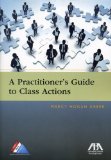
See Brooklyn Law School Library’s copy of A Practitioner’s Guide to Class Actions by Marcy Greer ( Call #KF8896.P735.2010) for more on the subject of class actions. This comprehensive guide provides practitioners with an understanding of the intracacies of the class action lawsuit.
This post has no comments.
05/30/2013
profile-icon BLS Reference Desk

LLRX, the “go-to” website for researchers seeking to leverage the expanding expertise and knowledge of legal resources, has published in its May 2013 edition an article titled Negotiating Justice: The New Constitutional Spectrum of Plea Bargaining by Ken Strutin. The article focuses on the impact of the Supreme Court’s decisions in Missouri v. Frye, 132 S.Ct. 1399 (2012) and Laflerv. Cooper, 132 S.Ct. 1376 (2012), and the upcoming appeal in Burt v. Titlow. The cases have divided practitioners and scholars into two camps: (1) those who consider the rulings to be a new statement in the law of plea bargaining and right to effective assistance of counsel; and (2) those who believe they are only a restatement of established principles. The cases have generated interest in the regulation of plea bargaining, the ethics and effectiveness of defense counsel as negotiator, the oversight of prosecutors regarding charging decisions, sentence recommendations and pre-trial discovery, and the scope of federal habeas corpus review and remedies.

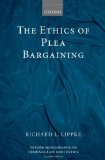
Users of the Brooklyn Law School Library who want to research the subject of plea bargaining have access to The Ethics of Plea Bargaining by Richard L. Lippke (Call # K5458 .L57 2011). The book offers a full-length philosophical analysis of the ethics of plea bargaining and develops a sustained argument for restrained forms of the practice and against the free-wheeling versions that predominate in the United States. It offers an ethical argument for restrained forms of plea bargaining and provides a comparison between the different plea bargaining regimes that exist within the US, where it is well-established, England and Wales, where the practice is coming under considerable critique, and the European Union, where debate continues on whether it coheres with inquisitorial legal regimes. Addressing concerns about rewards for admitting guilt, penalties for exercising the right to trial, and the deliberate over-charging by prosecutors and charge bargaining, the author argues that the negotiation of charges and sentences should remain the exception, not the rule.

This post has no comments.
05/28/2013
profile-icon BLS Reference Desk

Student loan obligations are presumptively non-dischargeable in bankruptcy absent a showing of “undue hardship.” 11 U.S.C. § 523(a)(8). A recent decision by the Ninth Circuit Court of Appeals may offer financially stressed student loan debtors a way out of their student loans. In Hedland v. Educational Resources Institute, Inc., the court ruled that a bankrupt law school graduate who accumulated $85,000 in student debt (with monthly payments of more than $800) was not obligated to repay the loans because he could not find a job with enought income to make the payments. After filing bankruptcy, the debtor commenced an adversarial proceeding seeking a partial discharge of his student loans. At trial, the Bankruptcy Court determined that the debtor satisfied the three-prong test for “undue hardship” and granted a partial discharge of all but a portion of his student loans. The District Court reversed and reinstated the entirety of the student loans. The Ninth Circuit held that the Bankruptcy Court’s findings under §523(a)(8) were not clearly erroneous and reversed the District Court’s order.

The Court of Appeals used the three-pronged test laid out in Brunner v. New York State Higher Educ. Services, 831 F. 2d 395 (2d Cir. 1987): (i) the debtor could not have maintained a minimal standard of living, if required to repay the full loans, (ii) circumstances indicated that the debtor’s inability to repay his loans would persist into the future, and (iii) the debtor made a good faith effort to repay his loans. The Court found that the Bankruptcy Court had not made any errors, had examined the evidence, had used the Brunner test, and that the reversal by the District Court was wrong. The Court then remanded the case back to the District Court to reinstate the discharge which the Bankruptcy Court ordered.

For more on the topic, see the Brooklyn Law School Library copy of Discharging Student Loans in Bankruptcy by David J. Light (Call # KF1530.D4 L54 2009). Contents include Legislative history of student loan dischargeability; Discharging student loans under Chapter 7; Discharging student loans under Chapter 13.

This post has no comments.
05/23/2013
profile-icon BLS Reference Desk

A large building next to a body of water

AI-generated content may be incorrect.

New York City’s Irish Hunger Memorial offers an informative look at the Irish Hunger of 1845-50, perhaps the worst social disaster of 19th Century Europe. Located near the World Financial Center in lower Manhattan, the half-acre site consists of a rural Irish landscape with an abandoned stone cottage, stone walls, fallow potato fields and the flora on the north Connacht wetlands. It is a metaphor for the Great Irish Famine and a reminder that hunger today is often the result of lack of access to land. Artist Brian Tolle designed the 96′ x 170′ Memorial, which contains stones from each of Ireland’s 32 counties. Along the base are bands of texts separated by layers of imported Kilkenny limestone. The text, which combines the history of the Great Famine with current reports on world hunger, is cast as shadow onto illuminated frosted glass panels.

A recent trip to Ireland, especially the counties in the west (County Galway, County Clare, and County Kerry), districts designated the Gaeltacht where the Irish government recognizes Irish as the predominant language spoken at home, made clear the extent of the Irish Hunger. An historic site on the Dingle Peninsula had the ruins of a famine house that gave an historical overview of the Land War in Ireland when English landowners evicted millions of Irish who could not pay rent in the wake of the great famine. The site describes the ruthless tactics that the British used to evict Irish peasants. Ironically, some evicted Irishmen immigrated to America, joined the US Army, and used the same methods to displace Native Americans during the Western expansion, not seeing any connection between the plight of the Irish and that of the Indians. 

The Great Famine had its roots in both the dependence of Irish peasants solely on a potato diet as well as the adverse relief policies of the British Government. Irish patriot John Mitchell summed up the tragedy saying “God created the potato blight but Britain created the famine.” The fungus that ruined the potato crop actually came from America by ship; it infected much of Western Europe, but Ireland was affected the most. The earlier 17th Century purges in Ireland under the rule of Oliver Cromwell and the later Penal Laws insured that the Irish peasant could own no land, paid exorbitant rents and subsisted exclusively on potatoes. Interestingly, food was exported from Ireland during the Great Famine, in the form of livestock, grains, fruits and vegetables. The term Famine is arguably a misnomer. An estimated 1 million died of starvation-related conditions in one of the most catastophic food crises in history. For many, migration was an escape from death. Approximately 20% of emigrants died at sea, in coffin ships, and in quarantine stations. The Irish exodus to America was the first large wave of European immigration

The Brooklyn Law School Library’s electronic collection has material related to this period. See the Making of Modern Law’s The Irish Land Acts, 1903 to 1909: Together with the Rules and Forms Issued Thereunder, Tables of Purchase Annuities, and a Form of Final Schedule of Incumbrances: Being a Supplement to Lord Justice Cherry’s Irish Land Law and Land Purchase Acts, 1860 To 1901. This topic from so long ago has gained some currency with the convening of the Irish Famine Tribunal in late April at Fordham University Law School. Organizers of the mock tribunal set it up as an experiment for lawyers and experts to “examine the responsibility of the British Government, under international law, for the tragic consequences of this period.” After extensive testimony, the panel consisting of New York State Supreme Court John Ingraham from Brooklyn and Irish Supreme Court Justice Adrian Hardiman reserved judgment on the case for 60 days until approximately June 20, 2013.

This post has no comments.
05/22/2013
profile-icon BLS Reference Desk

The latest edition the Brooklyn Law School Library New Books List has 68 items that cover a broad range of legal topics. All of the titles provide users of the BLS Library with content that can help their research needs on a wide number of subjects. These items on the list deal, to select just a few, deal with themes that are newsworthy and perhaps controversial: Capital Punishment’s Collateral Damage by Robert M. Bohm (Call #HV8699.U5 B64 2013); Chasing Gideon: The Elusive Quest for Poor People’s Justice by Karen Houppert (Call #KF336 .H68 2013); Democracy of Sound: Music Piracy and the Remaking of American Copyright in the Twentieth Century by Alex Sayf Cummings (Call #KF3035 .C86 2013); The Tough Luck Constitution and the Assault on Health Care Reform by Andrew Koppelman (Call #KF3605 .K67 2013); Rebels at the Bar: The Fascinating, Forgotten Stories of America’s First Women Lawyersby Jill Norgren (Call #KF367 .N67 2013); and Payback: The Case for Revenge by Thane Rosenbaum (Call #K5103 .R674 2013). 
Readers of this blog post who want a preview any of these items can click on the links above to see the item record which contains information about on the subjects for the selected book and a dust jacket for the book. When an item in the BLS Library catalog has a dust jacket, users can click on it to get use Amazon’s Search Inside feature which allows users to find the exact book to borrow from the BLS Library. SARA, the BLS Library catalog also has a browse shelf feature for each item record. By clicking on the browse shelf link next to an item’s call number, users will be able to  quickly see what other items are located next to the item in the record.  This is useful for researchers who are interested in a specific topic or an author and would like to see what else the library might own quickly. 

This post has no comments.
05/21/2013
profile-icon BLS Reference Desk

Early Summer Hours: May 20 – May 31, 2013

Seven days a week:  9:00am – 10:00pm

Memorial Day, Monday, May 27th, 9:00am – 10:00pm

Summer Hours: June 1 – July 29, 2013

Sunday – Thursday:  9:00am – 12Midnight

Friday & Saturday:  9:00am – 10:00pm

Independence Day, Thursday, July 4th:  9:00am – 10:00pm

Late Summer Hours, July 30 – August 11, 2013

Sunday:  10:00am – 10:00pm

Monday – Saturday:  9:00am – 10:00pm

Have a great summer!

This post has no comments.
05/09/2013
profile-icon BLS Reference Desk

When you are done with finals and need a night at home on the couch, look no further than the library’s collection of DVDs for a fun and low-cost movie night. We have many recent titles, including:

Too Big to Fail

Too Big to Fail

“Based on the bestselling book by Andrew Ross Sorkin, Too Big To Fail offers an intimate look at the epochal financial crisis of 2008 and the powerful men and women who decided the fate of the world’s economy in a matter of a few weeks. Centering on Treasury Secretary Henry Paulson, the film goes behind closed doors to examine the symbiotic relationship between Wall Street and Washington.” – Amazon.com

Paradise Lost TrilogyParadise Lost Trilogy

“The landmark documentary that sparked an international movement to ‘Free the West Memphis Three’, PARADISE LOST investigates the gruesome 1993 murder of three eight-year-old boys and the three teenagers accused of killing them as part of a Satanic ritual. From real-life courtroom drama and clandestine jailhouse interviews to behind-the-scenes strategy meetings and intimate moments with grief-stricken families, acclaimed filmmakers Joe Berlinger and Bruce Sinofsky were granted unprecedented access to all the players involved, capturing the events as they unfolded. REVELATIONS delves deeply into the shocking aftermath of the trials, updating the story seven years after the murders. With Echols on death row and Baldwin and Misskelley serving life sentences, PURGATORY picks up the story and reexamines the horrifying crime with fresh insights that only the passage of time can provide. Facts are reexamined, new evidence is revealed and new suspects are scrutinized.” – Amazon.com

Stonewall UprisingStonewall Uprising

“Stonewall Uprising explores the dramatic event that launched a worldwide rights movement. When police raided a Mafia-run gay bar in Greenwich Village the Stonewall Inn on June 28 1969 gay men and women did something they had not done before: they fought back. As the streets of New York erupted into violent protests and street demonstrations the collective anger announced that the gay rights movement had arrived.” – Amazon.com

Margin CallMargin Call

“Set in the high-stakes world of Wall Street, Margin Call is an entangling thriller involving the key players at an investment firm during the earliest hours of the 2008 financial crisis. When an entry-level analyst unlocks information that could prove to be the downfall of the firm, a roller-coaster ride ensues as the firm’s employees must weigh whether to save their own company (and their jobs) at the risk of fleecing millions of investors.” – Amazon.com

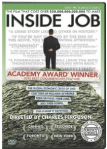
Inside Inside JobJob

“From Academy Award®-nominated filmmaker, Charles Ferguson (NO END IN SIGHT), comes INSIDE JOB, the first film to expose the shocking truth behind the economic crisis of 2008. The global financial meltdown, at a cost of over $20 trillion, resulted in millions of people losing their homes and jobs. Through extensive research and interviews with major financial insiders, politicians and journalists, INSIDE JOB traces the rise of a rogue industry and unveils the corrosive relationships which have corrupted politics, regulation and academia.” – Amazon.com

Check one out today!

This post has no comments.
05/07/2013
profile-icon BLS Reference Desk

The Senate, by a vote of 69-27, passed S. 336, the Marketplace Fairness Act of 2013, a bill designed to restore States’ sovereign rights to enforce State and local sales and use tax laws. The legislation seeks to reverse the decision of Quill Corp. v. North Dakota, 504 US 298 (1992) in which the Supreme Court ruled that States cannot require a retailer to collect sales taxes on its behalf, unless that retailer has a physical presence in the taxing state.  The Marketplace Fairness Act eliminates the Quill standard and would allow States that meet certain minimal standards to require retailers in all States to collect taxes for them.

The bill’s aim to enforce a sales tax on businesses that rely on the Internet to reach their customers has three problems: 1) Online businesses would be responsible for collecting and filing their sales tax from customers that do not reside in their state; 2) Businesses would need to use software to keep track of their tax paying customers putting their customers at risk by exposing sensitive information records; and 3) Requiring that sales tax be collected at the state from which the goods are shipped would be much simpler and would encourage states to be less reliant on highly regressive sales taxes.

The BLS Library has in its internet collection a report from the Congressional Research Service “Amazon Laws” and Taxation of Internet Sales: Constitutional Analysis which examines efforts by States to tax internet sales. According to the report, New York was one of the first to do so. On March 28, 2013, the New York Court of Appeals found New York’s Amazon tax constitutional in Amazon.com, LLC v. New York State Department of Taxation and Finance. That decision is important because, since New York enacted Tax Law §1101(b)(8)(vi) in 2008, eight other states have passed similar laws.

Brooklyn Law School Professor Brad Borden took part in a podcast with the Voice of Russia about the legislation that require retailers with more than $1 million a year in online sales to send taxes to states where their products are delivered. Large retailers and smaller stores support the bill, but online retailers such as eBay oppose it. According to Borden: “With Internet sales rising, constituents and business owners in various states are putting pressure on lawmakers to help even the playing field.”

This post has no comments.
05/06/2013
profile-icon BLS Reference Desk

New York Law School Law Review has a new symposium issue, Volume 57, Issue 4, Trial by Jury or Trial by Motion? Summary Judgment, Iqbal, and Employment Discrimination. The issue is based on a symposium held at New York Law School in April 2012 which examined evidence that civil rights cases, especially those alleging employment discrimination, are susceptible to dismissal before trial as well as to unfavorable judgment notwithstanding the verdict after trial.

Among the many contributors who include practitioners, judges, and academics is Brooklyn Law School Professor Elizabeth M. Schneider who with Harvard Law Professor Nancy Gertner co-wrote the article “Only Procedural”: Thoughts on the Substantive Law Dimensions of Preliminary Procedural Decisions in Employment Discrimination Cases, 57 N.Y.L. Sch. L. Rev. 767 (2012-2013), which focuses on the “substantive law dimensions” of the procedural decisions that federal courts make in employment discrimination cases. Professors Scheider and Gertner take the Supreme Court decision Wal-Mart Stores, Inc. v. Dukes, 564 U.S. ___ (2011), which limited the availability of class actions as the starting point for their argument. 

The other articles published in the issue give an in-depth look at pretrial motion practice in employment discrimination cases both from the point of view of practitioners and academics, offering practical suggestions for attorneys for plaintiffs and guidance for judges in ruling on pretrial motions.

This post has no comments.
Field is required.