The Brooklyn Law School logo

BLS Library Blog

Showing 7 of 7 Results

Thurgood Marshall

The BLS Library recently added to its collection Thurgood Marshall: Race, Rights, and the Struggle for a More Perfect Union by Charles L. Zelden (Call #KF8745.M34 Z45 2013). This 232 page biography, accompanied by primary sources that present Marshall in his own words, will help students learn what Marshall did (and did not do) during his life, why those actions were important, and what effects his efforts had on the larger course of American history. The book has content as follows: Introduction: The Struggle for a More Perfect Union; Chapter 1 – The Education of Thurgood Marshall; Chapter 2 – “Thurgood’s Coming”; Chapter 3 – Social Engineer Lawyer; Chapter 4 – Going for the “Whole Hog”; Chapter 5 – All Deliberate Speed Means S-L-O-W; Chapter 6 – “I AM the Establishment”; Chapter 7 – Not Only the Robe Was Black; Chapter 8 – How Do You Feel About Writing Dissents?; Postscript: Thurgood Marshall, Activist Judge; and an Appendix of Documents.

Today, August 30, 2014 marks the anniversary of the confirmation by the Senate in 1967 of Thurgood Marshall (1908-1993) as a Supreme Court justice. As the Court’s 96th justice and its first African American justice serving from 1967 to 1991, he was one of the most influential legal actors of his time. Before being appointed to the Supreme Court by President Lyndon Johnson, Marshall was a lawyer for the National Association for the Advancement of Colored People (NAACP), Federal Judge (1961-1965), and Solicitor General of the United States (1965-1966). He won twenty-nine of thirty-two cases before the Supreme Court including the landmark case of Brown v. Board of Education, which ruled that segregated public schools were unconstitutional. Marshall spent his career fighting racial segregation and legal inequality, and his time on the court establishing a record for supporting the “voiceless American.”

Marshall was an outspoken liberal on a court dominated by conservatives. In his twenty-four year tenure, he voted to uphold gender and racial affirmative action policies in every case in which they were challenged. He dissented in every case in which the Supreme Court failed to overturn a death sentence and opposed all efforts to narrow or burden the right of women to obtain abortions. No justice has been more forceful in opposing government regulation of speech or private sexual conduct. Nor has any justice been more egalitarian in terms of advancing a view of the Constitution that imposes positive duties on government to provide important benefits to people such as education, legal services, and access to courts regardless of their ability to pay for them. The legacy of change that he left behind continues to affect American society today.

This post has no comments.
08/29/2014
profile-icon BLS Reference Desk

Brooklyn Law School Assistant Professor of Law Christina Mulligan, who recently joined the faculty of the Law School where she will be teaching Internet Law, Cybercrime, and Intellectual Property, has co-authored an interesting new article. Written with Michael Douma of James Madison University, Hans Lind of Yale University, and Brian Patrick Quinn, the article is entitled Founding-Era Translations of the United States Constitution. It is posted on SSRN. The abstract reads:

Before its ratification, the United States Constitution was translated into German and Dutch for the German- and Dutch-speaking populations of Pennsylvania and New York. Although copies of both the German- and Dutch-language translations have been preserved, they have largely escaped analysis — and public awareness — until now. This paper provides historical context for these translations and analyzes how they might aid our interpretation of the U.S. Constitution in the present day.

Supplemental to this article is an appendix containing the German and Dutch translations, as well as extensive commentary on the translations, also available at SSRN at this link.

This post has no comments.
08/22/2014
profile-icon Kathleen Darvil

libraryuseitAs the fall semester is upon us, many students are scrambling to purchase text books for class. As a courtesy, the library purchased one copy of each required textbook. The books are located on course reserve behind the circulation desk. You can check out course reserve materials for two hours at a time. Some of the titles are on order and will be placed on reserve as soon as the library receives them. Please note that the library does not purchase statutory supplements, because you can access the United States Code and state codes through several online resources, including Westlaw, Lexis, and Bloomberg Law.  Click on the course reserves link to view the items on course reserve by course name or professors’ name.

This post has no comments.

The recent success of Brooklyn Law School’s BLIP clinic in bringing about the dismissal of the patent infringement case of 911 Notify LLC v. Carshield Services Inc. filed in U.S. District Court for the District of Delaware demonstrates how law students help real clients. The BLIP students represented a California-based startup called CarShield in defending a patent infringement lawsuit filed in January of this year. The complaint came with no prior notice, no warning and no demand letter. The plaintiff, a shell company called 911 Notify, appeared to be a classic patent troll. Since 2013, it had filed more than 35 patent infringement suits, including some against such companies as Ford Motor Co., Lowe’s Home Centers and BMW North America. The defendant determined that what the plaintiff really wanted was a settlement of over $250,000 to make the lawsuit go away.

CarShield, which makes a car-connection device to monitor and alert owners and emergency contacts in case of accident, breakdown or theft, had no intention of paying. Through the Patent Troll Defense Network, a group set up by the App Developers Alliance and law schools to help app developers and small businesses, they found the Brooklyn Law Incubator and Policy (BLIP) clinic. With BLIP’s help, six months after being served with the complaint, 911 Notify dropped the lawsuit. BLIP was able to fend off the plaintiff thanks to Brooklyn Law School students and their lawyer-adviser.

Brooklyn Law School Professor Jonathan Askin, Founder and Director of BLIP, showed his students the CarShield case and they agreed to take it on. Professor Askin said “They felt it was so egregious and a part of a systemic problem faced by startups. They knew a lot of companies couldn’t afford to litigate, but they would if they had support.”

Patent trolls win by offering to settle cases for less than the cost of the legal defense. With the help of the BLIP law school clinic, the cost of legal defense dropped to zero. In April, the students filed a motion to dismiss, arguing that the case should not have been filed in Delaware because the startup is based in California and had never sold its products in Delaware. By July, all briefs had been filed and the team of students was preparing for oral argument. On July 24, the day after CarShield formally requested the court schedule oral argument, 911 Notify officially dropped the lawsuit, without prejudice.

Brooklyn Law School Law Library has ordered a book on the subject of patent trolls, Patent Trolls: Predatory Litigation and the Smothering of Innovation by William J. Watkins Jr. and William F. Shughart II. It describes how patent trolls use overbroad patents to threaten litigation and bring infringement suits against inventors. Also known as non-practicing entities (NPEs), patent trolls typically do not produce products or services but are in the business of litigation. They wait for someone to create a process or product that has some relationship to the patent held by the troll, and then they pounce with threats and lawsuits. The authors call attention to this problem and the challenges it poses to maintaining a robust rate of technological progress. After describing recent trends and efforts to “tame the trolls,” the book focuses on ground zero in patent litigation—the Eastern District of Texas, where a combination of factors makes this the lawsuit venue of choice for strategically minded patent trolls. It also examines a more fundamental problem: an outmoded patent system that is wholly ill suited for the modern economy. Finally, the book examines proposals for reforming the U.S. patent system, which was created to spur innovation but today is having the opposite effect.

This post has no comments.
08/15/2014
profile-icon BLS Reference Desk

The Library staff wishes our new entering class the very best of luck as you embark on your law school career.  We are here to help you in using the Library and with its electronic and print resources.  You will learn about some of these resources at your combined IT/Library orientation sessions next week.

Lexis, Westlaw and Bloomberg Law are three of the many electronic resources you will have access to while you are a student.  These are the three major legal databases, and during your Fundamentals of American Law class, or your Case Reading Workshop next week, you will receive your Lexis and Bloomberg Law registration cards and your Westlaw password.  Please follow the instructions on each of these items and register yourself in all three systems as soon as possible.  Training sessions in Lexis and Westlaw will be held in September and in Bloomberg Law in the spring semester.

Reference assistance is available to you in person at the first floor reference desk, by email (refdesk@brooklaw.edu), by phone (718-780-7567) or by Live Chat from the Library homepage

We have several events planned for you this fall:  two Bluebooking with Success Workshops and two Research Review Sessions in late October/early November and our 3rd Annual Legal Research Fair on September 30th.  Stay tuned for more details about these events.

Best of luck and we’ll see you in the Library!

This post has no comments.
08/08/2014
profile-icon Loreen Peritz

Did you know there are detailed legal research guides freely available on the Internet on virtually any legal topic you can imagine?  Most of these guides are written by subject specialist law school librarians, although they can also be written by practitioners or government experts.  Research guides are a great place to turn when you are first beginning your research as they give an overview of an area of the law and provide links to primary law, secondary sources, relevant government agencies, and more.

Interested?  Start with our own collection of legal research guides at: http://guides.brooklaw.edu/.  First year law students, make sure to take a look at the legal research guide that we drafted especially for you http://guides.brooklaw.edu/1l.

Also, check out http://www.loc.gov/law/help/how-find.php and http://www.loc.gov/law/help/guide.php, the Law Library of Congress detailed guides to the laws of the 50 states, the Federal government, and most of the countries in the world.

Looking for more ways to find high quality legal research guides?  If you have a particular topic in mind, try doing a Google search: “Legal Research Guide [insert your topic]” or “LibGuide [insert your topic].”   This type of search will nearly always turn up one or more law school library legal research guides on your topic of interest.  A great way to get started on your research!

This post has no comments.
08/01/2014
profile-icon BLS Reference Desk

Almost 800 years ago, on June 15, 2015, King John puts his royal seal on the Magna Carta, or the “Great Charter” following a revolt by the English nobility against his rule. To commemorate the 800th anniversary of that event, the American Bar Association and the Library of Congress will debut a special traveling exhibit of the sealing of Magna Carta on August 8 at the ABA’s Annual Meeting Expo in Boston.

The ABA Standing Committee on the Law Library of Congress will unveil Magna Carta: Enduring Legacy 1215-2015 which will feature 16 banners, 13 of which reflect spectacular images of Magna Carta and precious manuscripts, books and other documents from the Library of Congress’s rare book collections. The exhibit also incorporates a video, produced by the Library of Congress, showing the Law Librarian and the exhibit curator handling the materials and explaining their significance.

The principles found in Magna Carta played a fundamental role in establishing the supremacy of the law in our constitutional, democratic society, including concepts embraced by the Founding Fathers in the Bill of Rights. The importance of Magna Carta to American laws and freedoms will be highlighted at the Annual Meeting as Chief Justice of the United States John G. Roberts Jr. speaks to the ABA House of Delegates on the subject Aug. 11 at 11 a.m. The exhibit will give people a better understanding of Magna Carta and its relevance to the modern-day rule of law.

After Boston, the exhibit will travel to public buildings such as courthouses, law schools, universities and public libraries around the United States, including Brooklyn Law School from September 14-28, 2015, hosted by the Brooklyn Law School.

The current schedule for the exhibit includes other stops including:

  • Indianapolis at the Indiana Statehouse, Sept. 29-October 10r
  • Ann Arbor at the University of Michigan Law School, October 1-21
  • Houston, at the ABA Midyear Meeting, February 6-8, 2015
  • Atlanta, at the Georgia Bar Center, Spring 2015
  • Salt Lake City, April 3-20, 2015r
  • Washington, D.C, at the ABA Section of International Law Spring Meeting, April 29-May 2, 2015
  • Philadelphia, at the ABA Tort Trial and Insurance Practice Section Meeting, April 29-May 3, 2015
  • London, England, at the ABA London Sessions, June 11-14, 2015
  • Chicago, at the ABA Annual Meeting, July 31 – August 2, 2015
  • San Diego, at the ABA Midyear Meeting, February 5-7, 2016

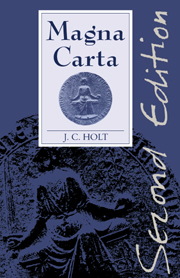
Magna CartaThe BLS Library has two books on the subject of the Magna Carta that are well worth reading. From the perspective of the English is Magna Carta by J.C. Holt (Call # JN147 .H64 1992) which sets the events of 1215 and the Charter itself in the context of the law, politics and administration of England and Europe in the twelfth and thirteenth centuries. The book has a chapter on justice and jurisdiction that provides a fresh approach to the legal provisions of the Charter that were to prove so enduring, along with appendices on matters as varied as vernacular translations of the Charter and grants of liberties in perpetuity.

MC TTThe second book is Magna Carta: Text and Commentary by A. E. Dick Howard (Call #KD3946 .H69 1998). This edition is geared towards the American perspective in which the author places the charter in context of the extraordinary surge of constitutionalism in the aftermath of the Cold War. The book is a cogent introduction to Magna Carta that students everywhere can readily appreciate.

This post has no comments.
Field is required.