The Brooklyn Law School logo

BLS Library Blog

Showing 6 of 6 Results

02/27/2015
profile-icon BLS Reference Desk

A close-up of a black background

AI-generated content may be incorrect. The Library hours for the BLS spring recess are:

Saturday, March 7:  9am – 10pm

Sunday, March 8:  10am – 10pm

Monday, March 9 – Saturday, March 14:  9am – 10pm

Sunday, March 15:  10am – 12am

For future Library hours, be sure to check out our new daily calendar which can be found on the Library homepage, in the lower right corner.

After a long, cold, snowy winter, enjoy your spring break!

This post has no comments.
02/25/2015
profile-icon BLS Reference Desk

During the month of March the Library will be offering “Prepare to Practice” workshops on various topics to prepare for summer legal jobs and internships.

Each “session” will last for 30 minutes and will be held in Room 113M of the Library at 1:15 pm on the dates indicated below.

No reservations are required to attend any of the sessions.  Librarians  will be conducting all workshops.  Drop by and check them out.

  • Tuesday, March 3:  Kathy Darvil – Dockets and Court Documents
  • Thursday, March 5:  Loreen Peritz – Transactional Resources

                              Spring Break

  •  Tuesday, March 17:  Rosemary Campagna – Federal Legislative History
  •  Thursday, March 19:  Linda Holmes – New York State Legislative History
  •  Tuesday, March 24:  Harold O’Grady – Administrative Research
This post has no comments.

The Brooklyn Law School Library February 2015 New Books List is out with 98 new titles in both print and e-book versions. The items cover a wide range of subjects including copyright law (Cultures of Copyright, Call #KF2996 .C85 2015), legal composition (How to Write Law Essays & Exams, Call #KD404 .S77 2014 and Putting Skills into Practice: Legal Problem Solving and Writing for New Lawyers, Call #KF250 .B375 2014), freedom of speech (Speech Matters: On Lying, Morality, and the Law, Call #BJ1421 .S554 2014 and Whistleblowers, Leaks, and the Media: The First Amendment and National Security, Call #KF3471 .W49 2014), and others.

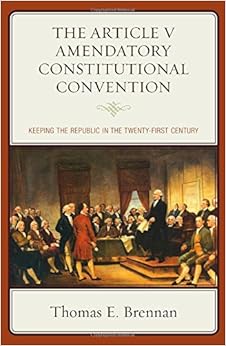
Article VOn the subject of what seems to be the nation’s broken politics and government, two books on the list are Too Weak to Govern: Majority Party Power and Appropriations in the U.S. Senate (Call #KF4987.A67 H36 2014) and The Article V Amendatory Constitutional Convention: Keeping the Republic in the Twenty-First Century (Call #KF4555 .B69 2014) by former Chief Justice of the Michigan Supreme Court Thomas E. Brennan, founder of the Thomas M. Cooley Law School and of Convention USA, a citizens’ initiative to promote an Article V convention. The latter book describes how a number of citizens groups are trying to get an Article V convention, coming to several conclusions:
  • Congress will never voluntarily call a convention no matter how many petitions are received, because a convention might propose amendments which would decrease the powers or prerogatives of Congress.
  • States have the right to call an Article V convention without the concurrence of the Congress whenever two-thirds of the states wish to participate.
  • Citizens of the several states have the constitutional right to organize a convention for proposing amendments, without the call of Congress or the approval of the state legislatures.
  • No amendment proposed by a convention, of any kind, will become a part of the federal constitution unless it is ratified by three quarters of the states, as required by Article V.

On this subject, BLS Professor of Law Nelson Tebbe and former BLS Professor Frederic Bloom have written and posted on SSRN a paper called Countersupermajoritarianism. The abstract for the 24 page paper, due for publication in an upcoming edition of the Michigan Law Review, reads:

How should the Constitution change? In Originalism and the Good Constitution, John McGinnis and Michael Rappaport argue that it ought to change in only one way: through the formal mechanisms set out in the Constitution’s own Article V. This is so, they claim, because provisions adopted by supermajority vote are more likely to be substantively good. The original Constitution was ratified in just that way, they say, and subsequent changes should be implemented similarly. McGinnis and Rappaport also contend that this substantive goodness is preserved best by a mode of originalist interpretation.

In this Review, we press two main arguments. First, we contend that McGinnis and Rappaport’s core thesis sidesteps critical problems with elevated voting rules. We also explain how at a crucial point in the book — concerning Reconstruction — the authors trade their commitments to supermajoritarianism and formalism away. Second, we broaden the analysis and suggest that constitutional change can and should occur not just through formal amendment, but also by means of social movements, political mobilizations, media campaigns, legislative agendas, regulatory movement, and much more. Changing the Constitution has always been a variegated process that engages the citizenry through many institutions, by way of many voting thresholds, and using many modes of argument. And that variety helps to make the Constitution good.

This post has no comments.
02/13/2015
profile-icon BLS Reference Desk

This week Prof. Fajans and Librarian Kathy Darvil held their semi-annual workshop on how to research and write a seminar paper. Topics discussed include sources for selecting your topic, sources for researching your topic, and how to effectively organize and write your paper. If you were unable to attend the workshop, you can access an online research guide which contains a recording of the workshop, links to and descriptions of all the research sources, and the writing and research presentations. The online guide is available at guides.brooklaw.edu/seminarpaper. From the guide’s landing page, you will be able to access a recording of this year’s presentation, Professor Fajans’ slideshow on how to write your seminar paper, and Kathy Darvil’s online presentation on how to research your seminar paper. If you should need further help selecting or researching your topic, please stop by the reference desk for assistance.

This post has no comments.

Listen to this episode on BrooklynWorks.

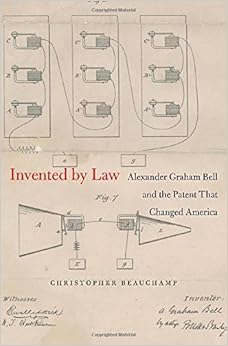
In this interview. Brooklyn Law School’s Associate Professor of Law Invented by LawChristopher Beauchamp speaks about his first book, Invented by Law: Alexander Graham Bell and the Patent That Changed America (Call# KF 3116.B43 2015). Published by Harvard University Press, the book explores questions of ownership and legal power raised by the invention of the telephone, and tells of a forgotten history with wide relevance for today’s patent crisis. Using the  invention of the telephone in 1876 as one of the great touchstones of American technological achievement, Beauchamp sheds new light on that history, and examines the legal battles that raged over Bell’s telephone patent, perhaps the most consequential patent right ever granted. Prof. Beauchamp shows that the telephone was as much a creation of American law as of scientific innovation.

On March 7, 1876, the U.S. Patent & Trademark Office approved Alexander Graham Bell’s patent for Improvement of Telegraphy (No. 174,465) in an unusually fast approval process, with three applications hand-delivered by Bell’s lawyer on February 14, mere hours before a competing application was submitted by engineer Elisha Gray. Bell’s legal maneuvering strongly suggested that an unknown informant within the PTO was assisting efforts to beat Gray to the telephone patent. Subsequent litigation reached the U.S. Supreme Court twice in 1888, first with The Telephone Cases (126 U.S. 1), and then with United States v. American Bell Telephone Corp. (128 U.S. 315). Prof. Beauchamp untangles these lawsuits and analyzes their aftermath in a way that should appeal to both intellectual property experts and novices.

Reconstructing the world of nineteenth-century patent law, replete with inventors, capitalists, and charlatans, where rival claimants and political maneuvering loomed large in the contests that erupted over new technologies, the book challenges the popular myth of Bell as the telephone’s sole inventor, exposing that story’s origins in the arguments advanced by Bell’s lawyers. More than anyone else, it was the courts that anointed Bell father of the telephone, granting him a patent monopoly that decisively shaped the American telecommunications industry for a century to come. Prof. Beauchamp investigates the sources of Bell’s legal primacy in the United States, and looks across the Atlantic to Britain to consider how another legal system handled the same technology in very different ways.

This post has no comments.
02/02/2015
profile-icon BLS Reference Desk

A heart shaped gift with a bow

AI-generated content may be incorrect. 

Valentine’s Day, celebrated this year on Saturday, February 14th, is considered a day of romance to celebrate love and spending time with that special someone.  Hearts, candy, flowers, and dinner dates are all symbols and activities of this special day.  Valentine’s Day can even lead to proposals, engagements and marriages, which hopefully will lead to long and happy lives for the lucky couples.

Below are titles from the BLS Library about marriage, same-sex marriage, marital agreements, etc., including one entitled Should You Marry a Lawyer? and an article from BLS Law Notes about “Lawyers in Love: Alumni Who Met at BLS and Married.”

Marriage:

Cott, Nancy, Public Vows: A History of Marriage and the Nation (2000)

Lind, Goran, Common Law Marriage: A Legal Institution for Cohabitation (2008)

Maillard, Kevin, Loving v. Virginia in a Post-Racial World: Rethinking Race, Sex and Marriage (2012)

Same-Sex Marriage:

Klarman, Michael, From the Closet to the Altar (2012)

Mello, Michael, Legalizing Gay Marriage (2004)

Moats, David, Civil Wars: A Battle for Gay Marriage (2004)

Pierceson, Jason, Same-Sex Marriage in the United States (2013)

Pinello, Daniel, America’s Struggle for Same-Sex Marriage (2006)

Premarital Agreements:

Dublin, Arlene, Prenups for Lovers: A Romantic Guide to Prenuptial Agreements (1993)

Hertz, Frederick, Counseling Unmarried Couples (2014)

Ravdin, Linda, Premarital Agreements: Drafting and Negotiation (2011)

Winer, Edward, Premarital and Marital Contracts (1993)

Divorce:

Abraham, Jed, From Courtship to Courtroom (1999)

Gold-Bikin, Lynne, The Divorce Trial Manual (2003)

Herman, Gregg, The Joy of Settlement (1997)

Turner, Brett, Attacking and Defending Marital Agreements (2012)

Marriage and the Lawyer:

Travis, Fiona, Should You Marry a Lawyer? (2004)

BLS Law Notes, Mergers & Acquisitions: Lawyers in Love: Alumni Who Met at BLS and Married, by Angela Strong (Spring 2010)

Have a Happy Valentine’s Day!

This post has no comments.
Field is required.