The Brooklyn Law School logo

BLS Library Blog

Showing 6 of 6 Results

07/28/2017
profile-icon Loreen Peritz

A screenshot of a web page

Description automatically generated

Oyez! Oyez! Oyez!  The list of cases the U.S. Supreme Court will hear in its 2017 October Term 2017 is now posted on SCOTUSblog.  SCOTUSblog is a great resource if you are researching any aspect of the Supreme Court or the opinions it issues.  The blog analyzes each merits case pending before the Court and posts breaking news of Court decisions. In fact, SCOTUSblog often posts Court decisions before the high court puts them on its own website. During session, links to audio clips of oral arguments are posted on SCOTUSblog as they become available. When you visit the blog, make sure to check out the other resources freely available there, such as “plain english” analysis of cases, videos, live blogging of oral arguments, and more.

This post has no comments.
07/27/2017
profile-icon BLS Reference Desk

There has been considerable commentary on the Justice Department’s filing of an amicus brief saying that Title VII of the Civil Rights Act of 1964 does not cover employment “discrimination based on sexual orientation.” The DOJ filed the brief in the case of Donald Zarda, who filed suit against his former employer Altitude Express in a case that questions whether sexual orientation is included in Title VII’s protections. Title VII prohibits employment discrimination based on race, color, religion, sex and national origin. Zarda was a skydiving instructor who said he was fired after disclosing his sexual orientation to a customer. He died in a skydiving accident before the case went to trial, and executors of his estate have continued the lawsuit on his behalf. The DOJ’s brief states “the sole question here is whether, as a matter of law, Title VII reaches sexual orientation discrimination. It does not, as has been settled for decades. Any efforts to amend Title VII’s scope should be directed to Congress rather than the courts”. It concludes “Title VII does not prohibit discrimination because of sexual orientation.”

The question is, of course, not that simple and has been the subject of commentary for some time. See, for example, Sex and Sexual Orientation: Title VII after Macy v. Holder by Cody Perkins, 65 Administrative Law Review 427 (Spring 2013). This article examines the EEOC’s treatment of sexual orientation as somewhat convoluted. While there is binding precedent from the Commission that “Title VII’s prohibition of discrimination based on sex does not include sexual preference or sexual orientation”, it cites two decisions issued through the Office of Federal Operations indicating that discrimination based on sexual orientation is discrimination based on sex for Title VII purposes under a Hopkins sex stereotyping theory. See Veretto v. Donahoe, where the Office of Federal Operations found that discrimination against a man for marrying another man was a valid sex stereotyping claim, because it was discrimination based on the stereotype that “marrying a woman is an essential part of being a man,” and Castello v. Donahoe, where the Office of Federal Operations found that discrimination against a woman for being attracted to other women was a valid sex stereotyping claim under Title VII, because it was discrimination based on the stereotype that women should only be attracted to and have relationships with men. These decisions, while not binding on federal agencies, indicate that the EEOC intends to allow claims based on sexual orientation under a sex stereotyping theory under Title VII. While there may be no binding precedent from the EEOC stating that sexual orientation is covered under Tide VII, there is binding precedent regarding transgender people. In Macy v. Holder, the plaintiff, a police detective from Phoenix who was still presenting as a man had applied for and been given assurances that she would be hired for a position with the Bureau of Alcohol, Tobacco, Firearms and Explosives (ATF). After going through steps in the hiring process and being told repeatedly that she would be hired, Ms. Macy disclosed to ATF that she was in the process of transitioning from male to female and was informed that the position she had applied for was no longer available due to budget constraints. Upon further investigation, Ms. Macy learned that the position had in fact been offered to someone else and filed a formal Equal Employment Opportunity complaint with ATF, alleging discrimination in hiring based on sex. When the agency failed to identify her claim as sex discrimination, instead creating a separate claim of “discrimination based on gender identity,” Ms. Macy appealed her case to the EEOC. In a reversal of its previous position, the full Commission held that “discrimination based on gender identity, change of sex, and/or transgender status” is discrimination “because of sex” under Title VII. In making this determination, the EEOC utilized two important theories: a traditional “sex stereotyping” theory and a new “per se because of sex” theory, both based on the Supreme Court’s decision in Hopkins.
Controversies

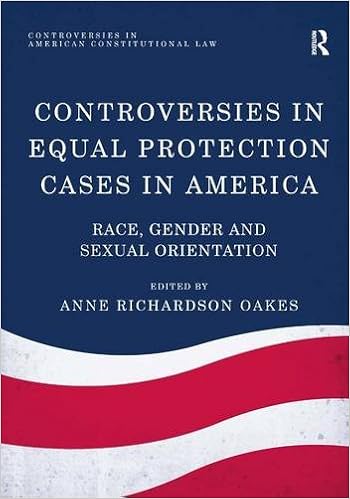
More recently, In April 2017, the en banc Seventh Circuit Court of Appeals overruled its own precedent and became the first Circuit to hold that discrimination on the basis of sexual orientation can constitute unlawful sex discrimination under Title VII. See Hively v. Ivy Tech. Cmty. College of Indiana, II, 853 F.3d 339, 351 (7th Cir. 2017) (overruling Hively v. Ivy Tech. Cmty. College of Indiana, I 830 F.3d 698, 709 (7th Cir. July 28, 2016).). All other Circuits that have addressed the issue have held sexual orientation is not protected under Title VII. The EEOC previously adopted the position in 2015 now taken by the Seventh Circuit. The Supreme Court and the Circuit Courts have held that Title VII protects employees who are discriminated against because they do not conform to the stereotype for their gender and this often may overlap with sexual orientation. For more on the subject, see Brooklyn Law School Library’s copy of Controversies in Equal Protection Cases in America: Race, Gender and Sexual Orientation (Controversies in American Constitutional Law) by Anne Richardson Oakes (Call No. KF4755 .C664 2015).

This post has no comments.
07/25/2017
profile-icon Eric Yap

Last week, I attended the American Association of Law Libraries (AALL) annual conference, which was held July 15-18 in Austin, Texas. The biggest takeaway for me, as a first time conference attendee, was how legal technology continues to shape the legal profession, and how the role of law librarians must continually evolve to meet technological challenges. 

A person standing at a podium

Description automatically generated
Susan Nevelow Mart, Univ of Colorado Law School Library, “Understanding the Human Element in Search Algorithms”

Legal technology was the focus of many of the programs at the conference:

Understanding the Human Element in Search Algorithms

Teaching and Implementing Emerging Technologies in Legal Practice 

Case Law as Data: Making It, Sharing It, Using It

The Law Library as Technology Laboratory,  and

Deep Dive: How Artificial Intelligence will Transform the Delivery of Legal Services

were just some of the programs addressing the subject.  In the exhibit hall, established and new tech vendors lured attendees to their booths with cute stuffed toy bats and other swag so they could sell you on their products.

A person in a suit standing in front of a screen

Description automatically generated
"Caselaw as Data", Harvard Law School Library Innovation Lab

Legal tech was also a constant subject offsite: vendors might gently push their services over a friendly game of shuffleboard at an evening social event; meanwhile in the Fastcase house, legal tech blogger Bob Ambrogi would be chatting in one room while Itai Gurari demonstrated Judicata’s new features in another.  In a recent blog post about the conference, Ambrogi described how legal information professionals increasingly wear the hat of “legal technologist,” stating that the AALL conference should be considered one of the top legal tech conferences.  


A close up of a book

Description automatically generated

What does this mean for academic law librarians?  For me, attending AALL reinforced issues discussed by my BLS colleague Harold O’Grady in his entry in this blog about the new class, Tech Tools for Law Practice, that he taught this summer. If we are to ensure that our students graduate from law school with technology competency, legal tech classes should be integrated into the curriculum. We can learn from the digital initiatives and legal technology curricula at other law schools, and from our own initial experiences in teaching technology courses designed for law students. BLS Library has some legal tech resources in our collection, such as the ABA Solo and Small Firm Legal Technology Guide, and can continue to build on them. 

While there is much to consider going forward, meeting and learning from the many talented and inspiring legal information professionals at the conference was a great experience.  One highlight: learning about the random limerick generator at Harvard’s Caselaw Access Project, where each line of the limerick is derived from a case — just one small illustration of the potential use of caselaw data.

A group of people standing in a room

Description automatically generated
Janet honored at reception for winning Law Library Journal Article of the Year Award


Finally, I should mention that at the AALL conference, BLS Library Director Janet Sinder received the Law Library Journal Article of the Year Award for her article, The Effects of Demand-Driven Acquisitions on Law Library Collection Development, 108 Law Library Journal 155 (2016). Kudos to Janet!


This post has no comments.
07/20/2017
profile-icon BLS Reference Desk

An interesting article, The Lawyer, the Addict, in last weekend’s New York Times was written by the ex-wife of a lawyer who died of an overdose. In investigating her husband’s drug use and death, the author found a legal profession with high rates of substance abuse. The article contained good news for law students showing that before they start law school, law students are healthier than the general population, both physically and mentally. Andy Benjamin, a psychologist and lawyer who teaches law and psychology at the University of Washington, says that “They drink less than other young people, use less substances, have less depression and are less hostile.” In addition, he said, law students generally start school with their sense of self and their values intact.

But, in his research, he said, he has found that the formal structure of law school starts to change that. Unfortunately, there is a culture of drinking in the profession that starts in law school. Addicted law students become addicted lawyers. Depressed law students turn into depressed lawyers, unless you get help. Rather than hew to their internal self, students begin to focus on external values, he said, like status, comparative worth and competition. This is where stress over taking the bar exam comes into play.

By now, students taking bar exams have done the hard work studying. Now it is time to perform. At this point, it is going to be difficult to memorize much more, so now is the time to focus on practice tests and the art of taking the test, the actual process, and your pace. Spend your time wisely – not cramming in more random facts you probably won’t recall anyway. Don’t forget to breathe! Take the time to meditate, so you can clear your head which will allow your thoughts to become better organized. This will serve you well in the week leading up to the bar exam. Start each morning meditating, allowing your brain to be calmed and soothed. Not only will this help in the week before the bar, studies show that people who meditate make better complex decisions. Just what you need to answer the complex bar exam questions!  So, when you take the exam, and you read that question that seems to be a trusts and estates question, or wait, is it a dissolution question? Stop, breathe, and think!  Allow yourself just a minute to breathe in deep, clear your mind, and breathe out. Re-read the question, and do what you are well trained to do at this point – apply the law! Do this anytime you hit a panic-point during the exam.

zen

On the day before the exam, relax. It is not the time to hit the other bar. Relax and do something enjoyable. Check out from the Brooklyn Law Library collection the e-book titled The Zen of Passing the Bar Exam by Chad Noreuil, the best supplemental bar exam mindset book written. See a movie, eat a good meal, and understand that a few more hours of study are not going to change much. You are as ready as you are right here, right now. And finally, if you don’t pass the exam, remember that it is not the end of your world. Lots have taken, lots have not passed, and lots have re-taken. They have become amazing lawyers and judges and had fantastic careers. Your test score will not matter forever. The great news is that you can take it again. If the stress is overwhelming and you feel you are at the end of your rope, call the Lawyer Assistance Program in your state. They are trained to meet with you and will try to help you through the rough patch. If more professional help is needed, they will guide you. If during your exam preparation you find yourself becoming overwhelmed, take a minute (HALT) and think about whether you are also experiencing hunger, anger, loneliness, or tiredness. If so, you have permission to attend to your self-care and try to remediate the negative feelings. Taking a break, accepting your feelings and needs, and attending to self-care will likely make you more productive overall.

This post has no comments.

A black background with a black square

Description automatically generated with medium confidence

Whether you are tracing a statute’s history for your summer internship or for a paper you are writing, you will want to use a new tool the library recently acquired, Proquest’s Legislative Insight.  Often researching legislative histories can be cumbersome and time consuming.   Legislative Insight promises to streamline the process by digitizing and by publishing online the majority of full text publications associated with a legislative history.  These documents include all versions of enacted and related bills, Congressional Record excerpts, and committee hearings, reports, and documents.  Legislative Insight also includes other related material such as committee prints, CRS reports and Presidential signing statements. Furthermore, Legislative Insight offers a research citation page that not only links to the full text of the associated primary source publications, but allows the user to do a Search Within from that very page that searches the full text of all the associated publications with one-click.

To access Legislative Insight from off-campus, you first need to implement the proxy instructions.

This post has no comments.
07/06/2017
profile-icon BLS Reference Desk

Brooklyn Law School Library’s New Books List for July 1, 2017 has 59 print titles and 30 eBook titles. Many of the titles deal with racial discrimination in the criminal justice administration and elsewhere, for example, He Calls Me By Lightning: The Life of Caliph Washington and the forgotten Saga of Jim Crow, Southern Justice, and the Death Penalty by S Jonathan Bass (Call No. E185.93. A3 B37 2017); Caught: The Prison State and the Lockdown of American Politics by Marie Gottschalk (Call No. HV9471. G667 2016); Homicide Justified: The Legality of Killing Slaves in the United States and the Atlantic World by Andrew T. Fede (E-Book); Killing the Black Body: Race, Reproduction, and the Meaning of Liberty by Dorothy Roberts (Call No. HV6533.L8 M37 2017); and Unequal: How America’s Courts Undermine Discrimination Law by Sandra F. Sperino and Suja A. Thomas (Call No. KF4755 .S965 2017).

ImpeachmentMore controversial is The Case for Impeachment by Allan J. Lichtman (Call No. KF5076.T78 L53 2017). Lichtman made headlines when he predicted that Donald J. Trump would defeat the heavily favored Democrat, Hillary Clinton, to win the presidential election. His latest book lays out the reasons Congress could remove Trump from the Oval Office: his ties to Russia before and after the election, the complicated financial conflicts of interest at home and abroad, and his abuse of executive authority. The book offers a fascinating look at presidential impeachments throughout American history, including the often-overlooked story of Andrew Johnson’s impeachment, details about Richard Nixon’s resignation, and Bill Clinton’s hearings. Lichtman shows how Trump exhibits many of the flaws (and more) that have doomed past presidents. As the Nixon Administration dismissed the reporting of Bob Woodward and Carl Bernstein as “character assassination” and “a vicious abuse of the journalistic process,” Trump has attacked the “dishonest media,” claiming, “the press should be ashamed of themselves.” Historians, legal scholars, and politicians alike agree: we are in politically uncharted waters—the durability of our institutions is being undermined and the public’s confidence in them is eroding, threatening American democracy itself. Most citizens—politics aside—want to know where the country is headed. Lichtman argues, with clarity and power, that for Donald Trump’s presidency, smoke has become fire.

This post has no comments.
Field is required.