The Brooklyn Law School logo

BLS Library Blog

Showing 6 of 6 Results

11/11/2010
profile-icon BLS Reference Desk

In addition to The Bluebook: a Uniform System of Citation, 19th edition (Call #KF245 .B58) and the ALWD Ctation Manual: a Professional System of Citation, 4th edition (Call # KF245 .A45 2010), law students writing seminar papers, journal notes, or memos for a legal writing course can use other Brooklyn Law School Library resources to answer style and grammar questions.

The Chicago Manual of Style, 15th edition (Call #Z253 .U69 2003), one of the leading reference books on style, grammar and publication in the US, is available in print at the reference desk. BLS Library also has a subscription to the online version available to BLS students and faculty.


The Redbook: A Manual of Legal Style by Bryan A. Garner (Call #KF250 .G375 2006) is on reserve at the Circulation Desk along with Just Writing: Grammar, Punctuation, and Style for the Legal Writer by Anne Enquist (Call #KF250 .E57 2009. Both of these style guides provide grammar and style advice specific to legal publications.

For an online overview, CALI has two punctuation and grammar lessons. Punctuation and Grammar Basics for Law Students covers fragments and run-on sentences, commas, semi-colons, verb agreement and misplaced modifiers. Punctuation and Grammar: Advanced covers colons, hyphens and dashes, passive voice, parallelism, and misplaced modifiers. See also Introduction to Basic Legal Citation (online ed. 2010) by Peter W. Martin which reflects changes appearing in the third edition of the ALWD Citation Manual, published in 2006 and the edition of The Bluebook published in 2005.

Those writing in international law can consult the LibGuide Developing a Paper Topic: International & Comparative which Reference Librarian Jean Davis created. It has a “Source-checking Guides” a tab that cites the Guide to Foreign and International Legal Citation, 2d ed., produced by N.Y.U. Journal of International Law and Politics (Call #K 89 .G85 2009) and the International Citation Manual published by the Washington University Global Studies Law Review with a link to guide sections for specific countries.

New York practicitioners will want to consult the Official New York Law Reports Style Manual (2007), once popularly known as the “Tanbook”, prepared by the Law Reporting Bureau of the State of New York. The editors of St. John’s Law Review publish New York Rules of Citation (5th ed. 2005) which applies the Bluebook rules to New York examples.

This post has no comments.
09/08/2010
profile-icon BLS Reference Desk

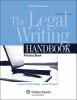
Brooklyn Law School Library’s Technical Services Department has released the September 8, 2010 New Book List. Of interest to the incoming class of 1Ls is the newly published Fifth Edition of Legal Writing Handbook: Practice Book by Laurel Currie Oates & Anne Enquist (Call #KF250 .O182 2010).


The Legal Writing Practice Book is the companion to the Fifth Edition of The Legal Writing Handbook: Analysis, Research, and Writing, which covers the key components of the first-year course Fundamentals of Law Practice I: Writing, Analysis, Research and Skills. Both items are on reserve at the Circulation Desk.

The Social Science Research Network (SSRN) abstract for the Legal Writing Handbook says that this item is actually 7 books in one. “Book 1 is an introduction to legal writing that includes an introduction to the U.S. legal system and an introduction to legal reading and analysis. Book 2 describes the basics of legal research, and it is accompanied by an Electronic Supplement that demonstrates step-by-step how to do legal research in the most recently updated electronic sources, including free sources and WestlawNext. Book 3 provides step-by-step instruction in writing objective memos, opinion letters, email, and text messages. Book 4 provides step-by-step instruction in writing motion and appellate briefs and making effective oral arguments. Book 5 provides in-depth instruction on writing effectively with numerous examples. Book 6 provides in-depth instruction on writing correctly, again with numerous examples. Book 7 discusses both grammatical and rhetorical issues that English-as-a-second-language law students often face. The Legal Writing Handbook, Fifth Edition has an accompanying website with teaching materials for professors who adopt the book, an online diagnostic exam for grammar and punctuation that is self-grading and sends students to the sections of the book they need to review, and a companion Practice Book that provides numerous exercises for students to do to reinforce the skills they have learned.”

This post has no comments.
08/10/2010
profile-icon BLS Reference Desk

If you are one of the many students who are writing a law note or seminar paper this semester, you may feel a bit overwhelmed at the moment.  Several questions maybe running through your head such as:  how do I identify a “good” topic; where do I begin researching; when should I stop researching; how do I organize my paper. Well, there is no need to fear.  Listed below are several resources available from the BLS library that can help you research and write your law note or seminar paper.  

General Resources for Legal Research and Writing

The quote below is provided by the publisher.

In order to inspire and motivate their readers, the authors have appended a selective list of student notes and comments and a chapter on techniques to help writers narrow their subjects and find theses. The authors added a section on reading for types of legal argument and an exercise to address increasing student concern over plagiarism. Includes a short section on the importance of editorial cooperation and communication. Offers a new chapter on entering writing competitions and publishing.

The quote below is taken from the book’s Foreword, which was written by Court of Appeals Judge for the Ninth Circuit, Hon. Alex Kozinski.

This book fills a void in the legal literature: It teaches students how to go about finding a topic and developing it into a useful, interesting, publishable piece.  It gives detailed and very helpful instructions for every aspect of the writing, research and publication process.  And it comes from the keyboard of someone who has authored articles on a dizzying variety of legal topics and is widely regarded as one of the brightest lights in legal academia.  

This research guide provides links and descriptions of sources to identify articles, dissertations, books, case documents, and treaties when writing an international or comparative law paper.

This guide provides links and descriptions of sources to identify developments concerning international law and foreign law.

This online research guide is designed to help law students select and develop a research topic for their seminar paper.

Legal Writing: Style & Grammer

The quote below is provided by the publisher.

In Legal Writing in Plain English, Bryan A. Garner provides lawyers, judges, paralegals, law students, and legal scholars sound advice and practical tools for improving their written work. The book encourages legal writers to challenge conventions and offers valuable insights into the writing process: how to organize ideas, create and refine prose, and sharpen editing skills. In essence, it teaches straight thinking—a skill inseparable from good writing.

 The quote below is taken from the book’s Foreword, which was written by Charles Alan Wright.

There are often many ways, all of which correct by the rules of usage, in which to express a particular idea.  Making the best choice among the possibilities requires an ear for the language, a good sense of taste and of tactics, and an instinctive feel for what will work best in a particular situation.  These choices are more informed, however, if the writer or speaker is aware of the possibilities and sensitive to the considerations that go into the choice.  Garner provides sound guidance on these matters of style for the legal writer.

This post has no comments.
05/30/2009
profile-icon BLS Reference Desk

A new website, The Legal Workshop, provides plain language summaries of articles published by member journals. The mission of the site is to feature “op-ed” versions of the articles published in the member journals. The concise summaries are written for a generalist audience and combine the best elements of print and online publication.

The site states that each Legal Workshop Editorial undergoes rigorous editorial treatment and quality screening and that readers can offer comments. Academics can submit response pieces, which are checked for citations and substance.

By aggregating the work of multiple law reviews, The Legal Workshop is able to provide frequently updated content. New article-based content is posted every Monday and most Wednesdays and Fridays. The Legal Workshop provides a one-stop forum for readers wishing to stay abreast of contemporary legal scholarship.

Currently member journals include

  • Cornell Law Review
  • Duke Law Journal
  • Georgetown Law Journal
  • New York University Law Review
  • Northwestern University Law Review
  • Stanford Law Review
  • University of Chicago Law Review

This post has no comments.
11/06/2008
profile-icon BLS Reference Desk

Correctly formatting legal citations, the standard language used by lawyers and legal scholars to refer to legal authorities with sufficient precision so that others can follow the references, can be a tedious and time consuming process. First, you need to copy the quoted material, the case name, abbreviate parts of the names as required, determine the correct font and then make sure that you have the pinpoint page number. Now, CiteGenie, a new extension for Firefox, can help you to create Bluebook formatted pinpoint citations when copying from Westlaw. Lexis functionality is coming soon. The product is a plug-in that currently works in Firefox 1.5 through 3.0.x. A version for Internet Explorer 6.x is in development.

Installing the plug-in is very simple. Once you do so, a new option is added to the browser’s right-click menu to “Copy with CiteGenie.” To use CiteGenie, simply highlight the text in the court opinion from Westlaw, right-click and select the “Copy with CiteGenie” option (or just press Ctrl-Shift-C). Then you can paste the text into any other program, such as your word processor, and the text will be pasted, along with the pinpoint citation for the selected text from the court opinion. See the illustrated example on the CiteGenie page.

What’s interesting about CiteGenie is that it allows users to select the jurisdiction where they are publishing and then correctly formats the citation to match the requirements of the jurisdiction in which it is published. For example, a common problem in creating correct citations is citing a case where the state is a party. When writing a brief to a court in your state and citing a case in which your state is a party, your state is (usually) referred to as “State” in the case name. To another state’s court, or to a federal court, that state is referred to by its name (e.g., “Georgia”).

Using 284 Ga. App. 660, CiteGenie cited it for a Florida brief as:

Ga. Pub. Defender Standards Council v. Georgia, 644 S.E.2d 510 (Ga. Ct. App. 2007)

It cited that case for a Georgia brief as:

Ga. Pub. Defender Standards Council v. State, 284 Ga. App. 660, 644 S.E.2d 510 (2007)

Thanks to Marc Hershovitz for his Review of CiteGenie published on October 13 on LLRX.

This post has no comments.
06/23/2008
profile-icon BLS Reference Desk

This past Saturday, US Supreme Court Justice Stephen Breyer appeared on C-Span with Bill Press to talk about good legal writing. The discussion was part of the Burton Awards program held at the Library of Congress to honor partners in law firms and law school students who use plain, clear and concise language in briefs and other legal writing. Anna Burns, BLS Class of 2008, was a recent recipient of a Burton Award for Legal Writing.

In the conversation, Justice Breyer refers to his own book Active Liberty: Interpreting Our Democratic Constitution, Call No. KF4552 .B74 2005 along with The Nine: Inside the Secret World of the Supreme Court by Jeffrey Toobin, Call No. KF8748 .T66 2007 both of which are in the BLS library collection.
 
 
The link to the half hour conversation is here.

This post has no comments.
Field is required.