The Brooklyn Law School logo

BLS Library Blog

Showing 7 of 7 Results

A screenshot of a web page

Description automatically generated

This new resource highlights current editions of BLS Library’s casebooks, study aids and guides for law school courses and bar exams.  It describes sources on: Doing Well & Being Well; Preparing for Law School Exams & Bar Exams; Administrative Law; Civil Practice & Procedure; Conflict of Laws; Constitutional Law; Contracts; Corporations & Other Business Associations; Criminal Law & Procedure; Evidence; Family Law; Professional Responsibility; Property; Sales; Secured Transactions; Torts; & Wills, Trusts & Estates.  Sources are categorized by type and are listed “newest to oldest.” The home screen also includes BLS Library’s hours of access for BLS students. 

TIPS: Our librarians continue to develop this research guide and Brooklyn Law School Library’s collection. When you access this guide in future, please reload the web page. If you need help accessing e-resources like CALI casebooks/exercises or study aids in the Understanding and Q&A series, please email us at askthelibrary@brooklaw.edu or text us at 718-734-2432.

Current editions of print casebooks adopted by BLS faculty and many print study aids are in BLS Library’s first-floor Reserve collection.  Students can request these sources at BLS Library’s first-floor Circulation desk.  These sources circulate for two hours.  Many sources in BLS Library’s Cellar-level Main collection circulate for the semester.  

Good luck completing end-of-term work and preparing for exams! 

This post has no comments.
03/15/2013
profile-icon BLS Reference Desk

Starting in 2015, Civil Procedure will be added to the Multistate Bar Exam. The National Conference of Bar Examiners (NCBE) has added it as a subject to the multi-state portion of the bar exam, the first change in more than 40 years. The number of core legal subjects is now seven including the current six subjects: Contracts, Criminal Law and Procedure, Constitutional Law, Evidence, Real Property and Torts. Athough new to the MBE portion of the bar exam, applicants for the New York State bar have always had to contend with New York Civil Procedure as a subject matter.

“This is a very positive development. Procedure is something that is fundamental to everything a lawyer does.” Brooklyn Law School Professor James Park said. The NCBE has hinted for some time that civil procedure would be included in the MBE. The announcement came in late February with a memo to law school deans announcing the February 2015 implementation date. The memo urged the deans to inform faculty and staff who teach civil procedure of the change. Brooklyn Law School Dean Nick Allard said “We will likely add more civil procedure courses.” BLS Professors Alan M. Trammell, James Park, Jayne Ressler, Elizabeth Schneider, Maryellen Fullerton, Michael Mushlin, Robin Effron, and Roger Michalski currently teach the Civil Procedure course that is designed to introduce beginning law students to the elements and procedures of the civil justice system. The course covers the litigation process from commencement of a case through appeals. Major topics include jurisdiction, remedies, pleading, discovery, class actions, and pretrial and trial procedures.
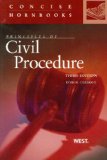
 
The BLS Library has an extensive collection of items on the subject of civil procedure including the 3d edition of Principles of Civil Procedure (Call # KF8840.C54 2012) by Kevin M. Clermont. It focuses on the material covered in a typical law school course on civil procedure and breaks down the subject of civil procedure along the standard lines: a brief orientation and a lengthier overview of the stages of litigation, followed by a close inspection of the major procedural problems (governing law, authority to adjudicate, former adjudication, and complex litigation), and then some reflections in conclusion. It discusses specific problems and illustrations, with the aid of generously sprinkled diagrams and special text boxes. Special attention was given to fitting the civil procedure course’s main points together to form the big picture, with each topic ending in a section on the big idea the student is supposed to take from the topic.
This post has no comments.
07/02/2012
profile-icon BLS Reference Desk

With just over four weeks to the July bar exam, think about alternatives to the bar prep courses:

CALI, the Center for Computer-Assisted Legal Instruction, provides interactive tutorials on more than 900 legal topics. They cover general areas of law to specific legal concepts. If you have not used CALI, you need a Brooklyn Law School authorization code to access the tutorials on the web. Ask a reference librarian at the library Reference Desk.

Wolters Kluwer has six separate Bar Review Exam Edge Mobile Apps covering Evidence, Property, Contracts, Constitutional Law, Torts, and Criminal Law. The six subject areas from Emanuel Bar Review are easy to download on an iPhone or iPod. Each app features 33-34 questions, identical in scope and content to those frequently asked on today’s MBE. Features include two different formats for quizzing yourself: Review Mode and Test Mode; a review Mode that features a “Notes” screen to capture your personalized notes via the touch-screen keyboard; a test Mode that randomizes the questions to present you with multiple test-taking experiences; a timer (in both modes) that helps you control and improve your question-answering speed.

Visual learners may want to review attorney Nathaniel Burney’s blog, The Illustrated Guide to Criminal Law, which began in December 2011. It publishes detailed and creative comics exploring criminal law concepts like mens rea, conspiracy, and defenses. A book-length version of the comic is due out in the fall with a whole set of comic-style study aids in time for next year’s MBE. Finally, for more traditional supplements to bar exam study (including study guides for the MBE and past bar exams), take a look at our July 2010 post on Bar Exam Study Aids or see the 2009 video Pass the Bar!: We Did, You Can Too available in SARA, the BLS Library catalog.

This post has no comments.
07/07/2010
profile-icon BLS Reference Desk

With three weeks before the July bar exam, patrons at the Brooklyn Law School library can review additional study resources in the collection. , A subject search for “Bar examinations—United States—Study guides” in the online catalog will retrieve some helpful resources for bar exam study on reserve at the circulation desk such as the 2009 edition of The Bar Exam in a Nutshell by Suzanne Darrow-Kleinhaus (Call # KF303 .D37 2009). Also on reserve is Pass the Bar by Denise Riebe and Michael Hunter Schwartz (Call # KF303 .R54 2006).

The library’s main collection has Scoring High on Bar Exam Essays by Mary Campbell Gallagher (Call # KF303 .G35 2006). There is also a 50 minute streaming video produced in 2008 that is accessible from the BLS Library catalog called Pass the Bar: We Did, You Can Too! 
 

Past exams are available for free on bar exam websites, such as New York’s page of Past Exam Questions. Visit the National Conference of Bar Examiners lists the Boards of Law Examiners site for all of the states for those taking bar exams outside New York.

This post has no comments.
10/13/2009
profile-icon BLS Reference Desk

Law.com has posted an article entitled Uniform Bar Exam Inches Closer To Reality by Leigh Jones which says that at least 10 states are expected to switch to the so-called Uniform Bar Exam (UBE) and that 22 other jurisdictions may adopt the test in the next few years. Proponents of the UBE say that its use will standardize attorney licensing across the country and would provide financial relief for states by relieving them from having to create their own test questions. Historically, states have retained their own testing autonomy by developing their own exam questions and by using their own pass scores.

The Bar Examiner, the journal of the National Conference of Bar Examiners, has several prominent legal professionals writing Essays on a Uniform Bar Examination advocating the UBE in Volume 78, Number 1 from February 2009. Among them is Diane Bosse, chairwoman of the New York State Board of Law Examiners, who wrote: “The benefits the UBE can bring to the lawyer-licensing are clear; what has been uncertain is whether, in adopting a common set of test instruments, we would need to abandon our long-standing position that a person seeking to become a member of the bar in our state should be required to demonstrate competence in our state-specific law.”

The UBE would have three components: the Multistate Bar Examination (MBE), the Multistate Performance Test (MPT), and the Multistate Essay Examination (MEE). Individual states would continue to perform their own grading. The Law.com article points out that the UBE still has hurdles to overcome as big states like New York, California, the District of Columbia, Florida, Illinois and Texas have yet agree to the idea. However, the article quotes John J. McAlary, executive director of the New York State Board of Law Examiners which administers some 15,000 bar examinations each year, as considering the uniform exam.

This post has no comments.
10/06/2009
profile-icon BLS Reference Desk

The Oxford English Dictionary, available at Brooklyn Law School in eleven print volumes in the National Reading Room on the 2d floor of the BLS Library and online on the Library database page, gives the figurative defintion of “labyrinth” as a “tortuous, entangled, or inextricable condition of things, events, ideas, etc.; an entanglement, maze”. That meaning of the word may well describe what many 1Ls and upperclass members feel as they work through their law school careers. To help them, the BLS Library recently added to its collection Law School Labyrinth by Steven R. Sedberry (Call #KF283 .S43 2009). The eight chapters in this easy to read book are: Lesson from the labyrinth, or how I learned to stop worrying and start booking classes — The money minotaur: keeping law school costs at bay — How to hit the ground running your first day as a 1L — Your law school study approach — How to prepare for final exams — Summer clerkships — Your second and third years — The bar exam and beyond.

 
For students who are feeling overwhelmed, this is an excellent guide and a good analysis of law school with some good tricks to succeed in law school. The book has useful tips on how to avoid spending precious time on the conventional competitive aspects of law school and more on what matters such as doing well on tests, the bar, and being a good lawyer. The book offers a study method that attempts to level the playing field even for those students who are intimidated by larger personalities. It has interesting anecdotal examples that bring down to earth the people, teachers and tests and scores that law students encounter during their academic years.
 
Chapter 1 sets the tone with five highly readable Lessons on navigating the labyrinth and some Fatal False Turns that are well worth reading. Sedberry defends the often criticized Socratic method in his Lesson #4: Law School Can Actually Help You to Become an Effective Lawyer.
 

Chapter 3 “How to Hit the Ground Running Your First Day as a 1L” explains what the Socratic Method is and offers reasons to embrace it rather than fear it. Sedberry impresses upon readers the absolute critical importance of those first-year grades and states that first-year grades determine who gets chosen for law review, moot court, and even summer clerkships.

Chapters 4 “Your Law School Study Approach”and Chapter 5 “How to Prepare for Final Exams” may be the most useful for law students as they explain law school study approaches and the once-a-semester exams. Sedberry explains the bell curve to students wondering why they did not get an “A”, offering useful tips to ensure placement at the top of that bell curve. Law students are accustomed to achieving high marks and turning in competent academic work. So competition for “A”s is high and students must push themselves differently than they did in their undergraduate schools. Students will benefit from reading the rest of the book.

The above comments are excerpted from Sami Hartsfield’s book review in the September 30 edition of the Houston Legal Issues Examiner.

This post has no comments.

The Daily Texan Online, the newspaper for the University of Texas at Austin reported on the three-day Teaching the Teachers Conference which I recently attended. A key new development of interest to law schools that was discussed at the conference was summed up as follows: “Law professors from across the U.S. and Canada joined for a conference at the UT School of Law to discuss how law students research and how they can improve these methods.” Click here for the full article.


Source: Daily Texan Online, October 22, 2007

This post has no comments.
Field is required.