


BrooklynWorks is the online repository of Brooklyn Law School, providing open access to scholarship produced by the law school and to other collections of law school materials. The repository is a service of the Brooklyn Law School Library. Current collections focus on faculty scholarship, the law school’s journals and library special collections.
Within the law Journals collection, you can browse or search issues of the Brooklyn Law Review, the Brooklyn Journal of International Law, the Journal of Law & Policy, and the Brooklyn Journal of Corporate, Financial, & Commercial Law. Within the faculty scholarship collection, you can browse or search Brooklyn Law School’s faculty publications going back to 2010.
Within the Special Collections, you can browse the papers of David Trager from the 1986-1989 New York City Charter Revision Commissions. Included in this historic collection are various drafts of the New York City Charter, meeting minutes and letters to the members of the commission. The digitized documents were selected from materials he donated to the Brooklyn Law School Archives. To access the entire collection, you can contact the reference desk (refdesk@brooklaw.edu) and make an appointment to visit the archives.


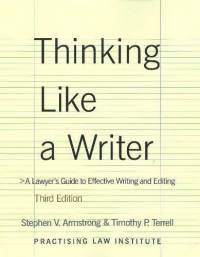 The Brooklyn Law School Library has in its reserve collection
 In addition to
  The
The 
 Those writing in international law can consult the LibGuide
Last year, the Brooklyn Law Library added to its collection The Lawyer’s Guide to Writing Well (3d ed.) by Tom Goldstein and Jethro K. Lieberman (Call No. KF250. G65 2016). This critically acclaimed book “should be in the office of every lawyer” says William Safire of the New York Times. In its 286 pages, the authors demystify legal writing, outline the causes and consequences of poor writing, and prescribe easy-to-apply remedies to improve it. Reflecting changes in law practice over the past decade, this revised edition includes new sections around communicating digitally, getting to the point, and writing persuasively. It also provides an editing checklist, editing exercises with a suggested revision key, usage notes that address common errors, and reference works to further aid your writing. This guide is an invaluable tool for practicing lawyers and law students.
Chapters are: Why Lawyers Write Poorly — Does bad writing really matter? — Don’t make it like it was — The Practice of Writing — Ten steps to writing it down — Of dawdlers and scrawlers, pacers and plungers: getting started and overcoming blocks — The technology of getting it down: from quill pens to computers — Lawyers as publishers: words are your product — Getting to the Point — Writing persuasively for your audience: tell your audience the point — Writing the lead — Revising for Clarity and Luster — Form, structure, and organization — Wrong words, long sentences, and other mister meaners — Revising your prose — Making your writing memorable.
Books and essays about the art of writing well go back a long time. In 1947, English novelist, essayist, journalist, and critic George Orwell (born Eric Arthur Blair 1903 – 1950) and author of Animal Farm: A Fairy Story and Nineteen Eighty-Four, his most famous works, wrote an essay titled Politics and the English Language. Although the essay addresses the decline of language in political and economic contexts, Orwell, in the closing paragraphs, offers rules that cover effective legal writing as well. They are:
Commenting on blog posts requires an account.
Login is required to interact with this comment. Please and try again.
If you do not have an account, Register Now.