The Brooklyn Law School logo

BLS Library Blog

Showing 10 of 59 Results

04/11/2018
profile-icon Kathleen Darvil

A close-up of a stamp

Description automatically generated

The raid of President Trump’s personal attorney’s law office raises questions of how the F.B.I and federal prosecutors will safeguard documents that fall under the attorney-client privilege.  If you want to learn about the privilege, the library has several recently published sources to help you understand this central component of the attorney-client relationship.

Vincent Walkowiak & Oscar Rey Rodriguez, The Attorney-Client Privilege in Civil Litigation (6th ed. 2015).

This edition provides updated and expanded treatment of the attorney-client privilege and the work-product doctrine. New topics include application of the revised federal rules and case law governing waiver of privilege, the pitfalls of privilege preservation and waiver in bankruptcy proceedings and international contexts, and the intersection of privilege and attorney/client-hired media consultants.

David Lender, Privilege Issues in the Age of Electronic Discovery (BNA 2011).

Also available on Bloomberg Law.

This BNA portfolio explains how the nature and scope of the attorney-client privilege and work-product protection have been impacted by technology, generally, and electronic discovery in particular.

The portfolio begins with an introduction to the relevant privileges and protections, each of which developed prior to the computer age. The portfolio then describes in detail the far-reaching implications of technology on these fundamental tenets of the legal profession. Included in this discussion is an examination of privilege as it relates to the reasonable expectation of privacy and related ethical issues, waiver, privilege logs, the crime-fraud exception, experts, litigation hold notices, and litigation support databases.

Paul R. Rice, Attorney-Client Privilege in the United States (2011).

This two-volume treatise, available on Westlaw, provides essential information for advising clients on protecting the confidentiality of their internal communications. This database provides instant access to: the history, theory, and purpose of the privilege, a comprehensive examination of court interpretations, the procedures for asserting, establishing, resolving, and appealing privilege matters.

Jessica Kunz, Attorney-Client Privilege & Work Product Doctrine: Corporate Applications (BNA 2009).

This online treatise is organized into three parts. Part One, Introduction, traces the historical development of the attorney-client privilege and the work-product doctrine and explains in detail their purposes, availability to corporations, scope of protection, and relation to each other. Part Two, Attorney-Client Privilege, covers a myriad of topics, including client identity, waiver of privilege, exceptions to the privilege, choice of law, shareholder suits and special committees, among many others. Part Three, Work-Product Doctrine, covers such topics as scope, waiver issues, and exceptions to the doctrine, among many others.

This post has no comments.
12/15/2017
profile-icon Loreen Peritz

Image result for holiday shopping

The authors of the blog, Above the Law, have published their annual Best Holiday Gifts For Lawyers.  The suggested gifts range from the practical, like a subscription to the meal service, Blue Apron, to the fanciful, like the Disappearing Civil Liberties coffee mug.

Happy Shopping!

This post has no comments.
09/08/2017
profile-icon BLS Reference Desk

Beyond Legal Reasoning

The Brooklyn Law School Library New Books List for September is out with 32 print titles and 9 eBook titles. One of the items is Beyond Legal Reasoning: A Critique of Pure Lawyering (Call No. K212 .L57 2017) by Professor Jeffrey Lipshaw of Suffolk University Law School. In the book, the author addresses the concept of learning to “think like a lawyer,” one of the corners of legal education in the US and beyond. In his book, Professor Lipshaw provides a critique of the traditional views of “thinking like a lawyer” or “pure lawyering,” aimed at lawyers, law professors, and students who want to understand lawyering beyond the traditional warrior metaphor. Drawing examples from the intersection of real world law and business issues, the book argues the “pure lawyering” of traditional legal education is agnostic to either truth or moral value of outcomes. It offers a critique of pure lawyering’s potential both for illusions of certainty and cynical instrumentalism, and the consequences of both when lawyers are called on as dealmakers, policymakers, and counsellors.

This book offers a way of getting beyond merely how to think like a lawyer. It combines legal theory, philosophy of knowledge, and doctrine with an appreciation of real-life judgment calls that multi-disciplinary lawyers are called upon to make. The book is of interest to scholars of legal education, legal language, and reasoning as well as professors who teach both doctrine and thinking and writing skills to 1Ls and for anyone interested in seeking a perspective on “thinking like a lawyer” beyond the litigation field. Law students considering a career in transactional law are well advised to read it right away. Law students should read the book after the 1L year. Lawyers and academics should read it at any time, and judges right away.

Free access to the book is available here.

This post has no comments.
08/04/2017
profile-icon BLS Reference Desk

As students prepare to resume their legal studies and begin their scholarship for another semester under the tutelage of their BLS professors, I want to recommend a new book that discusses the contributions to the legal profession of a group of selected scholars and professors over three centuries.

A book cover of a law professor

Description automatically generated

The book is: Three Centuries of Shaping American Law by Stephen B. Presser, West Academic Publishing, St. Paul, MN, 2017.

The author says that he hopes this volume will serve as an “introduction to the law for prospective lawyers and beginning students in J.D. and LL.M. programs.”

The book is composed of short biographical essays covering a representative number of legal scholars who have also been law professors.  The work explores the nature of the American legal system, and how American law professors have had a profound effect on American law and life.

While the author covers law professors from William Blackstone to Barack Obama, here are a few of the giants of those that are included:

  • William Blackstone –  It has been written that the groundwork for U.S. jurisprudence can be found in the multi-volume work of Sir William Blackstone, a noted English judge, scholar and politician of the 18th century.  The work, entitled Commentaries on the Laws of England...in four books, provided a systematic analysis of English common law.  These commentaries were based on Blackstone’s lectures at Oxford University.
  • Christopher Columbus Langdell was Dean of Harvard Law School from 1870 to 1895 and is often called the “father of American legal education” because it was he who established the case method of instruction where students read and studied appellate court decisions while teaching at Harvard, incorporating it with the Socratic method where students were asked questions about the cases and they were to draw conclusions in order to engage in a dialogue between faculty and students.
  • Joseph Story served on the United States Supreme Court from 1811 to 1845, taught at Harvard Law School while serving on the Court, and wrote a comprehensive treatise on the U.S. Constitution entitled Commentaries on the Constitution of the United States
  • Karl Llewellyn was a distinguished legal scholar, who was called one of the most important legal thinkers of the early twentieth century and whose works have been cited many times. He was a proponent of legal realism who felt that legal opinions should be examined to see how judges were influenced by outside factors.  He wrote a book which served as an introduction to the study of law for first year students entitled:  The Bramble Bush; Some Lectures on Law and Its Study . 
  • John Henry Wigmore was an important legal scholar and professor, who while attending Harvard Law School, helped found the Harvard Law Review.  He taught for many years at Northwestern University Law School and his most important contribution to legal scholarship was his Treatise on the Anglo-American System of Evidence in Trials at Common Law.
  • Barack Obama, law professor at the University of Chicago, United States Senator from Illinois and President of the United States.

This post has no comments.
12/02/2016
profile-icon BLS Reference Desk

An article in a recent issue of The New Yorker features Brooklyn Law School alum Carrie Goldberg, Class of 2007, as a leader in the crusade against non-consensual pornography, also called “revenge porn.” A founder of the Brooklyn firm C.A. Goldberg, PLLC, she is at the forefront of a movement to use both new and existing laws to penalize individuals who share compromising photos and videos of others without their consent. From her practice not far from the Law School, Goldberg assists clients like Norma, whose story of harassment by a former partner who shared explicit photos of her on the internet is chronicled in the article. Author Margaret Talbot calls Goldberg “a new kind of privacy champion,” detailing Goldberg’s many accomplishments in this new field, from successful prosecutions of revenge porn perpetrators to a major role in an activist campaign to get social media platforms and search engines to ban revenge porn. The article notes Goldberg’s recent hire of a fellow Brooklyn Law School graduate, Lindsay Lieberman, Class of 2011. Earlier this year, Goldberg spoke at the White House to members of the Task Force to Protect Students from Sexual Assault about sexual assault in k-12 with the crew at SurvJustice, a national not-for-profit organization that increases the prospect of justice for survivors by holding both perpetrators and enablers of sexual violence accountable.

hate crimesThe Brooklyn Law School Library collection included Hate Crimes in Cyberspace by Danielle Keats Citron (Call No. HV6773.15.C92 C57 2014). The book covers the subject of trolling or aggressive, foul-mouthed posts designed to elicit angry responses in a site’s comments. The author exposes the startling extent of personal cyber-attacks and proposes practical, lawful ways to prevent and punish online harassment. Persistent online attacks disproportionately target women and frequently include detailed fantasies of rape as well as reputation-ruining lies and sexually explicit photographs. And if dealing with a single attacker’s “revenge porn” were not enough, harassing posts that make their way onto social media sites often feed on one another, turning lone instigators into cyber-mobs. The book rejects the view of the Internet as an anarchic Wild West, where those who venture online must be thick-skinned enough to endure all manner of verbal assault in the name of free speech protection, no matter how distasteful or abusive. Cyber-harassment is a matter of civil rights law, Citron contends, and legal precedents as well as social norms of decency and civility must be leveraged to stop it.

This post has no comments.

robot law An intriguing new title in the Brooklyn Law School Library collection is Robot Law by Law Professors Ryan Calo, A. Michael Froomkin, and Ian Kerr (K564.C6 R63 2016). The 402 page book brings together research on robotics law and policy written by scholars from law, engineering, computer science and philosophy on topics such as liability, warfare, domestic law enforcement, personhood, and other cutting-edge issues in robotics and artificial intelligence. The book is an in-depth look at an area of law that is growing in importance. Like the Internet before it, robotics is a technology that will transform the social and economic landscape of legal research and practice. Robot Law looks at the increasing sophistication of robots and their widespread use in hospitals, public spaces, and battlefields requiring rethinking philosophical and public policy issues, including how AI interacts with existing legal regimes and changes in policy and in law.

Whether artificial intelligence will one day displace human lawyers has become so important that, this past April, Vanderbilt Law School hosted the first legal conference on the topic, “Watson, Esq.: Will Your Next Lawyer Be a Machine”. Speakers included Richard Susskind, author of “Tomorrow’s Lawyers” and “The Future of the Professions,” and Andrew Arruda, whose firm ROSS Intelligence helped build ROSS (which does not stand for anything), the world’s first artificially intelligent attorney, on top of IBM Watson.  Designed by students at the  University of Toronto, ROSS is meant for use by lawyers. Asking it a legal question will yeild an “instant answer with citations and suggested readings from a variety of content sources.” ROSS reads and understands language, postulates hypotheses when asked questions, researches, and then generates responses (along with references and citations) to back up its conclusions. It learns from experience, gaining speed and knowledge the more users interact with it.

A recent Washington Post news piece reports that the law firm Baker & Hostetler announced that it is employing ROSS to handle its bankruptcy practice of nearly 50 lawyers. CEO and co-founder Andrew Arruda, says that other firms have also signed licenses with ROSS and expects more announcements soon. Although still in the prototype stage, ROSS shows great promise as an innovative legal research tool. Tasks that ROSS can do include:

  1. Giving relevant answers – not a list of results – to natural language questions;
  2. Learning from user’s questions – it learns and improves the more it is used;
  3. Providing a consistent, easy-to-use experience on any devices used to access it.


At this week’s CALIcon 16 being held at the Georgia State University College of Law, BLS Reference Librarian Harold O’Grady and Technology Educator Lloyd Carew-Reid will present a session, The Future of Artificial Intelligence in Legal Education, Research and Practice. Also participating will be:

  • Professor Heidi Brown (Director of Legal Writing at Brooklyn Law School);
  • Mikhail Jacob (a Ph.D. student at the Georgia Institute of Technology); and
  • Dr. Mark Riedl (an Associate Professor in the Georgia Tech School of Interactive Computing and Director of the Entertainment Intelligence Lab).

This post has no comments.
05/17/2016
profile-icon BLS Reference Desk

This week the NY Times published an intriguing article on the resolution of a four year legal battle over ownership of personal property, silver Torah ornaments called rimonim, used in worship services in the nation’s oldest existing synagogue, Touro Synagogue in Newport, RI.  Judge John J. McConnell, Jr of the US District Court for the District of Rhode Island issued a 106 page opinion in favor of Congregation Jeshuat Israel, worshippers at the 252-year-old Touro Synagogue in Newport who have been battling Shearith Israel in New York City for control of the temple and the right to sell a pair of historic ceremonial ornaments worth millions of dollars. The suite was originally filed in Rhode Island Superior Court, Newport County, in November 2012 and later removed to federal court. Judge McConnell’s opinion begins;

Bricks and mortar of a temple, and silver and gold of religious ornaments, may appear to be at the center of the dispute between the two parties in this case, but such a conclusion would be myopic. The central issue here is the legacy of some of the earliest Jewish settlers in North America, who desired to make Newport a permanent haven for public Jewish worship. Fidelity to their purpose guides the Court in resolving the matters now before it.

torah bellsTouro Synagogue was established in 1763. During and after the Revolutionary War, most of the Newport’s Jewish residents moved away, many of them to New York. By the 1820s, no Jews were left in Newport, and Congregation Shearith Israel became Touro’s trustee. The two congregations began to feud when the Touro congregation tried in 2012 to sell the bells made by a noted 18th-century silversmith, Myer Myers to the Museum of Fine Arts in Boston for $7.4 million to improve the synagogue’s fiscal health. The New York congregation protested and Congregation Jeshuat Israel filed the lawsuit. Since, the museum withdrew the offer leaving the dispute to be decided by the federal court.

Touro Synagogue has become a national historic site drawing visitors from all over the world every year. Its most famous visitor was the nation’s first president George Washington who in 1790, stopped at Touro. After his visit he sent the congregants a letter saying the government of the United States “gives to bigotry no sanction, to persecution no assistance.” It is considered an important pledge of the new nation’s commitment to religious liberty. A search of Brooklyn Law School Library’s ProQuest Congressional database, available to members of the BLS community, will lead to 107 H. Con. Res. 62 dated July 17, 2001. The title of the resolution is “Expressing the Sense of Congress That the George Washington Letter to Touro Synagogue in Newport, Rhode Island, Which Is on Display at the B’nai B’rith Klutznick National Jewish Museum in Washington, DC, Is One of the Most Significant Early Statements Buttressing the Nascent American Constitutional Guarantee of Religious Freedom”.

This post has no comments.
05/14/2015
profile-icon Loreen Peritz

A blue and white logo

AI-generated content may be incorrect. All BLS students are eligible to take advantage of the American Bar Association’s offer of free membership to students enrolled at ABA approved law schools.   With your free membership, you can: access the ABA Job Board, subscribe to ABA publications, participate in ABA career webinars, and take advantage of ABA discounts on a wide variety of products and services.

For more information or to enroll online, visit www.americanbar.org/abalawstudents or call  the ABA Service Center at 800-285-2221.

This post has no comments.
12/06/2014
profile-icon BLS Reference Desk

Records

Students at Brooklyn Law School are focused on their upcoming exams. Soon enough they will be in the legal work force and will need to exercise best practices in records management. The BLS Library has in its most recent New Books List a useful resource on that very topic: The Lawyer’s Guide to Records Management and Retention by George C. Cunningham (Call # KF320.R42 C86 2014). Although most lawyers know how important timely access to the right information is to their work, many have little knowledge in filing systems, databases and other information management tools. This book is designed to help lawyers develop an effective strategy for coping with the daily barrage of email, data and documents.

The second edition of this ABA Book Publishing guide is a comprehensive 442 page resource that helps lawyers create and maintain an effective and well-organized records management and retention system at their firms, including administration and storage of client files and administrative records in all types of media. It shows how to reduce costs, access information quickly and accurately, and use staff and technology resources more economically and efficiently. Special sections address issues facing new lawyers, solo practitioners, and small firms. The accompanying CD-ROM features useful checklists, forms, guidelines, and more such as how to:

  • Understand the practical and ethical reasons for adopting a workable strategy for records information management and information governance;
  • Gain an understanding of the records and information management tools currently available;
  • Devise solutions and strategies to manage a law office’s records without taking up too much time;
  • Group paper documents and e-mail in order easily to locate them later;
  • Determine what you must keep, what you should keep, and for how long you should keep them;
  • Find the best software and electronic records management tools; and
  • Develop strategies that will please both technophobes and technophiles.

This post has no comments.
11/15/2014
profile-icon BLS Reference Desk

On Wednesday, November 19, 2014, from 9am to 3pm, Brooklyn Law School will host, in its Subotnick Center on the 10th Floor, the second annual Small Business Legal Academy (SBLA) bringing together corporate law firms, civil legal services organizations, financial services consultants, City and State agencies and other service providers to strengthen New York City’s vibrant and diverse small-business community. During the one-day event, small businesses in need of consulting services will be able to learn about starting and managing a business or nonprofit, and uncover solutions to the legal and financial challenges facing their organizations. The SBLA is a comprehensive one-stop shop for small business. The first annual event was held last year at Harlem’s Apollo Theater, where over 200 entrepreneurs received free legal counsel from volunteer attorneys representing nearly 35 top NYC law firms.

This year’s SBLA is expecting nearly 100 attorneys to volunteer in addition to the legal service providers, financial consultants, and City and State agencies that will be providing free services to the fledgling businesses and aspiring entrepreneurs who may otherwise not have the means to receive expert counsel. SBLA is sponsored by the Association of Pro Bono Counsel (APBCo) together with nearly a dozen non-profit public interest law firms and Brooklyn Law School’s Center for Urban Business Entrepreneurship (CUBE). Registration is available at this link and walk-ins are welcome.

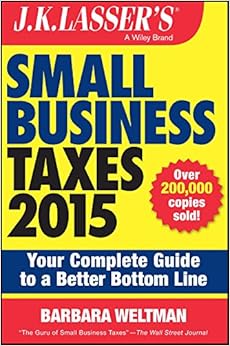
LasserThe BLS Library recently added to its collection an E-book titled J.K. Lasser’s Small Business Taxes 2015: Your Complete Guide to a Better Bottom Line. Fully updated for 2014 tax returns and 2015 tax planning, this detailed guide provides concise, plain-English explanations of tax laws tailored to business owners who are experts in their field—not in taxes. A complete listing of available business expense deductions includes comprehensive information on dollar limits and record-keeping requirements, allowing business owners to quickly recognize the deductions for which they qualify and make tax-savvy business decisions year round. Sample forms and checklists allow small business owners to organize their preparation, and clear instruction on tax form navigation helps them get it right the first time. Small business owners have a full plate. Indeed, just keeping the business going is a more than full-time job. But when tax time rolls around, they still need to file—correctly, on time, and without making errors or leaving money on the table. This book simplifies the process, breaking down tax laws and the filing process. It has expert insight on every step of the process, from organizing paperwork to sending the check.

This post has no comments.
Field is required.