The Brooklyn Law School logo

BLS Library Blog

Showing 10 of 50 Results

10/15/2020
profile-icon Loreen Peritz

If you are asked to draft an agreement (a.k.a contract), there are some great tools to help you get started.  Each of Lexis, Westlaw, and Bloomberg have specialized databases dedicated to corporate lawyers.  In these databases you will find millions of sample agreements that you can use to draft your own agreement. 

On Westlaw, first select Practical Law from the Westlaw homepage:

A screenshot of a computer

Description automatically generated

Then, select your practice area (e.g. if you are drafting an employment agreement, select Labor & Employment):

A screenshot of a computer

Description automatically generated

Now, select from Sample Documents, Sample Clauses, and other resources to help you draft your agreement (such as Practice Notes, Checklists, Toolkits, and more):

A screenshot of a website

Description automatically generated

Lexis users can use Practical Guidance to find similar resources:

A screenshot of a computer

Description automatically generated

Bloomberg Law aficionados have plenty of corporate drafting tools to choose from but probably the best place to start when drafting a corporate agreement is Practical Guidance:

A screenshot of a web page

Description automatically generated

If you have any questions about using these corporate transactional resources, or would like to discuss search strategies with a reference librarian, contact the reference desk.  You can reach us by email at askthelibrary@brooklaw.edu, by chat from the library homepage, or drop in during our Zoom Office Hours (M-W-F: 1-3pm; Tu-Th: 3-5pm).


This post has no comments.
02/02/2018
profile-icon BLS Reference Desk

Delaware

Among the February 1, 2017 New Books List at Brooklyn Law School Library, which has 76 print titles and 55 e-book titles, is Can Delaware be Dethroned? Evaluating Delaware’s Dominance of Corporate Law (edited by, among others, UCLA Law Professors Stephen Bainbridge and James Park, formerly of Brooklyn Law School). At 266 pages, this book is aimed at corporate lawyers, academics, regulators, and judges. The  practitioners and academics who have contributed essays to this volume provide sophisticated analyses of what makes Delaware the leading source of corporate law and describe the challenges that Delaware faces from other states and the federal government. Bainbridge states that Delaware law is neither pro-management nor pro-shareholder yet manages to retain its dominant position largely because of its Courts, particularly its Court of Chancery, devoted largely to corporate law cases. Businesses thrive best in an environment of predictability and certainty.

Delaware is the state of incorporation for almost two-thirds of the Fortune 500 companies, as well as more than half of all companies listed on the New York Stock Exchange, NASDAQ, and other major stock exchanges. In recent years, however, some observers have suggested that Delaware’s competitive position is eroding. Other states have long tried to chip away at Delaware’s position, and recent Delaware legal developments may have strengthened the case for incorporating outside Delaware. The federal government increasingly is preempting corporate governance law. The contributors to this volume are leading academics and practitioners with decades of experience in Delaware corporate law. They bring together perspectives that collectively provide the reader with a broad understanding of how Delaware achieved its dominant position and the threats it faces.

Interestingly, an article titled Should Your Company Incorporate in Delaware? Not So Fast by Alan M. Dershowitz, raises a huge question for Delaware’s supremacy as America’s capital of incorporation. The case involves a ruling in Shawe v. Elting where the Chancery Court ordered the forced sale of a privately-held, thriving corporation over the strenuous objections of shareholders who own half of the company. The court ruled that Shawe and Elting were “hopelessly deadlocked” despite the company’s impressive record of achieving 97 consecutive quarters of profitable growth. The facts of the case show unprecedented evidence of a lengthy and seriously dysfunctional relationship making for interesting reading and showing that corporate law can be far from dull.

This post has no comments.
01/09/2018
profile-icon BLS Reference Desk

abacus

If you want a tale of a bank charged with falsifying loan-application documents by inflating borrower assets, incomes, and job titles, and “fraudulent mortgages” being sold to Fannie Mae, the federally backed mortgage company, see the documentary Abacus: Small Enough to Jail. It is a 2016 American documentary by Steve James that centers on Abacus Federal Savings Bank, a family-owned community bank situated in Manhattan’s Chinatown. It was deemed “small enough to jail” rather than “too big to fail” and became the only financial institution to face criminal charges following the subprime mortgage crisis when District Attorney Cyrus R. Vance Jr. announced a 184-count indictment against the bank and 19 of its current and former employees accusing them of conspiracy, grand larceny, falsifying business records, and residential mortgage fraud.  Ten Abacus employees accepted plea deals in exchange for testifying against the bank, and Ken Yu became the star witness. The film debuted at the 2016 Toronto International Film Festival winning first runner-up for the People’s Choice Award in the documentary category.

The principal behind Abacus is Thomas Sung (Brooklyn Law School, Class of 1964). Born in Shanghai, he emigrated at age 16 to New York in 1952. His family was processed through Ellis Island and detained for three months before they could settle in New York. That left Sung determined to learn the law and help other immigrants. After earning a bachelor’s and master’s degree from the University of Florida in agricultural economics, he worked as an analyst for several New York companies while attending Brooklyn Law School at night. He began practicing law in 1964 and worked pro bono for the Chinese community. Sung founded Abacus in 1984 to serve the immigrant population, which had grown in New York. “We take people from illegal immigrant status, to legal status, to prosperous business people and homeowners,” said Sung.

Whether the government was giving a pass to big banks and picking on a small one, perhaps with a tinge of racism in its motives, is a question. Vance called the accusations of cultural bias “entirely misplaced and entirely wrong” adding “I felt that our handling of the bank was consistent with how we would have handled the bank if we were investigating a bank that serviced a South American community or the Indian community.” The movie shows its affection for the Sung family, which was equipped professionally, if not financially, for an expensive legal battle. Three daughters were trained as lawyers, including Jill Sung, the bank’s chief executive, Vera Sung, a director of the bank, who worked for the Brooklyn DA’s office for two-and-a-half years, and Chantarelle Sung, who worked in the Manhattan DA’s office for seven years leaving when Vance took over and started prosecuting her family’s bank. The NY Times criticized the filing as a dubious mortgage fraud case against Abacus, which was tatally exonerated at trial. Local newspapers put the news of the bank’s acquittal on their front pages. There was criticism from Bennett L. Gershman, a former prosecutor at the Manhattan D.A.’s office now a professor at Pace Law School, who said “This case just involved a terrible example of poor judgment by the prosecutor.” He characterized it as a “David and Goliath situation,” echoing a widespread view that it was convenient to make an example of a small bank like Abacus.

This post has no comments.

Amazon cover image

The Brooklyn Law School Library has placed an order for The Chickenshit Club: Why the Justice Department Fails to Prosecute Executives (Call No. KF9351.E37 2017) by Pulitzer Prize–winning journalist Jesse Eisinger. The book is a blistering account of corporate greed and impunity, and the reckless, often anemic response from the Department of Justice. The book asks why no bankers were put in prison after the financial crisis of 2008 and why CEOs seem to commit wrongdoing with impunity. The problem goes beyond banks deemed “Too Big to Fail” to almost every large corporation in America—to pharmaceutical companies and auto manufacturers and beyond. Eisinger starts his account with a story that gives the book its title. In the early 2000s, James Comey was the U.S. Attorney in charge of the most important local branch of the Department of Justice, the Southern District of New York, whose jurisdiction covers Wall Street. At Comey’s first meeting with the prosecutors on his team, he asked who among them had never lost a case. Many proudly raised their hands. “My friends and I have a name for you guys,” he said. “You are members of what we like to call the Chickenshit Club.” Comey was challenging them to be aggressive, to risk losing. A character-driven narrative, the book tells the story from inside the Department of Justice. The complex and richly reported story spans the last decade and a half of prosecutorial fiascos, corporate lobbying, trial losses, and culture shifts that have stripped the government of the will and ability to prosecute top corporate executives.

The book begins in the 1970s, when the government pioneered the notion that top corporate executives, not just seedy crooks, could commit heinous crimes and go to prison. The book travels to trading desks on Wall Street, to corporate boardrooms and the offices of prosecutors and F.B.I agents. These revealing looks provide context for the evolution of the Justice Department’s approach to pursuing corporate criminals through the early aughts and into the Justice Department of today. Exposing one of the most important scandals of our time, The Chickenshit Club provides a clear, detailed explanation as to how our Justice Department has come to avoid, bungle, and mismanage the fight to bring these alleged criminals to justice.

A more extensive book review by Thomas Fox can be found at JD Supra at this link. Fox also conducted an interview of Jesse Eisinger and Paul Pelletier, a key source for the book, at this link.

On Thursday, November 2, 2017, Cardozo School of Law will host a free event where the author will discuss his book. It will be held from 6:00 pm – 8:00 pm in the Third-Floor Lounge at 55 5th Avenue, New York, NY. Register at this link if you want to attend.

This post has no comments.
02/27/2016
profile-icon BLS Reference Desk

Securities Arbitration

Brooklyn Law School Library has many titles on securities arbitration. The Practitioner’s Guide to Securities Arbitration by Jason R. Doss and Richard S. Frankowski (Call No. KF1070.5 .D67 2013), published by the American Bar Association, is the most recent in the collection. The book is easy to understand with the knowledge of the authors making it useful for law students and attorneys planning on practicing securities law. The book shows how customer disputes are litigated in the Financial Industry Regulatory Authority (FINRA) arbitration process. Investors who are victims of bad investment advice or financial fraud often do not understand how their money is invested or the associated risks of those investments. Surprisingly few cases are filed against the securities industry despite widespread investment abuses. The book discusses practices and procedures including defenses and gives information for mastering tactics used in FINRA arbitration. Sections include: Defining the players in a securities arbitration case; Time limitations and other deadlines; Common claims; Bringing and defending claims, arbitrators and motion practice; Discovery and hearing practice and procedures.

Arbitration of legal disputes has advantages and disadvantages. Proponents argue that it is a cheaper than litigation to resolve disputes. Arbitrators do not have big caseloads, resulting in quicker final decisions. They are selected by agreement of both parties, so that in many cases, no one party controls who the arbitrator will be. Appealing arbitration rulings is difficult, even if an arbitrator makes glaring mistakes. This finality can be a positive factor ending a dispute so the parties can move on. Arbitration eliminates time-consuming and expensive tools of litigation. Arbitration hearings do not take place in open court and transcripts are not part of the public record. This can be very valuable for parties in some cases.

Critics cite the cost factor can as a “con” as arbitration does not always reduce costs. Consumers question the fairness of arbitration over a minor issue that could be resolved in small claims court. Companies favoring arbitration are often familiar with specific arbitrators and the process in general. Arbitration hearings are not always faster than litigation. Depending on the terms in a contract, the location of the hearing may be inconvenient to the average consumer, raising costs and time off from work. Finality of arbitration rulings, even if an arbitrator has made a blatant mistake, can result in an unfair result with only a small chance that a court can correct it. With no jury, consumers see arbitration as unfair, leaving matters to an arbitrator, who plays the role of both judge and jury.

Another disadvantage is discussed in a Law360 article, FINRA Arbitration Beset with Unpaid Awards, Report Says, citing a recent report by the Public Investors Arbitration Bar Association (PAIBA) saying that nearly one third of awards won by investors in arbitration go unpaid by brokers. PAIBA is calling on FINRA to create a national recovery pool. The report strongly criticized FINRA’s lack of data on award payments, suggesting the self-regulatory organization should do more to protect investors. For the year 2013, the PIABA report said there were 75 awards issued in 2013 that went unpaid. The total awards to investors was $256,749,289, with $62.1 million of unpaid awards comprising 24.2 percent of the total. The reports asks FINRA to require firms to obtain insurance and meet more stringent capital requirements and have a recovery pool to pay investors if firms dodge payment which It said would be the “best, least expensive option” to satisfy unpaid awards for investors. The report concludes “Allowing one in three awards to go unpaid is unconscionable. FINRA’s cures: barring from the industry those who fail to pay awards, and notifying claimants that they can pursue actions in court against former FINRA members, have failed to cure, or put a meaningful dent in, the problem. Steps must therefore be taken to put forth a new division of FINRA to craft and administer a National Recovery Pool.”

This post has no comments.
01/19/2016
profile-icon BLS Reference Desk

A Wall Street Journal article reports that the U.S. Supreme Court has granted a writ of certiorari to review the ruling by Judge Jed Rakoff in the case of Salman v. US, 792 F.3d 1087 (9th Cir. 2015). Judge Rakoff, who usually sits on bench of the Southern District of New York, served as a visiting judge temporarily assigned to the Ninth Circuit and wrote the opinion in Salman, which disagreed with last year’s Second Circuit ruling in US v. Newman, 773 F. 3d 438 (2d Cir. 2014). The Newman decision overturned the insider trading convictions of former hedge-fund traders articulating a narrower definition of the crime. The issue in Salman is what constitutes insider trading in a case involving an Illinois businessman’s appeal of his conviction for making $1.2 million trading on tips about mergers from his brother-in-law, a Citigroup banker. With the grant of certiorari, the Supreme Court may now decide a key question in insider trading cases, namely what benefits corporate insiders need to receive for any information they disclose to traders to be illegal. The Justice Department warned that overturning the convictions in Newman prosecution could hinder the government’s campaign to curb insider trading on Wall Street. The Supreme Court denied certiorari in Newman.

Salman was convicted of 2013 of making investments based on confidential information he received from a family member who worked in the health care investment banking group at Citigroup Global Markets in NY. Co-defendants pleaded guilty in 2011 and were sentenced to probation. Salman was sentenced to 36 months in federal prison and ordered to pay more than $738,000 in restitution. His appeal cites the Second Circuit decision in Newman where the court ruled that prosecutors must prove that a defendant had direct knowledge of the leaker, realize that a breach of fiduciary duty occurred and know that the leaker received a personal benefit in exchange for the information. In Newman, the Second Circuit held that the evidence was insufficient to establish that the tippers received a personal benefit in exchange for the tip. The court also explained that there needed to be “proof of a meaningfully close personal relationship that generates an exchange that is objective, consequential, and represents at least a potential gain of a pecuniary or similarly valuable nature.” In other words,  the relationship should suggest a quid pro quo from the recipient.

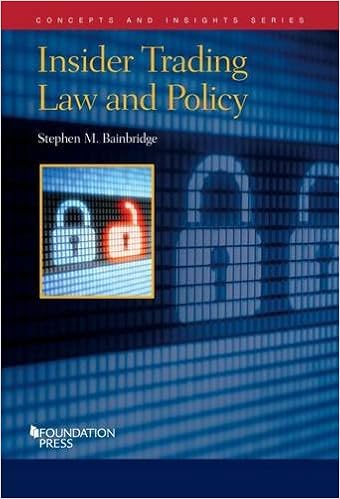
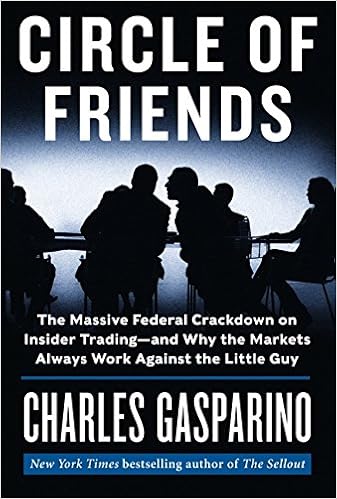
InsiderBrooklyn Law School Library has an extensive collection of material on  insider trading, the latest of which is Insider Trading Law and Policy by Stephen Bainbridge (Call # KF1073.I5 B35 2014). The textbook is for use in law school classes on insider trading, securities regulation, or business associations. It offers a clear and direct exposition of the law and policy concerns raised by this important and hcircleigh-profile area of the law. The author provides sufficient detail for a complete understanding of the subject without getting bogged down in minutiae. A second item in the BLS Library collection is  worth reading: Circle of Friends: The Massive Federal Crackdown on Insider Trading—and Why the Markets Always Work Against the Little Guy by Charles Gasparino (Call # HG4928.5 .G38 2013). It is a riveting work of narrative nonfiction, as engrossing and explosive as fictional thrillers of the finest magnitude and should serve as a wake-up call to the investing public.
This post has no comments.

The Brooklyn Law School Library New Books List for November 11, 2015 has 88 items with 65 print volumes and 23 e-books. The entries cover a wide range of subjects from Lotteries (American Sweepstakes: How One Small State Bucked the Church, the Feds, and the Mob to Usher in the Lottery Age) to Discrimination in Criminal Justice (Crime, Inequality and Power) to Prostitution (Getting Screwed: Sex Workers and the Law) to Freedom of Expression (Lessons in Censorship: How Schools and Courts Subvert Students’ First Amendment Rights) to Race Relations (Liberalizing Lynching: Building a New Racialized State).

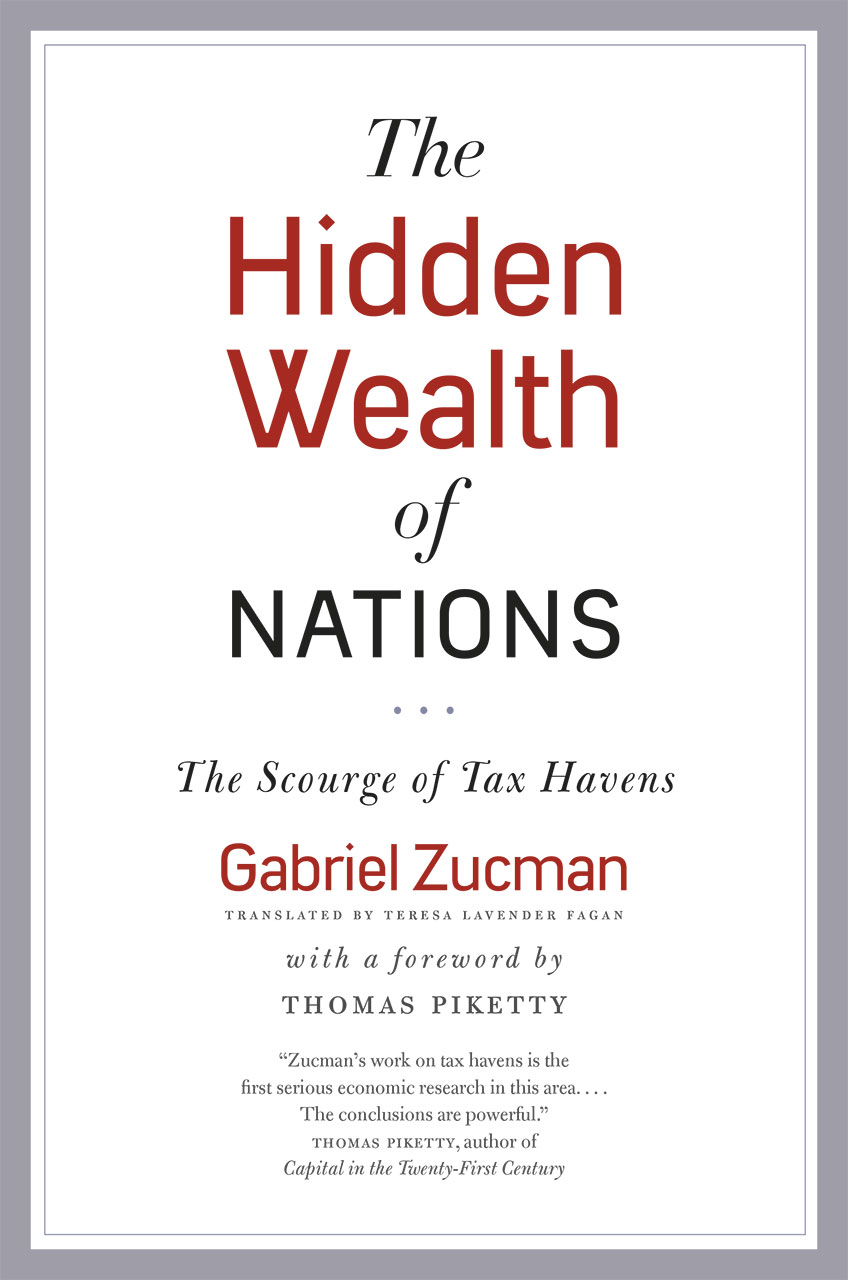
Hidden WealthAlso included is The Hidden Wealth of Nations: The Scourge of Tax Havens (Call # HJ2336 .Z8313 2015) by Gabriel Zucman (translated by Teresa Lavender Fagan from the French original Richesse Cachée des Nations and with a foreword by noted economist Thomas Piketty, author of Capital in the Twenty-First Century). This slim 129 page book claims to be the “the first serious economic research” into tax haven activity and an important work that anyone interested in tax havens, social justice, defeating inequality and delivering tax reform should read. The author is a French economist based at the University of California, Berkeley, and part of a network of doing valuable work on inequality, wealth, tax and the difficulties caused by the uneven distribution of capital resources in society. Although the book fails to define what a tax haven is, it does set out a campaign on tax havens in the second half of this book which makes a lot of sense. The book recommends the creation of a global register of financial asset wealth holding. This suggestion could be a practical and necessary step in the assembly of the data needed for the global wealth tax proposed in his book.

Whether country-by-country reporting can be an effective foundation for a taxation of multinational corporations is an open question. Country-by-country reporting may well permit tax authorities to determine what proportion of the sales, employees and assets of a multinational corporation are located in its jurisdiction. Similarly, if a global register of wealth could be established, the data needed to tax global wealth would have been created. The book is worth reading of its vision of an activist committed to promoting a new and radical solution that he has identified. Not many academics take on the role of the public intellectual who demands action to address a problem that they have identified. This one does.

Price We PayReaders interested on this topic may want to view The Price We Pay, a documentary inspired by another French book La Crise Fiscale qui Vient. Director Harold Crooks looks at the dirty world of corporate malfeasance and the dark history and dire present-day reality of big-business tax avoidance, which has seen multinationals depriving governments of trillions of dollars in tax revenues by harboring profits in offshore havens. Tax havens, originally created by London bankers in the 50s, today put over half the world’s stock of money beyond reach of public treasuries. Nation states are being reshaped by this offshoring of the world’s wealth. Tax avoidance by big corporations and the wealthy is paving the way to historic levels of inequality and placing the tax burden on the middle class and the poor. Crusading journalists, tax justice campaigners and former finance and technology industry insiders speak frankly about the  trends carrying the Western world to an unsustainable future.

This post has no comments.
11/04/2013
profile-icon BLS Reference Desk

This month, Brooklyn Law School will be launching the Center for Urban Business Entrepreneurship (CUBE). This new initiative will serve as a hub for exploring legal issues surrounding entrepreneurship, and for providing effective legal representation and support for new businesses. It will offer training for the next generation of business lawyers in technology, real estate, media, creative arts, energy, or any other area of enterprise with tools to support and help build the start-up successes of tomorrow.

BLS Associate Professor of Clinical Law Jonathan Askin is the  CUBE Innovation Catalyst and also Founder & Director of the BLIP Clinic. The inspiration for the project is allow BLS  law students to use their law degrees to explore new ways to represent innovative entrepreneurs, embark on ventures of their own, and trail blaze paths for the entrepreneurial lawyer and the legally-trained entrepreneur. BLS Dean and Professor Law Nicholas Allard is making a series of presentations seeking input from faculty and others about plans for the Center for Urban Business Entrepreneurship (CUBE).

Enterpreneurial

The BLS Library has in its collection Entrepreneurial Practice: Enterprise Skills for Lawyers Serving Emerging Client Populations by Nelson P. Miller, Michael J. Dunn, and John D. Crane (Call # KF300 .M554 2012). The book discusses the increasingly specialized role of law in our complex, technical, regulatory state affecting more people more frequently and more deeply than ever before. It argues that if communities are to prosper, lawyers must standardize law products and services to meet new needs, efficiently fit those services for individual clients, price those services transparently, and deliver them timely by accessible means. Lawyers who learn these new law practice conventions will have more meaningful and rewarding careers that promote the order, openness, health, welfare, and economy of their communities. These lawyers will use more mobile and powerful technology in more clear, precise, and technical means to convey better-suited law products and services to better-served clients.

This post has no comments.

On October 18, 2013, from 9:15 a.m. to 3:15 p.m. at Brooklyn Law School’s Subotnick Center, 250 Joralemon Street Brooklyn, New York, the Dennis J. Block Center for the Study of International Business Law and the Brooklyn Journal of International Law will host a symposium, What Law Governs International Commercial Contracts? Divergent Doctrines and the New Hague Principles. The event should be of interest to private international lawyers and the international arbitration community. The agenda and participants of the symposium are available here.

Given the continued dramatic growth of international commerce, the Symposium will address the increasingly critical question: What law governs the contracts behind the commerce? Key issues include:

  • In much of the world, courts accept the choice of the parties to a contract as to what law will govern it – but this principle is not accepted everywhere. Even in nations where it is accepted, differences abound.
  • Should the ability of parties to select the law governing their contract be approached differently in the increasingly prevalent world of international commercial arbitration?
  • In many arbitral systems, parties may select not only the law of a sovereign state, but also “rules of law” emanating from non-state sources, such as “principles” promulgated by international organizations. Should courts show the same deference to the parties’ choice of non-state law?

The Hague Principles on Choice of Law in International Contracts, prepared by the Hague Conference on Private International Law and now nearing completion, are expected to be quite influential, both in establishing the principle of party autonomy to select the law governing commercial contracts and in developing the principle and its limits. This symposium addresses the important issues described above – from the perspectives of both current law and the “best practices” represented by the draft Hague Principles.

This post has no comments.
07/19/2013
profile-icon BLS Reference Desk

The City of Detroit’s filing for Chapter 9 bankruptcy protection, the largest municipal bankruptcy filing in U.S. history, and the breaking news that Michigan Circuit Court Judge Rosemarie E. Aquilina has issued an Order directing Governor Rick Snyder to withdraw the petition because the filing violated the state’s constitution, raises serious issues for financially stressed local governments. For more on this development, see the NY Times article.The potential for the Detroit bankruptcy as a test case for municipalities restructuring retirement benefits in bankruptcy court is significant.  


On the subject of municipal bankruptcy, the Brooklyn Law School Library has in its collection When States Go Broke: The Origins, Context, and Solutions for the American States in Fiscal Crisis by Peter Conti-Brown and David Skeel (Call #KF1535.S73 W48 2012). Chapter 3 is entitled Public Pension Pressures in the United States. The book collects insights and analysis from leading academics and practitioners that discuss the ongoing fiscal crisis among the American states. No one disagrees with the idea that the states face enormous political and fiscal challenges. There is, however, little consensus on how to fix the perennial problems associated with these challenges. The book fills an important gap in the dialogue by offering an academic analysis of the many issues broached by these debates. Leading scholars in bankruptcy, constitutional law, labor law, history, political science, and economics have individually contributed their assessments of the origins, context, and potential solutions for the states in crisis. It presents readers – academics, policy makers, and concerned citizens alike – with the resources to begin and continue that important, solution-oriented conversation., the largest municipal bankruptcy filing in U.S. history,

This post has no comments.
Field is required.