
With New York State’s recent adoption of a rule on Inmate Access to Legal Reference Materials, the article Ineffective Assistance of Library: The Failings and the Future of Prison Law Libraries, 101 Geo. L.J. 1171, is timely reading. See Westlaw or LexisNexis for digital access or check the Brooklyn Law School Library Circulation Desk for the print version.
The abstract reads in part:
The prison law library has long been a potent symbol of the inmate’s right to access the courts. But it has never been a practical tool for providing that access. This contradiction lies at the core of the law library doctrine. It takes little imagination to see the problem with requiring untrained inmates, many of them illiterate or non-English speakers, to navigate the world of postconviction relief and civil rights litigation with nothing more than the help of a few library books. Yet law libraries are ubiquitous in American prisons. Now, in light of a technological revolution in legal research methods, prison libraries face an existential crisis that requires prison officials, courts, scholars, and inmates to reconsider the very purpose of the prison law library. . . This Article uses original historical research to show how prison law libraries arose, not as a means of accessing the courts, but rather as a means of controlling inmates’ behavior. . . This historical account helps explain a prison law library system that never really made sense in terms of providing access to the courts.
Commenting on blog posts requires an account.
Login is required to interact with this comment. Please and try again.
If you do not have an account, Register Now.
LLRX, the “go-to” website for researchers seeking to leverage the expanding expertise and knowledge of legal resources, has published in its May 2013 edition an article titled Negotiating Justice: The New Constitutional Spectrum of Plea Bargaining by Ken Strutin. The article focuses on the impact of the Supreme Court’s decisions in Missouri v. Frye, 132 S.Ct. 1399 (2012) and Laflerv. Cooper, 132 S.Ct. 1376 (2012), and the upcoming appeal in Burt v. Titlow. The cases have divided practitioners and scholars into two camps: (1) those who consider the rulings to be a new statement in the law of plea bargaining and right to effective assistance of counsel; and (2) those who believe they are only a restatement of established principles. The cases have generated interest in the regulation of plea bargaining, the ethics and effectiveness of defense counsel as negotiator, the oversight of prosecutors regarding charging decisions, sentence recommendations and pre-trial discovery, and the scope of federal habeas corpus review and remedies.
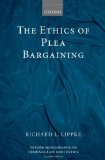 Users of the Brooklyn Law School Library who want to research the subject of plea bargaining have access to The Ethics of Plea Bargaining by Richard L. Lippke (Call # K5458 .L57 2011). The book offers a full-length philosophical analysis of the ethics of plea bargaining and develops a sustained argument for restrained forms of the practice and against the free-wheeling versions that predominate in the United States. It offers an ethical argument for restrained forms of plea bargaining and provides a comparison between the different plea bargaining regimes that exist within the US, where it is well-established, England and Wales, where the practice is coming under considerable critique, and the European Union, where debate continues on whether it coheres with inquisitorial legal regimes. Addressing concerns about rewards for admitting guilt, penalties for exercising the right to trial, and the deliberate over-charging by prosecutors and charge bargaining, the author argues that the negotiation of charges and sentences should remain the exception, not the rule.
Commenting on blog posts requires an account.
Login is required to interact with this comment. Please and try again.
If you do not have an account, Register Now.
On March 18, 1963, Supreme Court Justice Hugo L. Black, writing for a unanimous Court, ruled in Gideon v. Wainwright that the states must provide an attorney to an indigent criminal defendant who cannot afford one. Before Gideon, the Court had held that such a requirement applied only to the federal government. With the fiftieth anniversary of that landmark decision, the NY Times reports in an article Rightto Lawyer Can Be Empty Promise for Poor that many legal officials say that the promise inherent in the Gideon ruling remains unfulfilled because so many legal needs still go unmet.  The Brooklyn Law School Library recently acquired the DVD version of Gideon’sTrumpet (KF9646 .G53 2000) for its audio-visual collection. Starring Henry Fonda as Clarence Earl Gideon and José Ferrer as Abe Fortas who argued the case before the Supreme Court, the film tells the true story of Gideon’s fight to be appointed counsel at the expense of the state that led to the Supreme Court’s decision extending this right to all criminal defendants. The film was based on Anthony Lewis’ book by Gideon’sTrumpet: How One Man, a Poor Prisoner, Took His Case to the Supreme Court – andChanged the Law of the United States (Call # KF9646 .L428) which is part of the BLS Library Main Collection.
Commenting on blog posts requires an account.
Login is required to interact with this comment. Please and try again.
If you do not have an account, Register Now.

Included in the 49 titles in the Brooklyn Law School Library’s most recent New Books List is Asset Forfeiture Law in the United States (Call #KF9747 .C37 2013) by Stefan D. Cassella, one of the federal government’s leading experts on asset forfeiture law. A former Senior Counsel to the U.S. Senate Judiciary Committee, the author has a J.D. from Georgetown University. The second edition of this book which has 1204 pages is divided into four Parts: Part I – Overview and History; Part II – Administrative and Civil Forfeiture; Part III – Criminal Forfeiture Procedure; and Part IV – What Is Forfeitable? The 28 Chapters provide an Overview and Development of Asset Forfeiture Law in the United States; Administrative Forfeiture under the Civil Asset Forfeiture Reform Act of 2000 and Judicial Review of Administrative Forfeiture and other topics on the innocent owner defense.
The US federal government has used the tactic extensively in its forty year old “war on drugs.” The possibility for abuse is great. Many local government agencies increasingly rely on “civil forfeiture” to bolster their strained budgets. Use of asset forfeiture is part of a “policing for profit” trend. See the March 2010 Institute for Justice Report Policing for Profit: The Abuse of Civil Asset Forfeiture. Based on a legal fiction that enables law enforcement to take legal action against inanimate objects for participation in alleged criminal activity, regardless of whether the property owner is guilty or innocent—or even whether the owner is charged with a crime, asset forfeiture has generated much criticism. Nonetheless, it has become one of the most effective legal tools in the prosecutor’s arsenal allowing the government to seize and gain title to property obtained through criminal activity or used to further a criminal conspiracy. Criminal asset forfeiture can be used against drug producers and traffickers to cripple their operations and claim their profits. It can also be wielded in civil proceedings. In states implementing medical cannabis programs, personal property gained from or used for the sale of cannabis is subject to seizure due to the supremacy of federal laws prohibiting narcotics sales.
Last November, members of the Brooklyn Law School Students for Sensible Drug Policy, a chapter of Students for Sensible Drug Policy, participated in an Interview with Brooklyn Law School Students for Sensible Drug Policy, Part 3. Addressing recent marijuana legalization efforts in Colorado, Adam Scavone, BLS Class of 2013, noted that “Colorado seems to have worked out a system that can survive an attempt of repression by the Federal government . . . . to insulate people who want to enter that market from the tools that the federal government has on hand to shut down that market – the banking laws, asset forfeiture, and the old-fashioned handcuffs and federal prison. There are about 5,000 DEA agents in the country and 750,000 state and local law enforcement officers. More than 95% of the arrests made for drugs are made by state and local police officers. “
Commenting on blog posts requires an account.
Login is required to interact with this comment. Please and try again.
If you do not have an account, Register Now.
Election Day 2012 saw voter initiatives in several states on marijuana legalization. Colorado and Washington became the first US states to legalize the possession and sale of marijuana for recreational use on Tuesday in defiance of federal law, setting the stage for a showdown with the federal government. Medical marijuana measures were on the ballot in three other states. In Massachusetts, supporters issued a statement declaring victory for what they described as “the safest medical marijuana law in the country.” Seventeen other states, plus the District of Columbia, already have medical marijuana laws on their books. In Arkansas, a measure that would have made it the first state in the South to legalize marijuana for medical purposes appeared was defeated. In Oregon, a measure to remove criminal penalties for personal possession and cultivation of recreational cannabis was also defeated.
A newly released Quinnipiac University poll shows that American voters favor the legalization of marijuana, 51% to 44%, with a substantial gender and age gap. The poll states that men support legalization 59% to 36%, but women are opposed 52% to 44%. The racial split is barely noticeable on this question with 50% of white voters and 57% of black voters backing legalization. Those who are 18 to 29 years old support legalization 67% to 29% while voters over age 65 are opposed 56% to 35% and those who 30 to 44 years old like the idea 58% to 39%, while voters 45 to 64 years old are divided 48% to 47%.
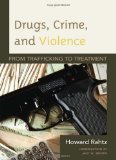 The Brooklyn Law School Library has on order a book by retired police officer Howard Rahtz, Drugs, Crime and Violence: From Trafficking to Treatment, which examines the history of drug abuse and provides a unique perspective on the drug war. It covers all aspects of the “war on drugs” to help readers become well-informed and capable of developing an educated reasonable conclusion. Chapters include Drugs, Crime and Violence — The Illegal Drug Market — Learning From the Past — Policy Options — An International Perspective — Drug Abuse-The Damage Done — Addiction: The Driving Force behind the Illegal Market — Marijuana-The Cartel’s Cash Cow — From Trafficking to Treatment — The Costs of Policy Paralysis — A New Direction.
Commenting on blog posts requires an account.
Login is required to interact with this comment. Please and try again.
If you do not have an account, Register Now.
A NY Times article dated November 3, 2012, Wrongly Turning Away Ex-Offenders, addresses state laws dating back to Reconstruction that deny the vote to people who have committed felonies barring about 5.85 million people from voting in the 2012 election. Policies on restoration of the voting franchise to convicted felons among the 50 states are so inconsistent that they create confusion among for both former offenders who wish to regain the right to vote as well as the officials charged with implementing the laws. See the State by State Chart of Felon Voting Laws on the Pro.Con.org website. This past October, the Minnesota Supreme in Council on Crime and Justice and Enjoli Rosas v. Mark Ritchie issued an Order in a case where a probation office incorrectly told a voter who pleaded guilty to felony possession of marijuana, was placed on 5 years of probation, and received a stay of adjudication that she could not vote and doing so would be a new felony offense. After the State admitted its mistake regarding the petitioner’s ability to vote, the Supreme Court dismissed the case as moot. However, the case illustrates that kind of misinformation that discourages legally eligible voters from registering to vote and may cause confusion for former offenders who, unaware of their state’s restrictions, then register and vote, unwittingly committing a new crime.
Other countries address felony re-enfranchisement much differently. The Australian Senate recently voted to amend the Electoral and Referendum Act to give the right to vote to persons who are serving sentences of three years or less. The amendment came after the High Court of Australia 2006 ruling in Roach v Electoral Commissioner on the validity of Commonwealth legislation that prevented prisoners from voting. In 2002, the Canadian Supreme Court ruled in Sauvé v. Canada that any ban on prison voting violates Canada’s Constitution and is counterproductive to the governments’ professed goal of promoting civil responsibility and respect for the rule of law.
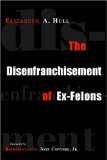 Last year, Brooklyn Law School Professor Susan N. Herman stated in a NY Times article, Restore the Right to Vote, that she does not view voting as a “privilege” and that “the idea that our democracy is only open to a chosen few flies in the face of decades of struggle to democratize the fundamental right to vote.” The Brooklyn Law School Library has a number of items in its collection on the subject of the loss of political rights including suffrage for ex-convicts in the United States including The Disenfranchisement of Ex-Felons by Elizabeth Hull (Call # KF9747.Z95 H84 2006) and My First Vote, a compilation of stories by the Brennan Center for Justice from people across the country who voted for the first time in November 2008 after having lost, and then regained, their right to vote following a criminal conviction.
Commenting on blog posts requires an account.
Login is required to interact with this comment. Please and try again.
If you do not have an account, Register Now.
 BLS Reference Desk
A recent Jurist article Despite Claims, ICC Prosecution of Bush, Blair Would Be Illegal by Jesse Oppenheim, Brooklyn Law School Class of 2013, questions whether the International Criminal Court (ICC) has to file war crimes charges against former US President George W. Bush and former UK Prime Minister Tony Blair for invading Iraq. The article comes in response to Archbishop Desmond Tutu’s suggestion that the two former leaders “should be treading the same path as some of their African and Asian peers who have been made to answer for their actions in The Hague.” The ICC hears cases on genocide, crimes against humanity, and war crimes. It was established ten year ago in 2002 when the Rome Statute became a binding treaty with sixty signatories including the United States, the minimum number required to bring it into force. Since then, three states—Israel, Sudan and the United States—have informed the UN Secretary General that they no longer intend to become states parties and have no legal obligations arising from signing the Statute.
Since the establishment of the ICC in 2002, the Court has heard 16 cases with only one having been completed: that of rebel leader Thomas Lubanga from the Democratic Republic of the Congo who was sentenced earlier this year to 14 years in prison for his part in war crimes in his home country. The other cases all involve situations involving African nations. Oxford Reports on International Law has on its web site a module to view a list of the decisions of the ICC. The Brooklyn Law School Library has in its collection The Annotated Digest of the International Criminal Court (Call #KZ6316 .A48) in its International Collection.
Critics have argued that the Court applies “selective justice” to Africa and is “a pro-western, anti-African court.” The newly appointed chief prosecutor, Fatou Bensouda, a Gambian national, says the ICC has sought justice for millions of victims in Africa. “Again and again we hear criticisms about our so-called focus on Africa and about the court being an African court, having an African bias. Anti-ICC elements have been working very hard to discredit the court and to lobby for non-support and they are doing this, unfortunately with complete disregard for legal arguments.”
 The article by Oppenheim, the Notes and Comments Editor of the Brooklyn Journal of International Law, points out the jurisdictional limitations of the ICC. Article 13 of the Rome Statute provides that only State Parties are subject to the ICC. Since the US has not ratified the Rome Statute and it is unlikely that the UN Security Council will refer the case to the ICC, former American officials will remain beyond the jurisdiction of the ICC. The BLS Library also has in its collection Hybrid and Internationalised Criminal Tribunals: Selected Jurisdictional Issues by Sarah Williams (Call #KZ7240 .W55 2012). For more on the pros and cons of whether the US should the US and other countries should join the ICC, see this Debatepedia webpage.
Commenting on blog posts requires an account.
Login is required to interact with this comment. Please and try again.
If you do not have an account, Register Now.
Chief Judge of the US Court of Appeals for the Seventh Circuit Richard A. Posner, to whom Brooklyn Law School awarded an honorary J.D. in 2000, recently called for the elimination of criminal laws against marijuana and other drugs. The lecture at Elmhurst College in Illinois on The Crisis of Capitalist Democracy, available on YouTube, covered a broad range of topics including education, health care, immigration, climate control and criminal justice. In the Q&A following his prepared remarks, Posner said at 54.06 of the video “Personally, I don’t think we should have a fraction of the drug laws that we have. I think it’s really absurd to be criminalizing possession or use or distribution of marijuana. I can’t see any difference between that and cigarettes. But also I’m skeptical about the other drug laws….The notion of using the criminal law as the primary means of dealing with a problem of addiction, of misuse, of ingesting dangerous drugs — I don’t think that’s sensible at all. That is responsible for a high percentage of our prisoners. And these punishments are often very, very severe…. It’s all very expensive and it’s a waste of a lot of high quality legal minds, and it’s also a waste of people’s lives who could be as least moderately productive with having to spend year after year in prison. That is a serious problem.”
In Drug Legalization, a post on the Becker-Posner Blog, Judge Posner noted that legalizing marijuana and other drugs would save federal, state and local governments $41.3 billion per year citing a Cato Institute report The Budgetary Impact of Ending Drug Prohibition. Judge Posner is one of the most prolific legal authors in the US. The BLS Library has in its collection more than 50 of his books as seen in this list. On the subject of drug legalization, see in SARA, the BLS Library catalog the March 2012 Congressional Research Service report Medical Marijuana: The Supremacy Clause, Federalism, and the Interplay Between State and Federal Laws the summary of which reads:
As part of a larger scheme to regulate drugs and other controlled substances, federal law prohibits the cultivation, distribution, and possession of marijuana. Yet 16 states and the District of Columbia have decriminalized medical marijuana by enacting exceptions to their state drug laws that permit individuals to grow, possess, or use marijuana for medicinal purposes. Although the Supreme Court has established Congress’s constitutional authority to enact the existing federal prohibition on marijuana, principles of federalism prevent the federal government from mandating that the states actively support or participate in enforcing the federal law. Even if the federal government is prohibited from mandating that the states adopt laws supportive of federal policy, the constitutional doctrine of preemption generally prevents states from enacting laws that are inconsistent with federal law. Under the Supremacy Clause, state laws that conflict with federal law are generally preempted and therefore void. This report will review the federal government’s constitutional authority to enact the federal criminal prohibition on marijuana; highlight certain principles of federalism that prevent the federal government from mandating that states participate in enforcing the federal prohibition; consider unresolved questions relating to the extent to which state authorization and regulation of medical marijuana are preempted by federal law; and assess what obligations, if any, the Department of Justice (DOJ) has to investigate and prosecute violations of the federal prohibition on marijuana.
Commenting on blog posts requires an account.
Login is required to interact with this comment. Please and try again.
If you do not have an account, Register Now.
An ACLU report At America’s Expense: The Mass Incarceration of the Elderly says that the US, the largest incarcerator in the world, with 2.3 million people behind bars, is seeing prisoners getting older with the same ailments afflicting those of the same age who are not behind bars. Correctional facilities are becoming veritable nursing homes with taxpayers footing the bill. From 1980 to 2010, the US prison population grew over 11 times faster than the general population. During this time, the general population increased by 36%, while the state and federal prison population increased by over 400%.
The older prison population is now a national epidemic afflicting states around the country. According to the National Institute of Corrections, prisoners age 50 and older are considered “elderly” or “aging” due to unhealthy conditions prior to and during incarceration. There are 246,600 elderly prisoners behind bars across the country. In 1981, there were 8,853 state and federal prisoners age 55 and older. Today, that number stands at 124,900, and experts project that by 2030 this number will be over 400,000, amounting to over one-third of prisoners in the US. The elderly prison population is expected to increase by 4,400% over this fifty-year time span.
Evidence shows that recidivism drops dramatically with age. In New York, only 7% of prisoners released from prison at ages 50-64 returned to prison for new convictions within three years. That number drops to 4% for prisoners age 65 and older. In contrast, this number is 16% for prisoners released at age 49 and younger. Further, most aging prisoners are not incarcerated for murder, but are in prison for low-level crimes. State and federal governments spend approximately $77 billion annually to run our penal system. Over the last 25 years, state corrections spending grew by 674%, substantially outpacing the growth of other government spending, and becoming the fourth-largest category of state spending. The report finds that it costs $34,135 per year to house an average prisoner, but it costs $68,270 per year to house a prisoner age 50 and older. The report estimates that releasing an aging prisoner will save states, on average, $66,294 per year per prisoner, including healthcare, other public benefits, parole, and any housing costs or tax revenue.
See also the Human Rights Watch report, Old Behind Bars: The Aging Prison Population in the United States with data developed from a variety of federal and state sources that document dramatic increases in the number of older US prisoners. Both reports are available in SARA, the Brooklyn Law School Libary catalog.
The First Step Act was enacted and signed into law with bipartisan support in December 2018. The statute includes numerous sentencing reforms, including a provision that allows a prisoner to file a motion for compassionate release if he or she can demonstrate “extraordinary and compelling” reasons for such relief. Data from the United States Sentencing Commission show that from October 2019 through December 2024, judges have granted 5,547 compassionate release motions.
In 1997, in his courtroom in the Eastern District of New York, Judge Frederic Block sentenced Walter Johnson to five life sentences for robbery, cocaine possession, and witness tampering. According to a NY Times article, Johnson’s criminal misdeeds in the 1980s and 1990s included armed robberies on a bus, on the F Line of the subway, and in a church. Notably, he was a suspect in the 1994 shooting of Tupac Shakur in the lobby of the Quad Recording Studios in Manhattan.
At the time of the 1997 sentencing, Judge Block had been on the bench for under three years. In the intervening years, the First Step Act was passed and on October 17, 2024, Judge Block granted Johnson’s motion for compassionate release, writing:
“Just like prisoners who have evolved into better human beings during their lengthy periods of incarceration, judges also evolve with the passage of years on the bench. When I sentenced Johnson in 1997, I had been a judge for only two years. But judges gain insights that with the passage of time only can come with experience on the bench and their judicial maturation. Now, having been on the bench for almost thirty years, the First Step Act has given me a second chance to reconsider the sentences I imposed on Johnson 27 years ago. I will now also give him a second chance.”
Interested in hearing more about Judge Block’s reasons for granting Walter Johnson’s motion, or about the six compassionate release cases he highlights in his latest book “A Second Chance: A Federal Judge Decides Who Deserves It”? Brooklyn Law School’s Center for Criminal Justice has organized “Sentencing, Second Chances & Justice,” a conversation between Judge Block and BLS Dean David Meyer about the book and the topic of compassionate release. The event is on April 1, 2025 at 6 PM, and further details can be found here (RSVP by March 27.)
If you plan on attending the event or have an interest in learning more about the topic and Judge Block’s views, BLS Library provides the BLS community with digital access to “A Second Chance.” Use the QR code above or click here for access. The library also has print copies of Judge Block’s earlier books Crimes and Punishment: Entering the Mind of a Sentencing Judge and Disrobed: An Inside Look at the Life and Work of a Federal Trial Judge as well as other works on sentencing reform. For help accessing any of these resources, please reach out to askthelibrary@brooklaw.edu
[Note: If you are a member of the BLS community and do not have access to the NY Times articles linked to above, information on how to sign up for free access to the Times and other news publications can be found at https://guides.brooklaw.edu/news]
Commenting on blog posts requires an account.
Login is required to interact with this comment. Please and try again.
If you do not have an account, Register Now.