


The right of same-sex couples to marry triggered decades of intense conflict before the U.S. Supreme Court upheld it in the 2015 decision Obergefell v. Hodges. Some of the most divisive contests shaping the quest for marriage equality occurred within the ranks of LGBTQ advocates. In the Brooklyn Law School Library copy of the encyclopedia-like 441-page book Awakening: How Gays and Lesbians Brought Marriage Equality to America (Harvard University Press, April 2017), author Nathaniel Frank, internationally recognized authority on LGBTQ equality and public policy, tells the dramatic story of how an idea that once seemed unfathomable became a legal and moral right in just half a century.
Awakening begins in the 1950s, when millions of gays and lesbians were afraid to come out, let alone fight for equality. Across the social upheavals of the next two decades, a gay rights movement emerged with the rising awareness of the equal dignity of same-sex love. A corps of lawyers soon began to focus on legal recognition for same-sex couples, if not yet on marriage itself. It was only after being pushed by a small set of committed lawyers and grassroots activists that established movement groups created a successful strategy to win marriage in the courts. Marriage equality proponents then had to win over members of their own LGBTQ community who declined to make marriage a priority, while seeking to rein in others who charged ahead heedless of their carefully laid plans. All the while, they had to fight against virulent anti-gay opponents and capture the American center by spreading the simple message that love is love, ultimately propelling the LGBTQ community immeasurably closer to justice.
See the YouTube video about the book.
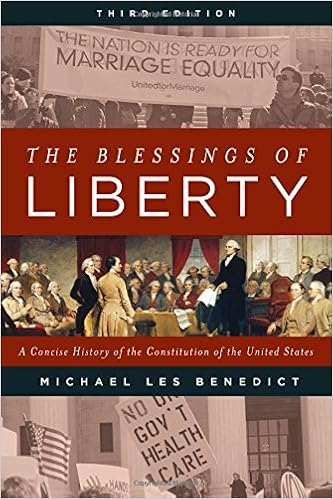

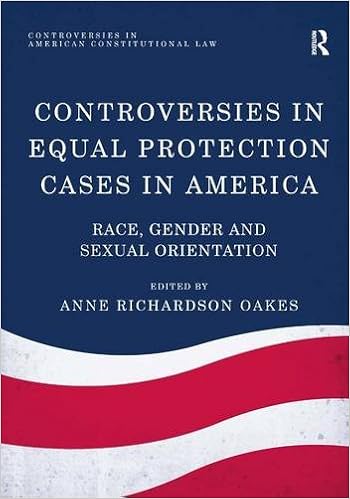


The US Congress, by Public Law 100-9, designated the month of March 1987, as “Women’s History Month”. This law requested the President to issue a proclamation calling on the American people to observe this month with appropriate activities. President Reagan then issued Presidential Proclamation 5619 proclaiming March 1987 as “Women’s History Month”. Since then, Presidential Proclamations have declared March as Women’s History Month.
Brooklyn Law School celebrates Women’s History Month by recognizing Amelia Dietrich Lewis, Class of 1924, as “one of the most tenacious lawyers the state of Arizona has ever seen.” She was a graduate of St. Lawrence University School of Law (now Brooklyn Law School). She exhibited her moxie early in her career, even before she was sworn in as an attorney. Although Lewis was scheduled to take the bar exam on June 24, 1924, she learned that the New York Bar prohibited candidates under the age of 21. In Lewis’s case, she was to turn 21 the very next day, on June 25. Facing this technicality, she filed suit against the Bar, arguing she would be 21 on the 24th because her birthday was actually the first day of her 22nd year.” She was successful in her suit and took the exam as planned on the 24th and passed. After practicing law in New York for 33 years, in 1957 following the death of her husband, she moved to Arizona. She took the bar examination in that state with just one other woman, Sandra Day O’Conner. There, she worked as a prosecutor for six years and then maintained a thriving solo practice, concentrating in elder law in Sun City. She was well into her eighties when she retired.
Lewis is best known for her involvement in the landmark 1967 Supreme Court case, In re Gault, 387 U.S. 1 (1967), which brought due process to juvenile courts across the nation. Her client, Gerald Gault, had been sentenced without legal counsel to an Arizona reformatory. He allegedly made an obscene phone call to a neighbor, was arrested by local police, and tried in a proceeding that did not require his accuser’s testimony. He was sentenced to six years in a juvenile “boot camp” for an offense that would have cost an adult only two months. Lewis assumed the role of co-counsel after Gault’s appeals at the lower level were exhausted. She was drawn to the case because she had raised three healthy sons and “wanted to give something back.” Ultimately, the defense of the boy prevailed, with the Court holding that he was entitled to the same constitutional safeguards as adults: a trial by jury, the right to legal counsel, the right to cross-examine witnesses, and the right to remain silent. Justice Fortas in his 8-1 majority opinion wrote: “Neither the 14th Amendment nor the Bill of Rights is for adults only. Under the Constitution, the condition of being a boy does not justify a kangaroo court.”
Lewis was recognized by the Arizona Republic as one of the legal greats of that state. In 1988, she received the first Amicus Award of the Association of Trial Lawyers of America, which honored her for pioneering the vital role of women in the legal profession. Upon her death in 1994, the Chief Justice of the Arizona Supreme Court commented: “She made history for the law in many ways. Her life and career epitomized the practice of law as it should be.”
Commenting on blog posts requires an account.
Login is required to interact with this comment. Please and try again.
If you do not have an account, Register Now.