The Brooklyn Law School logo

BLS Library Blog

Showing 10 of 18 Results

Feel free to ask BLS librarians for help (contact: askthelibrary@brooklaw.edu) in using these tools!

BLS Library has updated its publicly accessible research guide: English Legal Sources Available Through BLS Library

Guide tab: Legal Books describes how to find many Sweet & Maxwell sources in: Westlaw Edge UK. In this database, BLS researchers now can access a number of additional treatises (example: Dicey, Morris & Collins on the Conflict of Laws). 

Guide tab: Dictionaries includes a link to: Westlaw Edge UK: Index of Legal Terms. Westlaw Edge UK will search for a term like: demurrer in Jowitt’s Dictionary of English Law, Stroud’s Judicial Dictionary of Words and Phrases and Osborn’s Concise Law Dictionary. Westlaw Edge UK also states: “In addition to the dictionaries, the index includes definitions that form part of Westlaw UK’s Case, Legislation and Journal documents.” 

Guide tab: Cases now includes a box titled: Easy Ways To Find and Print Cases in Westlaw Edge UK. Also, researchers might appreciate the way Judicial Treatment appears so clearly in Westlaw Edge UK > tab: Cases.

Guide tab: News explains: At subscription Law360 UK, it appears that BLS researchers can only access “Top Stories.” Tip: Use Lexis+ Legal News Hub > All sections > UK to obtain the text of additional Law360 UK legal news stories/analysis.

This post has no comments.

A person in a suit and tie

Description automatically generated

Brooklyn Law School’s Professor Alex Stein gained appointment to the Israeli Supreme Court. Stein, a foremost expert on torts, medical malpractice, evidence, and general legal theory, was appointed along with Israeli District Court Judge Ofer Grosskopf to fill two open Supreme Court positions that were vacated by retiring justices. Stein’s nomination was unanimously approved by the Judicial Appointments Committee. There are 15 justices on the Israeli Supreme Court.

“Professor Stein is one of the world’s brilliant legal minds,” said Nick Allard, President and Dean of Brooklyn Law School. “In the short time he has been with us, he has made an enormous positive impact on the Brooklyn Law School community—as a teacher, a scholar, and a wonderfully energetic and engaged colleague and friend. We could not be prouder of his well-deserved appointment to the Israeli Supreme Court, where we know he will make important and lasting contributions as a jurist—as he has as a law professor and practicing lawyer.”

A red and black book cover

Description automatically generated

Born and raised in the former Soviet Union, Stein immigrated with his parents to Israel, where he finished high school, served in the military, and studied law. Following his marriage, he has lived in the United States for the last 14 years and joined the Law School faculty in 2016. While in the United States, he continued his involvement in the Israeli legal academy and practice. Stein has been recognized as one of the most highly cited scholars in the field of Evidence. His books include An Analytical Approach to Evidence: Text, Cases and Problems, (Call Number KF8935 .A83 2016). The book is a problem-based Evidence casebook that presents the Federal Rules of Evidence in context, illuminates the rules, and provides a fully updated and systematic account of the law. Lively discussion and interesting problems (rather than numerous appellate case excerpts) engage students in understanding the principles, policies, and debates that surround evidence law. He received his law degree from the Hebrew University of Jerusalem and his Ph.D. from the University of London.

This post has no comments.
06/29/2017
profile-icon BLS Reference Desk

A map of the country

Description automatically generated

Since last fall we have been inundated with a constant bombardment of stories in cable news, on the Internet, and in newspapers about the possibility of the Russians colluding in our presidential election, hacking Hillary Clinton’s emails, and influencing members of the Trump administration, etc., etc., ad nauseam.

I recently came across a cartoon in The Daily Signal by Michael Ramirez to illustrate the point.

The cartoon was entitled “The Russian Investigation,” and pictured Attorney General Jeff Sessions seated at a Congressional hearing, being asked the following questions:

Do you know where Russia is on a map?

Do you like Russian dressing?

Have you ever been to the Russian Tea Room?

Ever played Russian roulette?

Ever drink Russian vodka?

Have you seen “From Russia with Love?”

Have you ever been to an event where a Russian was attending?

You get the idea!

Since all things Russian are now in our consciousness, I decided to extend the Russian theme to legal research.  What follows is a brief introductory guide to Russian legal resources.

Electronic Sources:

Books:

For additional resources, access WorldCat, the world’s most comprehensive database, giving users access to millions of books and other resources available from thousands of libraries throughout the world.  Brooklyn Law School students and faculty may make interlibrary loan requests for items not owned by BLS.

This post has no comments.

In a major victory for libraries and public access to great literature, the Israeli Supreme Court this week issued a ruling concluding an eight-year legal battle about ownership of the literary works and letters of Franz Kafka. The series of court cases between Israel and the heirs of Max Brod, executor of the estate of Prague-born writer Franz Kafka began in 2009. Kafka’s last will and testament transferred all of his manuscripts to Brod after his death in 1924. A March 2015 article The Betrayed(?) Wills of Kafka and Brod by Nili Cohen, 27 (1) Law & Literature 1 (available to Brooklyn Law School Library users through a subscription to the Taylor & Francis Online Journal Library) relates that Kafka in separate letters entrusted his manuscripts and works to Brod instructing him to burn them after his passing. Brod did not honor Kafka’s request and took the papers with him when he fled Czechoslovakia in 1939 and emigrated to Palestine. After the 1968 death of Brod, his will bequeathed the papers to his secretary Esther Hoffe with instructions to give them to the “Hebrew University of Jerusalem, the municipal library in Tel Aviv or another organization in Israel or abroad”. Instead Hoffe kept the papers and shared them with her two daughters and even began to sell them.  In 1988, Hoffe sold an original copy of Kafka’s The Trial for $2 million. The 2007 death of Hoffe, more than 80 years after Kafka’s death, touched off a lengthy court fight between Israel and Hoffe’s daughters who claimed the papers were given to their mother by Brod so she could dispose of them as she wanted.

The WSJ Law Blog reports that Hoffe’s daughters refused the Israeli government’s demands to hand over the documents. The case turned on questions of inheritance law and whether Hoffe was entitled to give instructions about Brod’s literary legacy in her will. “Max Brod did not want his property to be sold at the best price, but for them to find an appropriate place in a literary and cultural institution” Israel’s high court stated in its opinion in which it directed that the papers should belong to the National Library of Israel in Jerusalem.

The Trial

Both Kafka and Brod studied law in Prague’s Karl University and Kafka devoted much of his literary work to the law. His letters to Brod to destroy his manuscripts was not a binding legal document as they included neither the title “Will” nor a date, suggesting that Kafka intended to ask his friend to honor a moral, not a legal, obligation. Kafka’s uncertain attitude towards law is expressed in his greatest novel, The Trial, which he wrote from 1914 to 1915. The novel was published in 1925 after Kafka’s death. Years later, Orson Welles wrote a screenplay based on the novel and directed the 1962 masterpiece The Trial (Call No. PT2621.A26 T75 1998) which the BLS Library has in its video collection. The story centers on the main character, Josef K, who wakes up one morning to find the police in his room. They tell him that he is on trial but no one tells him what the charges are. His efforts to learn the details of the charges and to protest his innocence remain fruitless. As he tries to look behind the facade of the judicial system, he finds he has no way to escape his nightmare

This post has no comments.
07/07/2016
profile-icon Loreen Peritz

brexit

Have you been following the UK’s decision to leave the European Union, colloquially known as “the Brexit?” In a referendum held on June 23rd, British citizens voted in favor of the Brexit, with 52% percent voting to leave the EU and 48% voting to remain.

What Happens Now?

That’s a good question as there is a great deal of uncertainty regarding the legal consequences of the referendum.  As a matter of fact, the UK is the first member nation ever to elect to sever its ties with the EU.  For the immediate future, though, the status quo will be maintained.  First of all, it is important to note that the referendum has no legal consequences with respect to the UK’s status as a member state of the EU.  Instead, the UK will begin the process of leaving the EU only after the British government invokes Article 50 of the Treaty of Lisbon, one of the EU’s governing documents.

According to Article 50: “Any member state may decide to withdraw from the union in accordance with its own constitutional requirements.”  Article 50 also specifically provides “A Member State which decides to withdraw shall notify the European Council of its intention.” This language is important because it makes clear that the Brexit cannot be initiated by the referendum vote, the trigger to request an exit from the EU can only be pulled by a formal request under Article 50 made by the British government. Whether and when the British government will actually invoke Article 50 is anybody’s guess given the spate of resignations and current state of turmoil in British politics.  As a matter of fact, British legal scholars are currently debating how Article 50 is to be invoked – can the Prime Minister trigger Article 50 or is a formal vote of Parliament required?

What Happens When/If the British Government Invokes Article 50?

If the British government provides the EU with a formal Article 50 notification of its election to leave the EU, the UK and the EU will then be required by the Lisbon Treaty to negotiate a deal setting forth the terms of the UK’s withdrawal and establishing a structure for the future legal relationship between the UK and the EU.  Once the Article 50 trigger is pulled, the European Council and the UK will have just two years to hammer out a new deal.  If the parties choose not to extend this period and cannot reach any agreement, the UK will exit the EU with no formal arrangement in place.  Once the Article 50 trigger is pulled, it is irreversible.

Following the Brexit vote, David Cameron announced his intention to resign as Prime Minister, leaving the decision on how and when to trigger Article 50 in the hands of his successor.  Given the current chaos in British markets and politics, the culmination of Brexit may take years.

This post has no comments.
02/24/2016
profile-icon BLS Reference Desk

international-flags

Interning at an organization that works internationally this summer?  Interested in international law or comparative law? Research skills are key in this area of practice.

Learn the basics of international/foreign law research with Associate Librarian for International Law Jean Davis!  This program will also feature a special guest from the International Legal Foundation.  The guest will describe selected projects assigned to interns.  Then Professor Davis will suggest tools to research one of the projects.  Professor Davis will also highlight sources to research international internships and fellowships.

Date:   Monday, February 29, 2016

Time:  12:45pm – 1:45pm

Location:  Library – Room C36 (Cellar Level)

Snacks will be provided.

Sponsored by the Library & the Public Service Office

Questions?   Email:  publicservice@brooklaw.edu

This post has no comments.

This fall, do you plan to:

  • Write a paper on an international, comparative or foreign law topic?
  • Source-check foreign statutes & cases for a journal?
  • Develop your knowledge about an aspect of a foreign legal system that might be of interest to a future employer, such as China’s anti-corruption laws or Canada’s anti-spam law?

If so, consider enrolling in my 7-week International & Foreign Law Research seminar, which begins on Wednesday, September 9.  The main course requirement is a 15-17 page legal research memo on an international or foreign law problem of interest to you.  in the memo, I ask you to use resources that we have evaluated throughout the course.  Last semester, we also started a new class tradition: students read a problem prior to class, broke into class teams to conduct international law research, and then argued issues before a mock international court.

Please feel free to email me with questions about this seminar!

Jean Davis, Associate Librarian for International Law                                                 jean.davis@brooklaw.edu

This post has no comments.
07/17/2013
profile-icon BLS Reference Desk

Congratulations to Brooklyn Law School alumna Catherine F. Duggan, Class of 1987, who has written The Lost Laws of Ireland: How the Brehon Laws Shaped Early Irish Society. The book, published by Dublin-based Glasnevin Publishing on June 11, 2013, tells how the ancient laws of Celtic Ireland were used from the time before Patrick until the 17th century when they were outlawed and disappeared. Crafted by judges, known as Brehons, the laws were surprisingly modern in their approach to timeless issues and reflect a complex and sophisticated society. This book gives an outline of the main features of the laws and their history, and ultimately focuses on certain themes that are significant to the modern reader, such as equity and fairness, transparent legal process and women’s rights. Many of the legal manuscripts have been lost or destroyed and the laws were not translated into English until modern times. As a result, they have mostly remained obscure and unstudied. Only recently have they given up their secrets. The ancient laws provide a window into society in early Ireland where learning was revered, social mobility was expected and fairness and harmony were social goals. Their resilience demonstrates their value and effectiveness. The Brehon legal system came to an end officially in 1605 after enduring for over a thousand years.
 

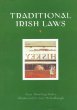
Researchers at the BLS Library can learn more about the subject of Celtic Law using SARA to locate Traditional Irish Laws by Mary Dowling Daley and illustrated by Ian McCullough (Call #KDK172 .D25 1998). It is a short book only 79 pages in length with a humorous look into the laws and culture of the ancient Irish. The BLS Library also has the print edition of The Brehon Laws: A Legal Handbook by Laurence Ginnell (Call #KDK145 .G56 1993). Both of these items are located in the BLS Library International Collection. The BLS Library also has the HeinOnline digital version of Brehon Laws: A Legal Handbook (1894).

This post has no comments.

Listen to this episode on BrooklynWorks.

In this podcast, Brooklyn Law School Professor Maryellen Fullerton talks about her second Fulbright Award which will bring her to Italy during 2012-2013 with her appointment to the Distinguished Chair in Law at the University of Trento. In the conversation, Prof. Fullerton looks back on her first Fulbright Award and how it transformed her legal scholarship and her teaching career at Brooklyn Law School. She also discusses other sabbaticals which brought her to other parts of Europe to research and study comparative law in the area of asylum and forced migration. Prof. Fullerton’s extensive scholarship on comparative asylum and refugee law can be found at this link.

This post has no comments.
02/06/2011
profile-icon BLS Reference Desk

The Brooklyn Law School Library has in its collection 20 separate parts of Kluwer Law International’s International Encyclopaedia of Laws. The IEL series provides detailed coverage of major areas of foreign law. Each part has expert commentary on a particular country’s law relating to that subject. Continually updated, each IEL set includes different countries. The list of “Published Monographs” indicates which countries are in each IEL set. The International Encyclopaedia of Laws is a great starting point for comparative law research. The Law Library collection of the series is in electronic format (accessible to the current BLS community either on campus or via remote access restricted with use of proxy instructions) for these titles:

A detailed description of the print version for these products is on the publisher’s website along with a more fully descriptive 53 page PDF brochure from the publisher which shows the depth of covergage of IEL and the countries covered for each topic.

This post has no comments.
Field is required.