The Brooklyn Law School logo

BLS Library Blog

Showing 10 of 15 Results

See:

Bloomberg Law, Health: In Focus: Coronavirus (COVID-19)   

Bloomberg Law also allows subscribers to receive alerts from its legal newsletter: Coronavirus Outbreak

Health Affairs, click link: ACCESS ONLINE VERSION > Topic: COVID-19

Lexis+, Complimentary Coronavirus Resources

Westlaw, Covid-19 Legal Materials & News

The New York Times, The Covid-19 Pandemic

Also, members of the BLS community who choose to create FT.com accounts can receive FT Coronavirus Business Update.

This post has no comments.

If you are researching legal issues related to the coronavirus pandemic, you will definitely want to check out the comprehensive coronavirus resource guide published by the Law Library of Congress, which provides links to laws, regulations and executive actions in the United States at both the federal and the state level, and in various countries.  The guide is updated at least weekly and in addition to direct links to laws and regulations, it includes Congressional Research Service reports which provide information to Congress about the coronavirus, law library blog posts, and articles from the Law Library of Congress Global Legal Monitor which tracks global legal developments. 

Some interesting Congressional Research Services reports listed in the Coronavirus Resource Guide include:

Todd Garvey, Constitutional Considerations of Remote Voting in Congress, Congressional Research Services(Apr. 14, 2020)

Colby Leigh Rachfal, COVID-19 and Broadband: Potential Implications for the Digital Divide, Congressional Research Services (Mar. 13, 2020)

Marc Labonte, COVID-19: Potential Economic Effects, Congressional Research Services (Mar. 11, 2020)

The Law Library of Congress’s Global Legal Monitor has dozens of articles organized by region which track individual country responses to the coronavirus, such as an article detailing Germany’s changes to its rules of procedure in Parliament and one discussing legislation in China that punishes the trade and consumption of wild animals.   

The guide also includes a link to a law library report on Legal Responses to Health Emergencies. Though written five years ago, the report provides useful summaries of regulations addressing health emergencies in 25 jurisdictions as well as a comparative summary and bibliography that may be useful in analyzing the level of preparedness of different countries for the current pandemic.

This post has no comments.
03/24/2017
profile-icon Kathleen Darvil

With the debate over the repeal and replacement of the Affordable Care Act raging, you might be interested in researching the act.  The library has 36 titles that are tagged with the subject, United States and the Patient Protection and Affordable Care Act.  Listed below are a few of those titles.

A logo of a government agency

Description automatically generated

Purva H. Rawal, The Affordable Care Act: Examining the Facts (2016).

This is the first reference book to provide a detailed assessment of the Affordable Care Act, explaining the realities and myths surrounding one of the most divisive political struggles in recent U.S. history.  This is an e-book.  If you are off campus, you will need to implement the proxy instructions in a web browser.

Steven Brill, America’s bitter pill: Money, Politics, Backroom Deals, and the Fight to Fix our Broken Healthcare System (2015).

This book details how the Affordable Care Act, or Obamacare, was written, how it is being implemented, and, most important, how it is changing—and failing to change—the rampant abuses in the healthcare industry. It’s a fly-on-the-wall account of the titanic fight to pass a 961-page law aimed at fixing America’s largest, most dysfunctional industry.

Josh Blackman, Unraveled: Obamacare, Religious Liberty, and Executive Power (2016).

Six years after its enactment, this book provides the definitive account of the battle to stop Obamacare from being ‘woven into the fabric of America’. Unraveled is essential reading to understand the future of the Affordable Care Act in America’s gridlocked government in 2016, and beyond. This is an e-book.  If you are off campus, you will need to implement the proxy instructions in a web browser.

Josh Blackman, Unprecedented: The Constitutional Challenge to Obamacare (2013).

This inside story of the legal challenge to Obamacare from a conservative constitutional lawyer involved in the movement is a mixture of legal, political, and media intrigue capped by a truly consequential Supreme Court decision.

This post has no comments.
11/30/2012
profile-icon BLS Reference Desk

On the eve of World AIDS Day 2012, more than 40 top business leaders have called for the repeal of travel bans that restrict the freedom of movement of people living with HIV. For nearly 23 years beginning in 1987, HIV-positive immigrants and travelers were banned from entering the United States. But that changed on January 4, 2010, when the U.S. Government officially lifted its HIV travel and immigration ban. President Obama announted the repeal of the HIV travel and immigration ban on Oct. 30, 2009 when he signed the Ryan White HIV/AIDS Treatment Extension Act of 2009, Public Law 111–87. See Medical Examination of Aliens—Removal of Human Immunodeficiency Virus (HIV) Infection from Definition of Communicable Disease of Public Health Significance, 75 Fed. Reg. 56547 (Nov. 2, 2009) (to be codified at 42 CFR Part 34). The ban went into effect after a 60-day waiting period. Other countries like Armenia, China, Fiji, Moldova, Namibia, South Korea and Ukraine have also removed such restrictions in recent years. However, countries including Australia, Russia, Singapore and the United Arab Emirates still maintain HIV travel bans as law.

Many countries enacted travel restrictions “to protect the public health” in the 1980s when ignorance, fear and prejudice surrounded HIV. Since then, effective HIV prevention has revolutionized the lives of people living with HIV so that they are fully productive workers living long and healthy lives. Newer treatments reduce the amount of HIV in one’s body to an undetectable level, lowering the possibility of transmitting HIV to someone else by some 96%. There is no evidence that HIV travel restrictions protect public health. The travel ban leads some professionals to leave their HIV medicines at home during business trips for fear that their pills will be discovered by airport agents. Skipping one’s HIV medication can lead to drug resistance, a troubling and expensive public health concern.

For these reasons, CEOs of more than 40 companies, including Levi Strauss & Co. and Kenneth Cole Production, issued a press release and pledge calling on the 45 remaining governments to lift their travel restrictions. These CEOs lead some of the world’s largest companies from Johnson & Johnson to The Coca-Cola Company from the National Basketball Association to Heineken, Pfizer and Aetna. They represent industries from travel to technology from banking to mining and almost 2 million employees around the world.

For information on the topic of HIV-Related Restrictions on Entry, Stay and Residence, see the Brooklyn Law School Library’s online resource Discrimination, Denial, and Deportation: Human Rights Abuses Affecting Migrants Living with HIV published by Human Rights Watch. 

This post has no comments.
07/23/2012
profile-icon BLS Reference Desk

via Census.gov

The U.S. Census Bureau today launched an interactive global resource on the prevalence of HIV infection and AIDS cases and deaths. The database was developed in 1987 and now holds 149,000 statistics, an increase of approximately 10,800 new estimates in the last year, making it the most complete of its kind in the world. The launch comes as thousands of people worldwide meet in Washington, D.C., for the International AIDS Conference this week.

The resource is maintained by the Census Bureau with funding from the U.S. President’s Emergency Plan for AIDS Relief (PEPFAR) through the United States Agency for International Development (USAID).

The tool is a library of statistics from more than 12,000 articles in international scientific and medical journals, individual countries’ annual HIV/AIDS surveillance reports, and papers and posters presented at international conferences.

The menu-driven access tool permits users to search for statistical information in countries and territories across the world, as well as by subpopulation, geographic subarea (such as urban and rural), age, sex and year (back to 1960).

Statistics for the United States are available separately from the Centers for Disease Control and Prevention.

This post has no comments.
06/30/2012
profile-icon BLS Reference Desk

This past Thursday, June 28th, 2012, the U.S. Supreme Court issued its decision on the challenges to the Patient Protection and Affordable Care Act of 2010. To briefly summarize, the Court found the individual mandate, which requires that virtually all Americans either obtain health insurance or pay a penalty by 2014, to be constitutional.

SCOTUSblog has extensive coverage of the decision, including a plain-English summary and a variety of articles in an online symposium devoted to the issue. The decision has also been reported on extensively by every major news outlet, including the New York Times, the Wall Street Journal, Reuters, and Law360 (accessible via BLS proxy server or on-campus).

For additional background information about the Act, consider checking out Law, Explanation and Analysis of the Patient Protection and Affordable Care Act, available in the BLS Library. This publication provides comprehensive and practical guidance on every provision of the Act, including committee reports, the official text, and detailed analysis of each provision.

Below is a video of President Obama’s comments on the significance of the Court’s decision.


This post has no comments.
06/12/2012
profile-icon BLS Reference Desk

The Second Circuit Court of Appeals ruled last month in Commack Self-Service Kosher Meats v. Hooker that New York’s Kosher Law Protection Act of 2004 does not violate the US Constitution, rejecting a First Amendment challenge by the plaintiff Long Island butcher shop and delicatessen. The three-judge panel affirmed a US District Court for the Eastern District of New York rulingthat upheld the law, which replaced an earlier version the court overturned in 2002. Applying the Lemon test from Lemon v. Kurtzman, 403 U.S. 602 (1971), the court stressed the fact that “kosher food” is not primarily a religious commodity.  In deciding the “secular purpose” prong, the Court found it important that unlike the prior version, the 2004 Kosher Act does not adopt a definition, interpretation or standard for the term “kosher.”  As for endorsement, again, the Court distinguished the prior Act: there is no preference in the 2004 Act for one sacred text over another; it only requires labeling. “The Kosher Act merely requires food products marketed as kosher to be labeled as kosher” U.S. Circuit Judge Christopher Droney wrote. “The Kosher Act does not entangle the state with religion because it does not require the state to enforce laws based on religious doctrine or to inquire into the religious content or religious nature of the products sold.”

The New York State Department of Agriculture & Markets says that “Outside of Israel New York has the largest population of kosher consumers and more than 135,000 products are available on the market shelves. The Department continues to conduct kosher surveillance inspections to make sure all products are registered and all establishments that sell kosher are in compliance with the kosher laws.” The Kosher Law Protection Act of 2004 requires those who market their products as kosher to label the foods as such and to identify in a filing with the NY State Department of Agriculture the individuals certifying the food as kosher. Despite the “victory,” kosher food law inspectors who worked for the Division of Kosher Law Enforcement of the state’s Department of Agriculture were laid off in the waning days of the Paterson administration. Large-scale abuses of kosher continue in the second largest market for kosher outside of Israel. One rabbi said: “Walk into any supermarket in New York and you’ll see mislabeled products, co-mingling of kosher and non-kosher products on kosher labeled shelves, and even some products with a k or d that are problematic.”

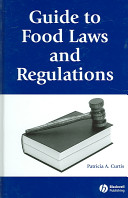
The Brooklyn Law School Library has in its collection Guide to Food Laws and Regulations by Patricia A. Curtis (Call #KF 3870.C87 2005) with a chapter titled An introction to kosher and halal food laws. For both students and experienced professionals, knowledge of US food law is the foundation that supports an understanding of all industry regulation. Based on a popular Internet course, the Guide to Food Laws and Regulations informs students on the significance, range, and background of food laws and gives tools for finding current regulations.

This post has no comments.
03/23/2012
profile-icon BLS Reference Desk

Among the titles in the Brooklyn Law School Library most recent New Books List is The Little Book of Foodie Law by Cecil C. Kuhne III (Call # KF3869 .K84 2012), the. The word “foodie” commonly refers to one who is unabashedly and unreservedly excited about food, its ingredients, and its preparation. This latest in the ABA “little books of” series examines the legal world of the foodie and is a fascinating read for anyone anxious to learn more about the legal issues that have taken place in the world of food.

The books 18 chapters cover cases with a wide range of legal issues dealing with food such as Litigating Restaurant Reviews in Mr. Chow of New York v. Ste. Jour Azur SA, 759 F. 2d 219 (2d Cir. 1985); Caspian Caviar: Spoilage from Poor Refrigeration in Fidelis Fisheries v. Thorden, 142 F. Supp. 798 (S.D.N.Y. 1956); Cooking Schools: Using the Name “Cordon Bleu” in Le Cordon Bleu v. Littlefield, 518 F. Supp. 823 (S.D.N.Y. 1981); Jewish Weddings: Failure to Serve Kosher Food in Siegel v. Ridgewells, Inc., 511 F. Supp. 2d 188 (D.D.C. 2007); Competitive Recipes: Trade Secret Ramifications in Buffets, Inc. v. Klinke, 73 F. 3d 965 (9th Cir. 1996); and Wine Sales: Shipment Across State Lines in Siesta Village Market LLC v. Steen, 595 F. 3d 249 (5th Cir. 2010). Each chapter features recipes based on the content allowing the reader to experience the material in the book first hand. The book has a fold-out “Timeline of Food” which tracks when certain food arrived in America. Both lawyers and foodies will find interesting the legal disputes over food related in this book.

This post has no comments.
12/14/2011
profile-icon BLS Reference Desk

Earlier this month, the Department of Health and Human Services in a memorandum blocked a Food and Drug Administration recommendation to make Plan B available without a prescription to women under 17. The executive decision has drawn a response from a group of 15 US Senators who have sent a letter to HHS seeking the specific rationale and data that went into the decision. Now, US District Court for the Eastern District of New York Judge Edward R. Korman, Brooklyn Law School Class of 1966, has invited the Center for Reproductive Rights to file a motion to reopen its case, Tummino v. Hamburg, which accuses the FDA of failing to respond to a 2001 petition to remove age restrictions on Plan B and its generic form. The Center for Reproductive Rights press release states that “The FDA has essentially been holding women’s reproductive health hostage to political calculations.” 

The CRR, with the Association of Reproductive Health Professionals and National Latina Institute for Reproductive Health, brought suit challenging the FDA’s decision to restrict access to emergency contraception. In 2009, Korman issued an Order ruling in favor of the women’s groups and ordered the FDA to act within 30 days to extend over-the-counter access to 17-year-olds. Judge Korman rejected a request to hold the Food and Drug Administration in contempt of court over its policy on the emergency contraceptive Plan B but said he would consider reviewing the government’s refusal to make it easier for girls and women to get the drug. The judge will hear arguments over whether the agency should have allowed the sale of the morning-after pill to girls younger than 17 without a prescription. He also instructed advocacy groups to file the appropriate legal motions, specifically suggested adding Health and Human Services Secretary Kathleen Sebelius to the lawsuit. For more information, see the Bloomberg article on this story.

This post has no comments.
06/30/2011
profile-icon BLS Reference Desk

The Sixth Circuit Court of Appeals ruled in Thomas More Law Center v. Obama that the government can require a minimum amount of insurance for Americans. It is the first ruling by a federal appeals court on the constitutionality of the individual mandate for insurance coverage. The lead plaintiff, based in Ann Arbor, MI, argued that the “Patient Protection and Affordable Care Act” was unconstitutional and that Congress overstepped its powers when it imposed a penalty for failing to comply with the mandate. The individual plaintiffs contended that if they do not purchase health insurance and are forced to pay a tax, it would go into the general fund where it could be used to fund abortions. They object to being forced to contribute to the funding of abortions. 

The District Court for the Eastern District of Michigan at 720 F. Supp. 2d 882 (2010) dismissed the claim that the minimum coverage provision is unconstitutional. The 2-1 ruling by the Circuit Court, written by Judge Boyce F. Martin, appointed by former President Jimmy Carter, and joined by Judge James L. Graham, appointed by former President Ronald Reagan, affirmed the lower court saying “Congress had a rational basis for concluding that the minimum coverage provision is essential to the Affordable Care Act’s larger reforms to the national markets in health care delivery and health insurance.” The ruling went on to say: 
 

No matter how you slice the relevant market — as obtaining health care, as paying for health care, as insuring for health care — all of these activities affect interstate commerce, in a substantial way. Start with obtaining medical care. Few people escape the need to obtain health care at some point in their lives, and most need it regularly… Congress could reasonably conclude that the decisions and actions of the self-insured substantially affect interstate Congress.

In choosing how to regulate this group, Congress also did not exceed its power. The basic policy idea, for better or worse (and courts must assume better), is to compel individuals with the requisit income to pay now rather than later for health care…Call this mandate what you will — an affront to individual autonomy or an imperative of national health care — it meets the requirement of regulating activities that substantially affect interstate commerce…

Does the Commerce Clause contain an action/inaction dichotomy that limits congressional power? No — for several reasons. First, the relevant text of the Constitution does not contain such a limitation. To the extent “regulate,” “commerce,” “necessary” and “proper” might be words of confinement, the Court has not treated them that way, as long as the objects of federal legislation are economic and substantially affect commerce. All three methods of paying for medical care (private insurance, public insurance and self-insurance) meet this modest requirement. And if Congress may prescribe rules for some of these methods of payments, as plaintiffs seem to agree, it is difficult to see why these words prohibit it from doing the same for all three….

Second, the promise offered by the action/inaction dichotomy — of establishing a principled and categorical limit on the commerce power — seems unlikely to deliver in practice. Level of generality is destiny in interpretive disputes, and it remains unclear at what level plaintiffs mean to pitch their action/inaction line of constitutional authority or indeed whether a workable level exists.

An appeal of the ruling to the full circuit court to review the case is likely as is review before the US Supreme Court.

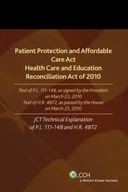
The BLS Library has in its collection Patient Protection and Affordable Care Act by CCH (Call #KF6276.6201 .A2 2010b) which has the full text of the Act. Earlier this year, Brooklyn Law School debate “Is ‘Obamacare’ Unconstitutional?” featured Professor Nelson Tebbe, an expert in constitutional law, and Ilya Shapiro, Senior Fellow in Constitutional Studies at the Cato Institute and Editor-in-Chief of the Cato Supreme Court Review.

This post has no comments.
Field is required.