The Brooklyn Law School logo

BLS Library Blog

Showing 9 of 9 Results

In recent years, the Law Library Association of New York (LLAGNY) has focused on developing CLE programming tailored to small and medium-sized law firms, attorney networking groups and solo practitioners. The programs typically include presentations by both a practicing attorney and a research librarian who identifies and discusses important research resources on the chosen topic.

On March 19, 2025, Brooklyn Law School librarian Jean Davis presented in the CLE program 60 Days In: Unpacking the Trump Administration’s Rapid Overhaul of U.S. Immigration Policy and Forecasting the Road Ahead, organized by the "Deliberate Solos" attorney group and LLAGNY. Jean discussed immigration law resources that complemented practitioner Michael Carbone's presentation, including resources on tracking recent executive actions affecting immigration, ICE raids and "know your rights" documents, and litigation challenging recent executive actions of the Trump administration.  

In her presentation, Jean highlighted the work of Professors Faiza SayedStacy Caplow and Susan Hazeldean both as scholars and as directors of BLS clinics. She talked about how BLS students gain invaluable skills through the Safe Harbor Clinic as they help clients in gaining immigration status and in asylum proceedings. She also discussed how BLS students in the LGBTQ Advocacy Clinic assist clients in asylum cases who are escaping from anti-gay or anti-trans persecution in their home countries. Jean’s program bibliography spotlighted a variety of resources on immigration law, many of them freely available, including the scholarship of Professor Maryellen Fullerton.

Participants left the event with helpful information on how to keep abreast of, and respond to the recent rapid changes to immigration law and policy.  If you are looking for guidance with your own immigration law research project, be sure to check out Jean’s immigration law research guide.

This post has no comments.
04/10/2019
profile-icon Sue Silverman

Presidential candidate, Julian Castro, just released a comprehensive immigration reform plan which would repeal the provision of US law that makes “illegal entry” into the US a federal crime. Under Castro’s plan, an immigrant who crossed the border would be detained briefly by Border Patrol and, if no red flags are raised, released pending an immigration hearing. Instead of a crime, being in the US without legal status would be considered a civil offense for which the penalty is deportation. Thus, if an immigrant does not qualify for asylum or another form of legal status, they would still be deported. See Dara Lind, Julián Castro wants to radically restrict immigration enforcement, Vox (Apr 2, 2019) https://www.vox.com/2019/4/2/18291584/2020-immigration-democrats-policy-castro-abolish-ice

“Illegal entry” into the US has been a crime since 1929 under Chapter 8, Section 1325 of the US Code, but only in the last 20 or so years has this provision been routinely enforced.   To learn more about US law and policy regarding immigration and border control, take a look at these resources:

U.S. Immigration and Naturalization Laws and Issues: A Documentary History (Michael C LeMay & Elliott Robert Barkan, eds., 1999)

This book compiles 100s of primary documents including court cases and opinion pieces that illuminate the controversies surrounding immigration and nationalization policies throughout US history. The book includes explanatory introductions to assist the reader in understanding the significance of each document.

Margaret S. Orchowski, The Law that Changed the Face of America : the Immigration and Nationality Act of 1965 (2015)

Margaret Orchowski, a journalist and immigration expert, examines how immigration laws have changed over the course of US history into the 21st century in light of globalization, changes in technology, terrorism, the recession and changing attitudes and expectations among younger generations. She also explores the roles that different branches of government and competing interests play in influencing immigration policy.

Ira J. Kurzban et al., Kurzban’s Immigration Law Sourcebook: A Comprehensive Outline and Reference Tool (16th ed. 2018)

Kurzban’s Immigration Law Sourcebook is intended to be a quick reference tool for practitioners and students that includes federal and administrative cases, regulations, statutes, and agency rulings.

Lucy E. Salyer, Laws Harsh as Tigers: Chinese Immigrants and the Shaping of Modern Immigration Law (1995)

This book examines the debates surrounding judicial enforcement of the Chinese exclusion laws as well as administrative power and reform of the Bureau of Immigration during a period of heightened nativism in the early 20th century.

Kevin R Johnson & Bernard Trujillo, Immigration Law and the US-Mexico Border: Sí Se Puede (2011)

Johnson and Trujillo review the history of Mexico – US migration patterns, the discrimination against US citizens of Mexican ancestry and policy debates over “illegal” aliens. Their discussion encompasses US immigration law and policy, the migration of labor, state and local regulation, and the contributions of Mexican immigrants to the US economy.

David Brotherton & Philip Kretsedemas, Immigration Policy in the Age of Punishment: Detention, Deportation, and Border Control (2017)

Immigration Policy in the Age of Punishment is an interdisciplinary exploration of immigration policies in America, Canada, and Europe during the Obama and Trump eras, within the context of what the authors refer to as a decades-long “age of punishment.” This book looks at deportations and border enforcement, national policy and jurisprudence, and the prison-to-deportation pipeline in its discussions of immigration laws and their enforcement.

Constructing Immigrant “Illegality”: Critiques, Experiences, and Responses (Cecilia Menjívar & Daniel Kanstroom, eds. 2014)

Constructing Immigrant “Illegality” is a collection of essays from the fields of anthropology, law, political science, religious studies, and sociology that explore the concept of immigrant “illegality,” how immigration law shapes immigrant illegality and how “illegality” takes effect in the lives of immigrants. The essays also examine power structures associated with the concept of illegality.

Immigration Stories (David A. Martin & Peter H. Schuck, eds. 2005)

This book tells the stories of 13 canonical immigration cases to illustrate how immigration law is made.

This post has no comments.
11/21/2017
profile-icon BLS Reference Desk

Earlier this year, the NYC Council passed legislation, Introduction 1568-2017, a bill to prohibit City agencies from partnering with the U.S. Department of Homeland Security to enforce federal immigration laws. The bill would prohibit the use of City resources, property, and information obtained on behalf of the City in furtherance of federal immigration enforcement. It would also require any requests for assistance by federal immigration enforcement agencies to be documented and later compiled into an anonymized report sent quarterly to the Council. It passed by a vote of 41-4 so now city employees are banned from spending any time on duty or using city property to assist in enforcing immigration laws. The move makes legally binding a policy the city has already followed of bowing out of assisting the feds in finding undocumented immigrants for deportation. Another bill, Introduction 1558-2017 bars the Department of Probation from handing over undocumented immigrants in response to requests from the feds. It expands rules that previously applied to the NYPD and city jails, which say officials cannot honor detainers from the feds unless the person they seek has been convicted of any of 170 serious crimes. “We will not waste city resources to help immigration authorities destroy our families,” said Council Speaker Melissa Mark-Viverito.

The defiant step followed President Trump’s threat to strip sanctuary cities of federal funds, saying they were letting potentially dangerous illegal immigrants go free instead of helping the feds. Earlier, the Justice Department gave New York and three other cities a “last chance” warning that the feds believe they are violating laws requiring cooperation, saying it would nix a $4.3 million grant without proof of compliance. The city has only reinforced its policy. “We’re taking a serious stance and saying that New York is a sanctuary city. We are not going to held federal authorities find immigrants in this city that are no threat to the resident of New York City,” said Councilman Rafael Espinal (D-Brooklyn), one of the sponsors.

Meanwhile the attempts of the Trump administration to crack down on sanctuary cities has met new obstacles as US District Court Judge William Orrick issued a permanent injunction blocking an executive order seeking to strip so-called sanctuary cities of federal funding. The ruling is a major setback to the administration’s attempts to clamp down on cities, counties and states that seek to protect undocumented immigrants from deportation by federal authorities. The ruling is the latest instance in which a federal judge has stood in the way of the president’s effort to implement his policies on immigration, joining rulings that have blocked different portions of the travel ban. Monday’s ruling, which followed lawsuits from two California counties, nullifies the January executive order on the matter, barring the administration from setting new conditions on spending approved by Congress. In the judge’s words “The Executive Order threatens to deny sanctuary jurisdictions all federal grants, hundreds of millions of dollars on which the Counties rely. The threat is unconstitutionally coercive.”

This post has no comments.
06/22/2016
profile-icon BLS Reference Desk

UNHCR 

This week, Brooklyn Law School Library Associate Librarian Linda Holmes created a display of library material marking World Refugee Day. In December 2000, the United Nations General Assembly passed a resolution, A/RES/55/76, designating June 20 as World Refugee Day to commemorate the 50th anniversary of the 1951 Convention relating to the Status of Refugees. Among the titles in the display case located on the first floor of the BLS Library opposite the elevator is The UNHCR and the Supervision of International Refugee Law edited by James C. Simeon (Call No. K3230.R45 U54 2013). The 384 page book is an in-depth analysis of the UNHCR’s supervisory role in the international refugee protection regime. It examines the part played by key institutions, organizations and actors in the supervision of international refugee law and provides suggestions and recommendations on how the UNHCR’s supervisory role can be strengthened to ensure greater State Parties’ compliance to their obligations under these international refugee rights treaties. Another title in the display is Green Card Stories by Saundra Amrhein and Ariana Lindquist (Call No. JV6455 .A826 2011), a coffee table style book that depicts 50 recent U.S. immigrants—each with permanent residence or citizenship—in powerfully written short narratives and compelling portraits.

According to the United Nations High Commissioner for Refugees (UNHCR), in 2016, 65.3 million people are considered refugees, the largest count since WWII. Due to rising conflict in the Middle East and ISIS’ intent to destroy Christians and non-Muslims, the world now has a record number of people who have been displaced from their homes and have nowhere to go. Unfortunately, many countries have no desire to help them, especially displaced Christians from the Middle East. One reason is because many fear that ISIS members are disguising themselves. The UNHCR estimates that 24 persons are displaced from their home every minute due to conflict and persecution with 16 million qualifying as refugees due to persecution. It released its latest analysis of global displacement trends in a 68-page report. To help understand its key findings, see this 90-second video:


This post has no comments.
09/27/2012
profile-icon BLS Reference Desk

Brooklyn Law School Professor Stacy Caplow has written a new article, Governors! Seize the Law: A Call to Expand the Use of Pardons to Provide Relief from Deportation. It is posted on SSRN and the abstract reads:

An obscure provision of the Immigration and Nationality Act allows an immigrant convicted of a wide range of crimes that are grounds for deportation to avoid this fate if pardoned by a chief executive. In the current era of expansion of the categories of crimes that constitute grounds for deportation and the shrinkage of equitable forms of relief, a pardon presents a vehicle for ameliorating these harsh effects. But few presidents or governors take advantage of this opportunity, even when the individual facing deportation is a long-term lawful resident whose transgression occurred long ago. During a few months in 2010, New York Governor David A. Patterson broke this trend to establish a pardon panel specifically to consider applications from immigrants. This article argues that Governor Patterson’s resolute and courageous, but ephemeral example presents a model for governors in all states to exercise discretion on behalf of individuals who deserve the exercise of mercy and justice that a full and unconditional pardon confers, particularly when the permanent exile they face far exceeds their wronging and is disproportionate to their well-established character.

This post has no comments.
06/28/2012
profile-icon BLS Reference Desk

The Supreme Court is winding down and this past week issued two eagerly awaited decisions, one of which dealt with immigration.

Arizona v. U.S. did not involve the issue of racial bias, though many civil rights groups have challenged it as such. Rather, the issue before the Supreme Court had to do with whether the Arizona law usurped the federal government’s authority to regulate immigration laws and enforcement.

If you are interested in finding out more information about immigration issues, our library has several books on this topic.   I have highlighted a few of the more recent ones below.

American Immigration: A Very Short Introduction – A fascinating and even-handed historical account, this book puts into perspective the longer history of calls for stronger immigration laws and the on-going debates over the place of immigrants in American society.  Oxford University Press


Immigration : A Documentary and Reference Guide  – Presents a history of US immigration, tracing the roots of the debate in the history of our profoundly divided and surprisingly cyclical response to foreign immigration.


In a New land : A Comparative View of Immigration – Drawing on the rich history of American immigrants and statistical and ethnographic data, In a New Land compares today’s new immigrants with the past influxes of Europeans to the United States and across cities and regions within the United States.


This post has no comments.
04/05/2012
profile-icon BLS Reference Desk

In Brooklyn’s US District Court for the Eastern District of New York this week, Immigration Equality filed a complaint on behalf of several married gay couples, including New York residents Heather Morgan and Maria del Mar Verdugo, who were married last year. The suit alleges a violation of the plaintiffs’ constitutional rights by preventing them from sponsoring their spouses for green cards. The five couples named as plaintiffs are seeking to obtain US citizenship for a foreign-born spouse. At issue is the 1996 Defense of Marriage Act (“DOMA”) which bars the federal government from recognizing same-sex marriages and denies federal benefits to married gay couples. The US federal government does not recognize lesbian and gay couples for immigration purposes. The plaintiffs were married in states permitting gay marriage. For heterosexual married couples, the US government would recognize the foreign spouse as an immediate relative of the American citizen and allow for citizenship. The named defendants are Attorney General Eric Holder, Secretary of Homeland Security Janet Napolitano, and the Director of the US Citizenship and Immigration Services, and others. The complaint alleges that DOMA violates the constitutional right to equal protection.
SARA, the Brooklyn Law School Library catalog, has an item in electronic format Hearing on “S.598, the Respect for Marriage Act, Assessing the Impact of DOMA on American Families” dated July 20, 2011written testimony of the Williams Institute, UCLA School of Law which has statistical analysis of the effects of the Defense of Marriage Act on same-sex couples in the United States. See also Legal Recognition of Same-Sex Couples in Europe edited by Katharina Boele-Woelki and Angelika Fuchs (Call # KJC1159 .L34 2003). A preview of this book is available here.
This post has no comments.
02/11/2011
profile-icon BLS Reference Desk

US District Court Judge Shira A. Scheindlin of the Southern District of New York ruled that federal government agencies, when responding to Freedom of Information Act requests, must release documents in a searchable format and provide the document’s metadata when making releases in electronic format. The ruling in National Day Laborer Organizing Network et al v. United States Immigration and Customs Enforcement Agency et al. is a groundbreaking case going beyond FOIA and e-discovery issues which she addressed Zubulake v. UBS Warburg LLC, 217 F.R.D. 309 (click on the case name to view it in LexisNexis).

The Center for Constitutional Rights and the Immigration Justice Clinic of the Cardozo School of Law filed the complaint in February 2010 demanding records related to the Immigration and Customs Enforcement Agency (ICE) “Secure Communities” program that involves local and state police in federal immigration enforcement. The program requires local and state police to run individuals’ fingerprints through multiple databases upon arrest even if no charges are brought and regardless of how minor the charges are. Besides the potential of erroneous information in those databases, critics of the program charge that it uses racial profiling to funnel people into the ICE detention and removal system. The FOIA action by the National Day Laborer Organizing Network (NLDON) sought materials necessary to provide comprehensive information on the program, including policies, procedures and objectives; fiscal impact; statistical information; individual records; communications; and assessment records.

In response to the FOIA requests, the government delivered documents grouped together in large files that were not searchable and in which individual documents could not be identified without reading through the entire file and e-mails were separated from their attachments. In the conclusion of her 27 page opinion in NLDON v. ICE, Judge Scheindlin remarked:

Once again, this Court is required to rule on an e-discovery issue that could have been avoided had the parties had the good sense to “meet and confer,” “cooperate” and generally make every effort to “communicate” as to the form in which ESI would be produced. The quoted words are found in opinion after opinion and yet lawyers fail to take the necessary steps to fulfill their obligations to each other and to the court. While certainly not rising to the level of a breach of an ethical obligation, such conduct certainly shows that all lawyers -even highly respected private lawyers, Government lawyers, and professors of law -need to make greater efforts to comply with the expectations that courts now demand of counsel with respect to expensive and time-consuming document production. Lawyers are all too ready to point the finger at the courts and the Rules for increasing the expense of litigation, but that expense could be greatly diminished if lawyers met their own obligations to ensure that document production is handled as expeditiously and inexpensively as possible. This can only be achieved through cooperation and communication.

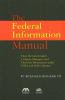
The Brooklyn Law School Library has in its collection The Federal Information Manual: How the Government Collects, Manages, and Discloses Information under FOIA and Other Statutes by P. Stephen Gidiere (Call # KF5753 .G53 2006) with these chapters: An overview of federal information disputes — Agency collection of information — Management of agency records — Classified information — Access to federal records — Electronic records and federal public websites — Elements of a successful FOIA request — Reasons for the withholding of agency records — Litigation involving federal records — Homeland security information.

This post has no comments.
03/19/2010
profile-icon BLS Reference Desk

This semester, two of the faculty in my liaison group, Professors Stacy Caplow and Maryellen Fullerton, offered me the opportunity to co-teach Directed Study in International Refugee Law.  Under supervision, the upper-level students in this seminar research and draft legal documents to support the Hong Kong Refugee Advice Centre.  HKRAC describes itself as “the only dedicated provider of pro bono legal aid to refugees seeking protection at the United Nations High Commissioner for Refugees in Hong Kong.”  BLS alumnus Brian Barbour is the Executive Director of HKRAC.

Below is a link to a web guide that I created to assist these students.  I think that sections of this guide, such as the tab “COI” (country of origin data), will also aid participants in the BLS Safe Harbor Clinic.

Sources To Support Directed Study in International Refugee Law

This post has no comments.
Field is required.