

With paper deadlines fast approaching, many of you may need to identify relevant Congressional documents for your paper. Often legislative history research is cumbersome and time consuming. The Brooklyn Law School Library licenses two useful databases to ease this process: Legislative Insight and Proquest Congressional.

Legislative Insight streamlines the research process by digitizing the majority of full text publications associated with an enacted statute’s legislative history. These documents include all versions of enacted and related bills, Congressional Record excerpts, and committee hearings, reports, and documents. Legislative Insight also contains other relevant material such as committee prints, CRS reports, and Presidential signing statements.
Unlike Legislative Insight, Proquest Congressional carries documents pertaining to both enacted legislation as well as the bills that do not become law. This includes the text of bills, transcripts of unpublished and published hearings, Congressional reports, the Congressional Record, Congressional Research Service reports, voting records, etc. The indexing of some of the material goes back to the signing of the Constitution. A useful feature of Proquest Congressional is the Congressional Profiles which provide the historical context of each Congressional term, including an overview of party divisions and leadership, economic conditions, conflicts, major laws, Landmark Supreme Court cases and major event
To access Legislative Insight or Proquest Congressional from off-campus, you first need to implement the proxy instructions.

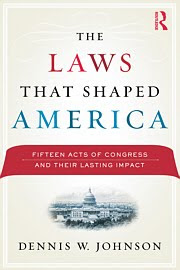


 For further reading on the topic, see Consumer Arbitration Agreements: Enforceability and Other Topics, by F. Paul Bland, Jr. (Call No. KF9084 .B53 2007) in the library’s main collection.
If you are researching legal issues related to the coronavirus pandemic, you will definitely want to check out the comprehensive coronavirus resource guide published by the Law Library of Congress, which provides links to laws, regulations and executive actions in the United States at both the federal and the state level, and in various countries. The guide is updated at least weekly and in addition to direct links to laws and regulations, it includes Congressional Research Service reports which provide information to Congress about the coronavirus, law library blog posts, and articles from the Law Library of Congress Global Legal Monitor which tracks global legal developments.
Some interesting Congressional Research Services reports listed in the Coronavirus Resource Guide include:
Todd Garvey, Constitutional Considerations of Remote Voting in Congress, Congressional Research Services(Apr. 14, 2020)
Colby Leigh Rachfal, COVID-19 and Broadband: Potential Implications for the Digital Divide, Congressional Research Services (Mar. 13, 2020)
Marc Labonte, COVID-19: Potential Economic Effects, Congressional Research Services (Mar. 11, 2020)
The Law Library of Congress’s Global Legal Monitor has dozens of articles organized by region which track individual country responses to the coronavirus, such as an article detailing Germany’s changes to its rules of procedure in Parliament and one discussing legislation in China that punishes the trade and consumption of wild animals.
The guide also includes a link to a law library report on Legal Responses to Health Emergencies. Though written five years ago, the report provides useful summaries of regulations addressing health emergencies in 25 jurisdictions as well as a comparative summary and bibliography that may be useful in analyzing the level of preparedness of different countries for the current pandemic.
Commenting on blog posts requires an account.
Login is required to interact with this comment. Please and try again.
If you do not have an account, Register Now.