The Brooklyn Law School logo

BLS Library Blog

Showing 10 of 29 Results

10/30/2017
profile-icon BLS Reference Desk

After years of efforts to repeal New York City’s outdated Cabaret Law, the City Council is on the verge of repeal. The New York Times reports today that After 91 Years, New York Will Let Its People Boogie. The “no dancing” law is set to be struck down with a new bill tomorrow according to a report. Councilman Rafael Espinal told the newspaper that he has the 26 votes needed to pass a repeal through City Council, as well as Mayor Bill de Blasio’s approval. In 1926, while liquor was bootlegged and Jazz was shaking things up in Harlem, New York City instituted the Cabaret Law that required establishments serving food or drink to obtain a separate license before permitting any dancing or live music on their premises. This law successfully sought to police and restrict the interracial mixing happening in dance clubs uptown. Almost 100 years later, though times and racial attitudes have changed, the Cabaret Law is not only still in effect and enforced, but contemporary zoning regulations effectively make dancing illegal in large parts of the city.

Drafted by Brooklyn Council Member Rafael Espinal (D-37), first elected to the New York State Assembly at the age of 26 and currently in his first term as a council member, the bill will address a pernicious, racially motivated law that has followed “fringe” musical scenes in the city for nearly a century.

gigs

The Brooklyn Law School Library has in its collection Gigs: Jazz and the Cabaret Laws in New York City (Call No. PN2277.N5 C51 2005) by Paul Chevigny, an attorney and former civil rights activist, who recounts his efforts to repeal New York’s Cabaret Law. The book is also available as an e-book. Gigs provides a fascinating account of a unique victory for musicians against repressive entertainment licensing laws. It provides a much-needed study of the social, political, cultural and legal conditions surrounding a change in law and public attitudes toward vernacular music in New York City.

This post has no comments.
09/19/2013
profile-icon BLS Reference Desk

An article in the New York Law Journal reports that US District Judge Shira Scheindlin for the Southern District of New York has appointed a panel of law professors to assist a court-appointed facilitator in developing remedies in the case of Floyd v. City of New York, the stop-and-frisk litigation. Brooklyn Law School Professor of Law I. Bennett Capers will serve as chair of the Academic Advisory Council to assist facilitator Nicholas Turner of the VERA Institute of Justice. Turner will work with the NYPD and the Academic Advisory Council in a mediation process to develop  reforms. Longer-term changes include a trial run of body-worn cameras in the precinct in each borough that saw the highest number of stops.

The second part of Judge Scheindlin’s opinion in last month’s ruling lays out her remedies. Those include “immediate changes” to the NYPD’s implementation of stop-and-frisk, such as revisions to NYPD training materials, more thorough documentation of stops through a new form and better and more thorough activity log records, as well as a better standard for the NYPD’s supervising officers to assess the constitutionality of the stops their subordinates are making.

Other members of the panel are retired Brooklyn Law Professor William Hellerstein, Ian Ayres of Yale Law School, Alafair Burke of the School of Law at Hofstra University, Miriam Gohara, visiting assistant professor at Columbia Law School, Taja-Nia Henderson of Rutgers School of Law-Newark, Tanya Hernandez of Fordham University School of Law, Conrad Johnson of Columbia Law School, K. Babe Howell of CUNY Law School, Olatunde Johnson of Columbia Law School, Tracey Meares of Yale Law School, Janice Tudy-Jackson of Columbia Law School and Steve Zeidman of CUNY School of Law.

The appointment of the Council comes one day after the Judge’s Order denying New York City’s request for a stay pending appeal of her appointment of a police department monitor to help develop and implement reforms of stop-and-frisk practices. The city has moved for an expedited appeal in the case the case and is expected to ask the U.S. Court of Appeals for the Second Circuit for a stay.

For background information on the issue of stop and frisk, see SARA, the BLS Library Catalog, for the 27 page internet report Stop-and-Frisk 2011 NYCLU Briefing.

This post has no comments.
04/24/2013
profile-icon BLS Reference Desk

In Black Car Assistance Corp. v. City of New York, Justice Carol E. Huff of the Civil Branch of the Supreme Court, New York County, ruled Tuesday dismissing a lawsuit by livery cab owners against the Taxi and Limousine Commission’s (TLC) pilot program enabling riders with smartphones to summon yellow cabs for pick-up. Fares could also be paid electronically through the app. The program was adopted by the TLC in December 2012.

Livery-cab companies and black-car owners argued that the program would cut into their business of pre-arranged rides with customers. They also argued that the program could be discriminatory against elderly riders because they tend to lack smartphones. But New York State Supreme Court Justice Huff found the plaintiffs’ arguments without merit writing “Any experiment to determine whether an e-hail program will work in New York City would require extensive participation to determine, for example, effects on street-hail availability and whether there would be sufficient numbers of participating taxi drivers to meet demand.”

This decision is a victory for all the riders who want to decide for themselves what technologies and services they want to use,” said TLC Commissioner and former Brooklyn Law School faculty member David Yassky. “The market will ultimately decide which apps rise or fall and we have an obligation to give the riding public that choice. Thanks to today’s ruling, they have that choice.”

The ruling removes a big hurdle for the TLC and the Bloomberg administration whose proposals to reform the taxi industry have faced obstacles in the courts. In June 2012, Judge Arthur F. Engoron of the Civil Court of the City of New York, New York County issued a temporary restraining order in Taxicab Service Association v. The State Of New York to block their proposed outer-borough street hail plan which would have allowed 18,000 livery cabs to take street hails in the outer boroughs and upper Manhattan. Two months later, Judge Engoron issued an opinion invalidating the state law that permitted the street hail plan on the grounds that its passage required “home rule” approval by the New York City Council aksing the Legislature to act on an issue concerning New York City. The case is now pending before the New York Court of Appeals. The TLC website states that the city currently has 3,237 yellow medallion cabs. A NY Times article reported that the cost of medallions hit a record high in 2011 when two were sold for $1,050,000 each. 

This post has no comments.
02/14/2013
profile-icon BLS Reference Desk

New York Assemblywoman Aravella Simotas of Queens has introduced Assembly Bill 3339, a new version of her Rape is Rape bill. In the last legislative session, she introduced a similar bill following the trial of former police officer Michael Pena, who was charged with sexually assaulting a young teacher by gunpoint in 2011. New York Penal Law 130 makes “sexual intercourse,” defined in its ordinary meaning as “any penetration, however slight,” an element of rape in the first, second, and third degree. At trial, Pena’s lawyer denied that there was rape because there was no intercourse. Pena admitted attacking the woman and threatening to shoot her if she fought back. With the jury deadlocked over whether Pena’s assault constituted rape, the judge declared a mistrial.

Simotas’ bill would define rape as criminal sexual conduct, rather than sexual intercourse, to ensure that offenders face the full consequences of their actions. The proposed legislation re-defines the crimes of Rape in the First, Second and Third Degrees to include oral sexual conduct, anal sexual conduct, and aggravated sexual contact in addition to sexual intercourse as an element of these rape charges. New York State Senator Catharine Young, a co-sponsor of Senate Bill 2240,said “We want to ensure that our state has the most effective and comprehensive statute in the country to prosecute violent sexual assault crimes against women. We will work with the Assembly, prosecutors and victims advocacy groups to come up with a positive solution.”

Andrew Willis, Chief Executive Officer of the Stop Abuse Campaign, a non-profit cause dedicated to supporting survivors of abuse, also spoke in favor of the bill. He said “I was raped when I was a 10 year old boy, but in New York anal rape isn’t rape it’s only a sexual assault. Working together we’re going to change that by passing the Rape is Rape bill.” An online petition is available for supporters to sign. As of Wednesday afternoon, there were more than 2,800 signatures recorded in support of the bill.
 
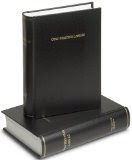
The Brooklyn Law School Library has in its collection Practical Aspects of Rape Investigation: A Multidisciplinary Approach (Call # HV8079.R35 P7 2009) by Robert R. Hazelwood and Ann Wolbert Burgess. The 592 page book cites U.S. Justice Department statistics that indicate that only 26 % of all rapes or attempted rapes are reported to law enforcement officials, and only slightly more than half of these result in the arrest of a suspect. Part of the problem lies in the public’s lack of faith in the criminal justice system’s ability to effectively deal with rape, victims, and the offenders.

This post has no comments.
01/17/2013
profile-icon BLS Reference Desk

On February 1, 2013, the NYS Court of Appeals will launch an online service they developed,  the Court of Appeals Public Access and Search System, aka Court-PASS.   Court-PASS provides an improved method for the filing of records and briefs in digital format on appeals to the Court of Appeals and, for the first time, offers universal online access to these documents through a publicly-searchable database on the Court’s website. nyscoa

Users of this database may view a list of all pending and decided cases listed alphabetically by case name.  In addition, the search function allows users to retrieve pending and decided cases by party name, argument date, decision date, Judge, appeal number, subject matter or a combination of any of the above.

The public will be able to use Court-PASS free of charge to view or download documents from every stage of a case at the Court of Appeals.

Court-PASS  will be maintained as a permanent public archive for documents related to Court of Appeals cases pending on or filed after January 1, 2013.

The Notice to the Bar as well as changes to the Court’s Rules, and revised Technical Specifications are available here.

This post has no comments.
07/03/2012
profile-icon BLS Reference Desk

Under current New York law, N.Y. Penal Law § 270.00 makes the sale and possession of fireworks illegal. The law dates back to section 1844a of the Penal Law of 1909 which was enacted into law in 1940. In 1997 certain fireworks were reclassified as “dangerous fireworks”. These fireworks are capable of causing serious physical injury and include torpedoes, skyrockets, Roman candles and bombs. Current law penalizes as a violation the possession or use of fireworks or dangerous fireworks, and penalizes as a class B misdemeanor the sale of fireworks or dangerous fireworks. Any person who sells fireworks or dangerous fireworks valued at $500 or more, or who sells dangerous fireworks to a minor, is guilty of a class R misdemeanor. Finally, any person who, within the past five years has previously been convicted of the sale of dangerous fireworks is guilty of a class E felony.

For Fourth of July celebrations beyond 2012, that could change if Governor Andrew Cuomo signs a bill recently passed by the State Senate and Assembly. The proposed law would legalize the sale of hand-held sparkles, ground sparkler displays and other so-called novelty items. Explosive devices, including firecrackers and Roman candles, would still be banned. The proposed law would not apply to New York City, where all fireworks would remain illegal. New York, New Jersey, Massachusetts, and Delaware are the only four states that ban all forms of fireworks. Assemblyman Kenneth Zebrowski, (D, New City) and Assemblyman Joseph Morelle, (D, Rochester), co-sponsors of the bill, say people are crossing into other states to buy fireworks or buying them in underground markets. Making fireworks legal will bring in about $50 million in annual sales and $2 million in state sales tax.

Safety advocates are concerned legalizing some fireworks is putting profit ahead of safety. Fireworks can be dangerous, causing serious burn and eye injuries. The American Association of Pediatrics (AAP) supports a ban on all sales of consumer fireworks. “The AAP continues to urge families NOT to buy fireworks for their own or their children’s use,” their website states. “Each July 4th, thousands of people, most often children and teens, are injured while using consumer fireworks. Despite the dangers of fireworks, few people understand the associated risks — devastating burns, other injuries, fires and even death.” This video from the AAP relates the dangers of fireworks.

The U.S. Consumer Product Safety Commission reports that in 2010 three people were killed and about 8,600 others were hurt in fireworks. In 2009, there were two deaths and approximately 8,800 injuries. The year before, there were seven people killed and an estimated 7,000 others hurt. Read the 2010 report here.

This post has no comments.
04/04/2012
profile-icon BLS Reference Desk

The Law Library Association of Greater New York, a chapter of the American Association of Law Libraries, is the local library association for legal information professionals.  Each year LLAGNY, as it is referred to, hosts a series of educational programs.  This year, as a member of LLAGNY’s education committee, I coordinated tours of the City Hall Library and the new Visitors’ Center.  The first tour was held on March 13, 2012 and the second tour, already fully booked, is slated for April 24, 2012.  Since the City Hall Library collection is little known in the New York City community, it’s the purpose of this post to inform the BLS community about this gem of a collection.

The City Hall Library is located in room 112 of the Surrogate’s Court building at 31 Chambers Street in Manhattan.  The architect of the building was John R. Thomas and it was constructed between 1899 and 1907.  The building was originally intended as a Hall of Records and was renamed the Surrogate Courthouse in 1962.  The first floor interior is frequently compared to the Paris Opera House.  The building was designated a New York City landmark in 1977.

Christine Bruzzese, Supervising Librarian, pointed out the highlights of the City Hall Library to the LLAGNY group.  The City Hall Library is New York City’s official depository for all agency published reports and studies.  The City Hall Library was established in 1913 and now has a collection of approximately 250,000 volumes.

Some of the highlights of the City Hall Library include:

  • New York Laws from 1674 to date
  • Proceedings of the New York City Council
  • Building Codes, used by city and private attorneys, architects and engineers
  • Board of Estimate Proceedings from 1879 to 1989 (when the board was declared unconstitutional by the U.S. Supreme Court)
  • Landmark designation reports
  • Laws of the City of Brooklyn (an independent city until it was annexed by New York City in 1898)
  • New York City labor contracts
  • Press releases of the mayors
  • New York City biographical files and topical clipping files from the early twentieth century until the early twenty-first century

The new Visitors’ Center, scheduled to open in April 2012, will have rotating displays of pictures, memorabilia and miscellaneous items of interest.  During the LLAGNY pre-opening tour in March, we saw several gifts presented to the mayors over the years from visiting heads of state, mug shots of various infamous New York City crime figures and most impressive to me, were the beautiful crystal ball and bat given to Mayor Rudolph Giuliani by the New York Yankees when they won the World Series in 2000.

The City Hall Library is open to the public Monday, Wednesday and Thursday, 10:00am to 4:00pm and Tuesday and Friday, 10:00am to 12:00pm.

Linda Holmes, Associate Law Librarian

This post has no comments.
03/06/2012
profile-icon BLS Reference Desk

The US Court of Appeals for the Second Circuit in Hayes v. State of New York Attorney Grievance Committee of the Eighth Judicial District overturned part of a NY requirement that lawyers advertising professional certifications include particular disclaimers, saying sections of the rule are unconstitutional encroachments on free speech. Ruling that a requirement that ads that say certified lawyers are not necessarily more competent than others is “far more intrusive than necessary” and impermissible under the First Amendment, the court also voided a part of the rule requiring advertisements to explain that lawyers can practice without special certifications, saying the state had not shown that consumers would otherwise be misled.

J. Michael Hayes, who holds board certification in civil trial advocacy, faced several investigations by the State of New York Attorney Grievance Committee for inadequate disclosures on his letterhead and on one of two billboards advertising his services in 1999. To receive certification, a lawyer must have been lead counsel in at least five trials and actively participated in at least 100 matters requiring the taking of testimony. Although the Committee dismissed the investigations, Hayes, fearing further investigations, filed suit pro se in 2001, asking a US District Court for the Western District of New York to declare the disclaimer requirement void. The trial court rejected his void-for-vagueness claim following a bench trial in 2010.

The Second Circuit reverssed finding questionable the requirement that lawyers explain that the certification is not required to practice law, saying the state did not demonstrate that the disclaimer is needed to protect the public. “The alleged harm is surely not self-evident. It is difficult to imagine that any significant portion of the public observing the thousands of lawyers practicing in New York without certification believe that all of them are acting unlawfully.” The Second Circuit did rule that New York can require lawyers to say a certifying organization is not government-affiliated, since “avoiding such a possible misconception furthers a substantial governmental interest in consumer education and is not more intrusive than necessary to further that interest.” However, the court barred the Grievance Committee from enforcing that requirement against Hayes without clear notice of specific problems with his advertising and what he can do to comply. Finding that there was a lack of clear standards for enforcing Rule 7.4 on attorney specializations, the appellate judges ruled that “It is therefore void for vagueness as it has been applied to Hayes.” The New York Rules of Professional Conduct are available via SARA, the Brooklyn Law School Library catalog.

For more on the case, see the NY Law Journal article Circuit Finds Attorney Ad Rule on Specialty Violates Free Speech. How the issue of lawyer specialization impacts law students and law schools was the subject of a post, The end of law schools by Ray Campbell, in the Legal Ethics Forum last month that is worth reading.

This post has no comments.
01/06/2012
profile-icon BLS Reference Desk

The BLS Library Blog wishes readers a Happy New Year. The first of the year is when many new laws take effect. New York passed the Job Creation and Taxpayer Protection Act of 2011 enacting personal income tax cuts for about 4.4 million people and tax relief for manufacturers (Chapter 55, L.2011). A 2% cap on property tax increases levied by school districts and local governments also starts this year (Chapter 97, L.2011).

New regulations amend Section 7807 of the Education Law to require massage therapists to take at least 36 hours of mandatory continuing education every three years. Section 70.10 of the Regulations of the Commissioner on Public Accountancy now requires all accounting firms to participate in a mandatory quality review program. A new law (Ch. 65, L.2011) requires dental offices to keep a defibrillator on hand in case any patient has a cardiac emergency.

New legislation (Ch.205, L.2010) goes into effect banning household dishwashing soap containing phosphorus, which has been deemed hazardous to lakes, rivers and other water sources. New laws give the New York State Department Environmental Conservation new powers: one, (Ch. 220, L2011) bans products that contain mercury; another (Ch. 383, L.2011) limits the number of commercial fishing licenses and permits issued by DEC to protect the viability of the commercial and consumer fishing industry.

Another new law (Ch. 131, L.2011) amends the Public Health law to prohibit minors from buying hookahs and water pipes — and the tobacco that goes inside them.

There is a new law (Ch. 459, L.2011) that requires drivers to move over to adjacent lanes when approaching or passing hazard vehicles. It also provides extra safety measures for drivers and workers helping a broken-down vehicle, removing snow or performing other road maintenance.

Governor Andrew Cuomo signed into law a measure that goes into effect in early February requiring state and local agencies to make available all resolutions and related documents to be discussed at public meetings to be made available before or at the meeting – on the agency’s website, if it has one that it regularly updates. Currently, documents in many instances are made available following the meeting or not at all. Agencies are exempted from the requirement if compliance is too expensive or exceedingly onerous. Under the state open meetings law, anyone can sue an agency that fails to provide the required documents; a court could then order the agency to provide staff training, as well as cover the plaintiff’s legal costs.

The Brooklyn Law School Library has related material on the issue. See Open Meeting Laws 2d by Ann Taylor Schwing and Constance Taylor (Call # KF5753.Z95 S38 2000) a reference tool that covers meeting requirements, litigation procedures and has a list of defenses that typically fail. The book provides an invaluable table of statutes, cases, attorney general opinions and a comprehensive listing of secondary authorities to aid in research.

This post has no comments.
11/05/2011
profile-icon BLS Reference Desk

The 2011 New York State Judicial Candidate Voter Guide is available through the Unified Court System’s website at (www.nycourts.gov/vote) through Election Day, Nov. 8, 2011.

The 2011 non-partisan Judicial Candidate Voter Guide is designed to help you make a more informed decision on Election Day (November 8, 2011).

The  Guide covers elected, trial-level judge positions, other than Town and Village Justices as provided by the state and county boards of election. There is also biographical information about each candidate as provided by the candidate.  Where candidates have participated, the Guide has links to their biographical, educational and professional histories. Candidates also were allowed to provide a short “personal statement” about themselves for the Guide. Finally, there is are descriptions of elective judicial offices throughout New York State.

The Guide lists covers for New York State judicial races; fifty-four of the state’s sixty-two counties have at least one contested judicial races on November 8th.

This post has no comments.
Field is required.