The Brooklyn Law School logo

BLS Library Blog

Showing 10 of 18 Results

05/08/2018
profile-icon BLS Reference Desk

The Brooklyn Law School Library New Books List for May 1, 2018 has 23 print titles and 54 E-book titles. There are so many topics covered in the list but the pending case of Gaylor v. Mnuchin which involves permitting housing allowances given by denominations to clergy to be exempt from taxation makes one book on the list highly topical.

A book cover with a coin

Description automatically generated

The book is Taxing the Church: Religion, Exemptions, Entanglement, and the Constitution by Edward A. Zelinsky, Professor of Law at Cardozo School of Law. It explores the taxation and exemption of churches and other religious institutions. This exploration reveals that churches and other religious institutions are treated diversely by the federal and state tax systems. Sectarian institutions pay more tax than many believe. In important respects, the states differ among themselves in their respective approaches to the taxation of sectarian entities. Either taxing or exempting churches and other sectarian entities entangles church and state. The taxes to which churches are more frequently subject – federal Social Security and Medicare taxes, sales taxes, real estate conveyance taxes – fall on the less entangling end of the spectrum. The taxes from which religious institutions are exempt – general income taxes, value-based property taxes, unemployment taxes – are typically taxes with the greatest potential for church-state enforcement entanglement. It is unpersuasive to reflexively denounce the tax exemption of religious actors and institutions as a subsidy.

For many years, religious denominations in the United States have been largely exempt from paying taxes. However, some cracks are beginning to show in that armor. Principal among them is a suit awaiting a hearing by the 7th U.S. Circuit Court of Appeals in the case of Gaylor v. Mnuchin, in which the Freedom From Religion Foundation is challenging the constitutionality of a 1954 law, the so-called “parsonage allowance” under 26 U.S.C. § 107(2) that permits “ministers of the gospel” to receive cash housing allowances tax free, a potential violation of the Establishment Clause. The case is on appeal to the United States Court of Appeals For The Seventh Circuit seeking to reverse the district court’s opinion and affirm the constitutionality of the minister’s housing allowance under 26 U.S.C. § 107(2).

This post has no comments.
09/29/2017
profile-icon BLS Reference Desk

ta

Brooklyn Law School Library’s New Books List for October contains 10 print titles and 20 eBook titles. Among the print items are two on taxation both authored by BLS Professors. The first is Federal Taxation of Corporations and Corporate Transactions (KF6464.D43 2017) by Steven Dean and Bradley T. Borden. This first edition of Federal Taxation of Corporations and Corporate Transactions provides a comprehensive examination of tax principles with a unique practice-oriented approach to help students become practice ready with skills that they have developed in a setting that reflects practice in the real world. The casebook introduces students not only to transactional tax practice and the federal tax penalty regime, but also to the rules of professional ethics and the specific rules that govern professionals who practice tax law. It features an array of Deal Downloads that breathe life into complex material, presenting high-profile transactions involving Amazon, Apple, Ford and others.

Amazon cover image

The second title is Taxation and Business Planning for Partnerships and LLCs: 2017-2018: Client File: DD Pizza LLC (operating partnership) by Bradley T. Borden (Call Number KF6452.B673 2017). The materials in this Client File provide real-word problems, documents, and financials that direct the study of partnership taxation. They are an ideal accompaniment to partnership tax casebooks, especially the author’s own Taxation and Business Planning for Partnerships and LLCs. This first edition of the Client File includes memoranda and practice materials. It also includes recent developments that will not be in most casebooks. The Client File creates a practice setting that is ideal for studying issues that transactional tax attorneys’ clients face regularly.

The book is uniquely designed to help students become practice-ready with skills that they have developed in a setting that reflects actual practice. This new partnership tax casebook has several key features, including an accompanying client file created to help students learn the law in a practice-like setting. This comprehensive treatise-like casebook includes background information on non-tax topics, such as basic accounting and finance, concepts related to debt, and state-law entity transactions, as well as a general review of basic tax concepts that come up through the course of studying partnership taxation. The first edition of Taxation and Business Planning for Partnerships and LLCs also includes rules of conduct for attorneys and practice before the IRS.

This post has no comments.

jordan

Joseph A. Jordan, was born in Norfolk Virginia and was a Brooklyn Law School graduate.  He was a veteran, paralyzed from the waist down during World War II and confined to a wheelchair.

As an attorney, Jordan and his firm, Jordan, Dawley & Holt, fought civil rights cases across the South during the 1960’s.  One such case made constitutional history,

In November 1963 Jordan filed suit on behalf of Mrs. Evelyn Thomas Butts to have the state’s poll tax declared unconstitutional. The poll tax was a tax levied on individuals as a prerequisite for voting. Although levied on all voters regardless of race, the tax effectively disenfranchised the poor, including many African-Americans. The tax was outlawed nationally in January 1964 by ratification of the 24th amendment, but it only addressed federal elections and remained silent on state and local applicability.

Jordan’s suit was defeated nine times by local and state courts before finally working its way up to the U.S. Supreme Court.  In March 1966 the case became part of the landmark decision, Harper v. Virginia State Board of Elections.   Only six years out of law school,  Jordan argued before the U.S. Supreme Court that Virginia’s poll tax should be struck down.  The court agreed and ruled it unconstitutional under the equal protection clause of the 14th Amendment.

Joseph A. Jordan went on to become the first black elected to the Norfolk City Council since 1889. He served three terms on the council, including two years as vice mayor. In 1977, he was appointed to Norfolk’s General District Court and retired in 1986.

This post has no comments.

The Brooklyn Law School Library New Books List for November 11, 2015 has 88 items with 65 print volumes and 23 e-books. The entries cover a wide range of subjects from Lotteries (American Sweepstakes: How One Small State Bucked the Church, the Feds, and the Mob to Usher in the Lottery Age) to Discrimination in Criminal Justice (Crime, Inequality and Power) to Prostitution (Getting Screwed: Sex Workers and the Law) to Freedom of Expression (Lessons in Censorship: How Schools and Courts Subvert Students’ First Amendment Rights) to Race Relations (Liberalizing Lynching: Building a New Racialized State).

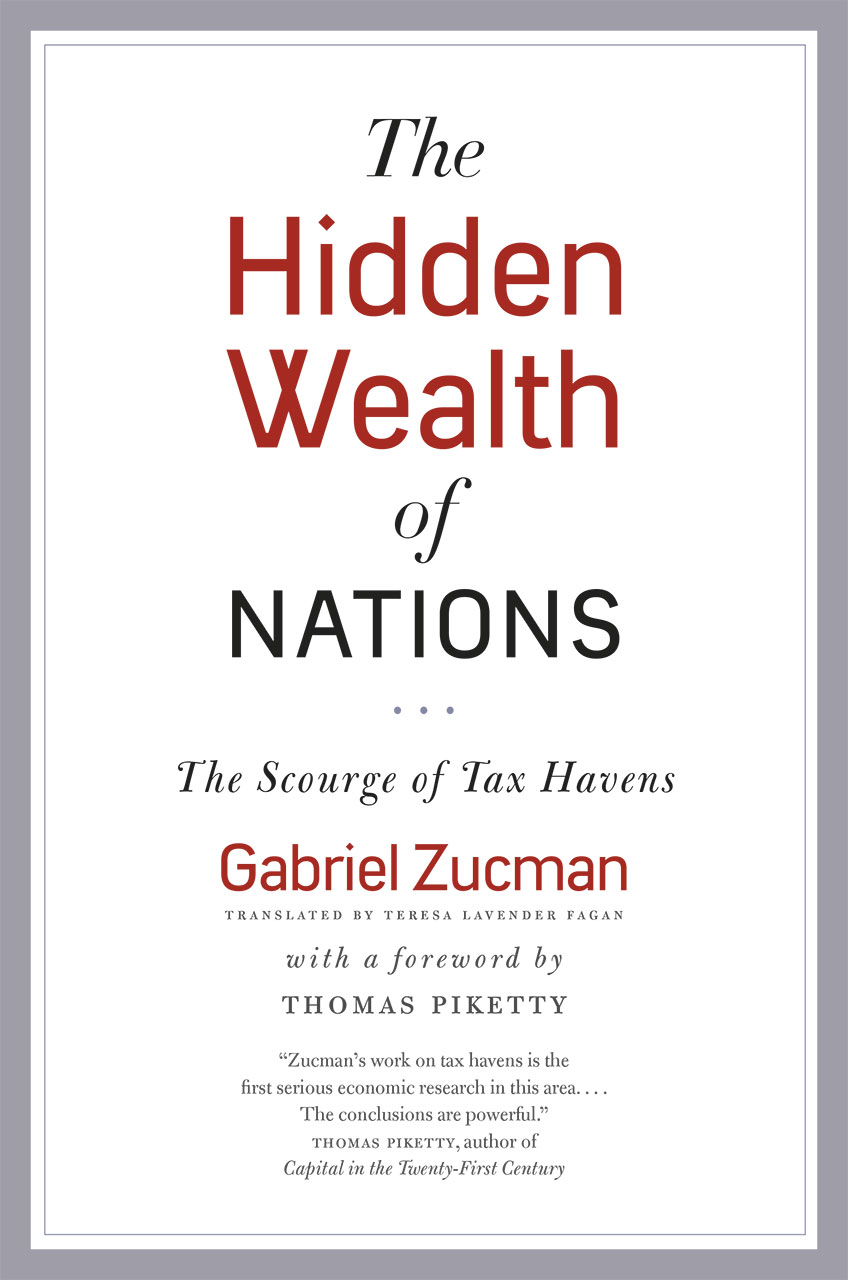
Hidden WealthAlso included is The Hidden Wealth of Nations: The Scourge of Tax Havens (Call # HJ2336 .Z8313 2015) by Gabriel Zucman (translated by Teresa Lavender Fagan from the French original Richesse Cachée des Nations and with a foreword by noted economist Thomas Piketty, author of Capital in the Twenty-First Century). This slim 129 page book claims to be the “the first serious economic research” into tax haven activity and an important work that anyone interested in tax havens, social justice, defeating inequality and delivering tax reform should read. The author is a French economist based at the University of California, Berkeley, and part of a network of doing valuable work on inequality, wealth, tax and the difficulties caused by the uneven distribution of capital resources in society. Although the book fails to define what a tax haven is, it does set out a campaign on tax havens in the second half of this book which makes a lot of sense. The book recommends the creation of a global register of financial asset wealth holding. This suggestion could be a practical and necessary step in the assembly of the data needed for the global wealth tax proposed in his book.

Whether country-by-country reporting can be an effective foundation for a taxation of multinational corporations is an open question. Country-by-country reporting may well permit tax authorities to determine what proportion of the sales, employees and assets of a multinational corporation are located in its jurisdiction. Similarly, if a global register of wealth could be established, the data needed to tax global wealth would have been created. The book is worth reading of its vision of an activist committed to promoting a new and radical solution that he has identified. Not many academics take on the role of the public intellectual who demands action to address a problem that they have identified. This one does.

Price We PayReaders interested on this topic may want to view The Price We Pay, a documentary inspired by another French book La Crise Fiscale qui Vient. Director Harold Crooks looks at the dirty world of corporate malfeasance and the dark history and dire present-day reality of big-business tax avoidance, which has seen multinationals depriving governments of trillions of dollars in tax revenues by harboring profits in offshore havens. Tax havens, originally created by London bankers in the 50s, today put over half the world’s stock of money beyond reach of public treasuries. Nation states are being reshaped by this offshoring of the world’s wealth. Tax avoidance by big corporations and the wealthy is paving the way to historic levels of inequality and placing the tax burden on the middle class and the poor. Crusading journalists, tax justice campaigners and former finance and technology industry insiders speak frankly about the  trends carrying the Western world to an unsustainable future.

This post has no comments.
09/21/2012
profile-icon BLS Reference Desk

Members of the House and Senate held a rare joint meeting of the House Ways and Means Committee and the Senate Finance Committee to hear testimony from business and academic experts on the capital gains tax. The current tax rate for capital gains is 15%. If Congress lets the Bush-era tax rates expire at the end of 2012, capital gains will be taxed at 25%. By comparison, ordinary income is taxed up to 35%. Capital gains have long been taxed at a different rate than ordinary income in order to encourage investment. Lawmakers are considering whether the capital gains tax rate should stay at 15 % or move closer to the tax rate imposed on ordinary income. 

The BNA Daily Tax Report, Witnesses Split on Whether Capital Gains Tax Rate Should Be Raised or Left Low, available through the Brooklyn Law School’s subscription to BloombergLaw (password required), said that “some witnesses said the rate should be left low to help jump-start investment and job creation and others said keeping the rate low would require significant trade-offs elsewhere.” Witness testimony is available at the Senate Finance Commitee website. Syracuse University Professor Leonard Burman told lawmakers that the tax system needs to be relatively neutral. “Low capital gains tax rates are the main reason why many wealthy individuals pay lower tax rates than middle-class families,” he said adding that taxing capital gains at a lower rate than income can do more harm than good. The reduced capital gains rate is the single biggest factor behind individual income tax shelters and there is a whole industry devoted to making the compensation of high-income people into capital gains, he said. 

Few issues in tax policy are as divisive as capital gains tax. Should capital gains – the increase in value of assets such as stocks or businesses – be taxed at all? If so, when should they be taxed, when are they earned, or when are they realized? Should taxes be adjusted for inflation? And should gains be taxed at both the individual and corporate levels? The Brooklyn Law School Library copy of The Labyrinth of Capital Gains Tax Policy: A Guide for the Perplexed by Leonard E. Burman (Call # HJ4653.C3 B874 1999) tries to present the facts about capital gains. Explaining the complex rules that govern the taxation of capital gains, it looks at the kinds of assets that produce them, and factors that can lead to gains or losses. It also reviews the effects of capital gains taxation on saving and investment and considers the arguments for and against indexing capital gains taxes for inflation, as well as other options for altering the current system.

A September 2012 report by the Congressional Research Service, Taxes and the Economy: An Economic Analysis of the Top Tax Rates Since 1945, concludes: “The results of the analysis suggest that changes over the past 65 years in the top marginal tax rate and the top capital gains tax rate do not appear correlated with economic growth. The reduction in the top tax rates appears to be uncorrelated with saving, investment, and productivity growth. The top tax rates appear to have little or no relation to the size of the economic pie. However, the top tax rate reductions appear to be associated with the increasing concentration of income at the top of the income distribution.”

This post has no comments.
07/24/2012
profile-icon BLS Reference Desk

A new reportby the British group Tax Justice Network concludes that there is at least $21 trillion — and possibly as much as $32 trillion — sitting in secret tax havens in offshore accounts, an amount roughly the size of the American and Japanese economies combined. The offshore tax havens result in an estimated $280 billion in lost income tax revenues. In 2010, the world’s top 50 private banks managed more than $12.1 trillion in cross-border funds, up from $5.4 trillion in 2005. The offshore wealth belongs to a group of 10 million people, according to the report, which is based on data from the World Bank, the International Monetary Fund, the United Nations and more.


For more on the subjects of Tax evasion — United States and Tax havens, see the Brooklyn Law School Library’s collection for its copy of Treasure Islands: Uncovering the Damage of Offshore Banking and Tax Havens by Nicholas Shaxson (Call #HV6344.U6 S53 2011). The publisher states that the book, written in league with the Tax Justice Network, “dives deep into the secret world of tax havens and takes us to hot spots from Switzerland to Panama to Delaware in a riveting narrative of how society loses through illegal tax evasion.” It shows how more than 12,750 foreign corporations get out of paying taxes each year by claiming to have offices in the same five-story building in the Cayman Islands and how one thousand children die every day as a result of illegal, trade related tax evasion.

This post has no comments.
01/28/2012
profile-icon BLS Reference Desk

On December 16, 2011, Rep. Darrel Issa (R-CA) Carolyn B. Maloney (D-NY) introduced H.R. 3699, the Research Works Act, similar to the Fair Copyright in Research Works Act from 2008. The legislation would end the current requirement that research paid for by taxpayers be publicly available for free. The main section of the RWA states: “No Federal agency may adopt, implement, maintain, continue, or otherwise engage in any policy, program, or other activity that (1) causes, permits, or authorizes network dissemination of any private-sector research work without the prior consent of the publisher of such work; or (2) requires that any actual or prospective author, or the employer of such an actual or prospective author, assent to network dissemination of a private-sector research work.” 

The impact of the RWA would be greatest on the National Institute of Health because of its Public Access Policy. Other agencies that share the results of research gained through public funds would also be inhibited from doing so in the future. The bill’s primary supporter is the Association of American Publishers which argues that charging for search results is justified as publishers add value and credibility to the research and that allowing free public access to the research results would deny publishers just compensation. Proponents of the bill claim that the peer review process assesses the research for validity and significance and adds value to justify charging for articles outlining the results.

If the bill becomes law, researchers can expect to pay $25 to $30 for access to a research paper. It will cut off a valuable source of information for schools, scientists, medical professionals and anyone interested in learning more about research. Opponents of the bill (which include the Alliance for Taxpayer Access, the American Library Association, and the American Association of Law Librarians) argue that these research results are already public property as taxpayer funds paid for the research. Those who would purchase the articles essentially pay for the research twice. These organizations stress the importance of access to publicly funded research and would like to continue its availability to those individuals whose funds made the research available in the first place. See their letter in opposition to H.R. 3699 to the House Committee on Oversight and Government Reform. Read more on at the Chronicle of Higher Educations article, Library Groups and Open-Access Advocates Speak Out Against Bill (Brooklyn Law School Library users can ask a reference libraran for the username and passwork). Open access articles on the subject incldue the NY Times op-ed Research Bought, Then Paid For and the WIRED article Congress Considers Paywalling Science You Already Paid For.

This post has no comments.
11/30/2011
profile-icon BLS Reference Desk

Listen to this episode on BrooklynWorks.

This podcast features Brooklyn Law School Professor Steven A. Dean discussing his recent article, Tax Deregulation, 86 N.Y.U. L. Rev. 387 (May 2011). The article defines what tax deregulation is as it has emerged as an important feature of the tax policy landscape. It has done so even as scholars have failed to grapple with its normative significance. Prof. Dean discusses his proposal using examples from the current election campaign to illustrate the differences between tax simplification and tax deregulation. In the article, he concludes deregulatory provisions that aim to produce micro-compliance spirals offer the most promising risk-reward profiles, but even they may cause more harm than good.

Prof. Dean has expertise in Tax Law and Policy, International Tax, Tax Havens and Tax Simplification. He has written extensively on these topics with a list of his publications available here.

This post has no comments.
04/25/2011
profile-icon BLS Reference Desk

A proposal for a “financial speculation tax” or a “financial transaction tax” (FTT) has generated support as a way to address large deficits in the US budget. The idea, which places a small tax on all financial transactions, has its roots in the Tobin Tax named for the late James Tobin who suggested it to raise money to help eradicate global poverty. Instead of raising taxes on ordinary income earners or imposing cuts in social services, the FTT looks to the financial sector to pay for the damage it caused to the economy when Wall Street speculators and large banks invested in high risk mortgage backed securities leading to the crash of 2008 and the loss of 8 million jobs. After taxpayers bailed them out, there are reports of record profits. With unemployment at record highs and states in enormous fiscal distress, budget cuts alone are inadequate to address the shortfall in tax revenue. 

The People’s Budget which the Congressional Progressive Caucus recently introduced has as part of its corporate tax reform a derivatives and speculation tax. For such a proposal to work, the unanimous support of all G20 states is needed. The likelihood of enactment of an FTT in the US is low. A Bloomberg report from 2009 has Treasury Secretary Geithner and the Obama administration opposing it as unworkable since participants would find ways to circumvent the expense and almost all Republican members of the 112th Congress have signed a pledge to vote against all new taxes.

In January of this year, the Center for Economic and Policy Research (CEPR) issued a report called The Deficit-Reducing Potential of a Financial Speculation Tax showing that a 0.25% tax on trades of stocks, options, futures and other financial instruments could generate $40 billion a year for the Treasury. The idea gained support from French President Nicolas Sarkozy who said a financial transaction tax is one of his top priorities as leader of the Group of 20 nations this year. Earlier this month, an article in the Guardian reported that a thousand economists from 53 countries urged the G20 finance ministers meeting in Washington, to adopt a “Robin Hood tax” or Tobin tax on transactions in financial markets as “an idea that has come of age” arguing that even if such a tax was levied at just 0.05%, it could raise hundreds of billions of dollars, which could be ploughed into development projects. This is the launch video for the Robin Hood Tax campaign.

The International Monetary Fund (IMF) issued a Working Paper called Taxing Financial Transactions: Issues and Evidence in March 2011. Dean Baker, co-director at CEPR and author of its report, concluded: 
 

This is not just a hypothetical; the revenue collected by the U.K. on its more narrow tax on stock trades shows that it is possible to collect large amounts of money through such taxes. Furthermore, the incidence would be almost entirely on the financial industry and those involved in very active trading.

The potential revenue from such a tax far exceeds the amount of money involved in most items that are heavily debated in Congress, such as the extension of unemployment benefits or the tax breaks going to the
wealthiest two percent of the population. The revenue from an FST also vastly exceeds the size of the projected Social Security shortfall. Given the amount of money potentially at stake and the progressivity of the tax, it is surprising that it does not feature more prominently in policy debates. It is not clear what possible downsides would be posed by such a tax, except for its negative impact on the income of people connected with the financial industry.

This post has no comments.
04/14/2011
profile-icon BLS Reference Desk

This year, Tax Day, usually April 15, is three days later on Monday, April 18 because federal and municipal offices in Washington DC close on Friday to observe Emancipation Day. The observance of that holiday is usually April 16 but this year it falls on a Saturday and is celebrated one day earlier. The holiday commemorates the 1862 signing of the Compensated Emancipation Act (read the document at the Library of Congress’ Century of Lawmaking site) which freed the enslaved people in Washington, DC nine months before President Abraham Lincoln issued the Emancipation Proclamation. The Internal Revenue Code (26 USC §7503) states that when the last day for “performing any act” falls on a Saturday, Sunday, or legal holiday, the performance of that act is considered timely if it is performed on the next succeeding day which does not fall on a weekend or legal holiday. “Legal holiday” includes those observed in Washington, DC. As a result, tax payers get an extra three days to file their returns this year.

Yesterday’s Remarks by the President on Fiscal Policy (read transcript) laid out a budget plan that differs sharply from one offered by the opposing party. See chart comparing the two plans at the NY Times website which shows major differences in tax policy particulary concerning the tax rates for high income earners: the Republican plan calls for lowering the top tax rate to 25%; the President’s plan calls for the expiration of the Bush tax cuts and restoring the top tax rate to 39.6%. The President stated “In the last decade, the average income of the bottom 90 percent of all working Americans actually declined. Meanwhile, the top 1 percent saw their income rise by an average of more than a quarter of a million dollars each.” His call for Congress “to reform our individual tax code so that it is fair and simple — so that the amount of taxes you pay isn’t determined by what kind of accountant you can afford” is likely to meet strong opposition.

The Tax Prof Blog has two blog posts that make clear how far apart views are on the issue of higher taxes for the wealthy. The first cites a Wall Street Journal opinion piece called Obama’s Soak-the-Rich Tax Hikes Won’t Work by Alan Reynolds. The Brooklyn Law School Library has in its collection an item written by Reynolds entitled The Microsoft Antitrust Appeal: Judge Jackson’s “Findings of Fact” Revisited (Call #KF228.U5 R48 2001).


The other post cites 9 Things The Rich Don’t Want You To Know About Taxes by David Cay Johnston. The BLS Library contains a book by Johnston called Perfectly Legal: The Covert Campaign to Rig Our Tax System to Benefit the Super Rich–and Cheat Everybody Else (Call #HJ2362 .J64 2003).

This post has no comments.
Field is required.