The Brooklyn Law School logo

BLS Library Blog

Showing 10 of 46 Results

If you need to conduct remote research during the BLS Winter Recess (Dec. 23–Jan. 3), these are our suggestions:

  • NOW is the time to email askthelibrary@brooklaw.edu or to text (718) 734-2432 and state: “My [professor/journal editor] encouraged me to find additional articles and treatises to support [assertion X].  Can you help me?”  A reference librarian can recommend searches in our SARA library catalog to find e/books and “advanced searches” in our OneSearch discovery platform to find articles.
  • NOW is the time to implement the BLS proxy server instructions for off-campus access to many ebooks, ejournals and databases.  Prior to Winter Recess, you can still troubleshoot implementation problems with our library tech staff, accessible through: library.lab@brooklaw.edu  Librarians recommend either the Firefox (Mac) Proxy Instructions or the Firefox (Windows) Proxy Instructions
  • Check out needed print sources in BLS Library by Dec. 22.
  • If you find cites to articles or books unavailable through BLS Library, as of Dec. 15, 2022, you still have time to place requests for scans of articles and book chapters through the BLS interlibrary loan process. 
    • To place an ILL request, access SARA library catalog and click tab: ILL, enter your BLS username [format: firstname.lastname] & password, then click: Create Request
      • Fill out the appropriate template: Article, Book or Other (choose Other to request a scan of a single book chapter).
    • Feel free to email askthelibrary@brooklaw.edu or to text (718) 734-2432 to learn more about making an ILL request. 
    • If you place an ILL request, please monitor both your BLS “In” box and “Clutter” folder for replies from lenders. 
    • Note: ILL requests will not be processed from Dec. 23-Jan. 3. 
  • For further information, BLS patrons can access the Canvas page: Librarians’ Research Presentations > under heading: Materials from Librarians’ “Alcove Academy” Presentations, click: PowerPoint: “Effective Remote Research.”

We hope our tips will improve your research during Winter Break.  Remember: Right now, we are here to help! 

This post has no comments.

You asked, we listened! 

A few months ago, the SBA told library representatives that students often encountered issues with the older copiers on the ground floor. Good news: the library now has a new copier that replaces the older equipment in the alcove near the reference desk. 

The new copier copies, scans, prints, and you can readily email your scanned documents or save them to your USB device. Unlike its departed brethren, large stacks of paper will not derail it so copy and scan away! Thank you to the SBA for bringing this issue to our attention. Thanks also to Yves and Sunil, the library computer staff, who worked hard over the weekend to ensure everything is working properly.

By the way, we were thinking of naming the new copier. Any suggestions? For now, we’re calling it the anti-Bob Marley, since it’s not jamming.

A close up of a printer

Description automatically generated

The anti-Bob Marley 

This post has no comments.
12/13/2017
profile-icon BLS Reference Desk

Network neutrality is in danger. Yet it is not what those of us who care about democracy and a free marketplace of ideas seek. We need to be fighting to wrest access to the internet out of the hands of large corporations who currently dominate it. The debate makes clear that it is time to start treating the internet like a utility. Most regions of the US are dominated by only one or two major internet service providers. A marketplace with so few choices is not a free market. The net neutrality debate makes clear that it is time to start treating internet like a utility rather than pretending that monopolistic internet service providers operate in a free market.

Current FCC chairman, Ajit Pai, voted against those rules when he was a commissioner. He has supported “light-touch” regulations that instead require Internet Service Providers (ISPs) to disclose any blocking or prioritization of their own content or from their partners. Now more than twenty Internet experts, including the “father of the internet” Vint Cerf and Tim Berners-Lee, inventor of the World Wide Web, say in a letter that they are concerned that rules written to replace the current ones are based “on a flawed and factually inaccurate understanding of Internet technology”. They mentioned “major problems” the FCC had with its online comment system. The FCC received 23 million comments on the issue of net neutrality, but millions of them were fake submissions. Nearly a half-million comments came from Russian email addresses. Last week, the agency’s general counsel rejected an open letter by New York Attorney General Eric Schneiderman’s (D) request for information about comments filed in the agency’s net neutrality records and whether some were filed under stolen identities.

The FCC is expected to pass the new regulations, with the three Republicans on the commission saying they support the measure.  The FCC, the letter noted, has also not “held a single open public meeting to hear from citizens and experts about the proposed Order” ― a break from “established practice.” Congress should cancel the agency’s vote, the experts say, because the FCC’s “rushed and technically incorrect proposed Order to abolish net neutrality protections without any replacement is an imminent threat to the Internet we worked so hard to create.” Democratic lawmakers have consistently opposed the repeal and are continuing their quest to keep the net neutrality rules in place. A letter by thirty-nine senators urged Pai  to “abandon this radical and reckless plan to turn the FCC’s back on consumers and the future of the free and open Internet.” On December 7, Rep. Sean Maloney (D-N.Y.) introduced H.R. 4585 to prohibit the FCC from relying on the Notice of Proposed Rulemaking in the matter of restoring internet freedom to adopt, amend, revoke, or otherwise modify any rule of the Commission. Rep. Mike Doyle (D-Penn.) announced that he will introduce legislation to reverse the repeal if the FCC votes on it.

net

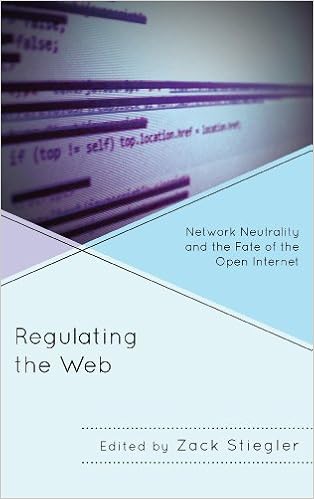
It is unlikely that the three Republican commissioners will switch sides. The FCC is an independent agency. The courts have generally allowed the FCC to classify services as it wishes. One issue is  whether the FCC has the authority to make a U-turn and reduce broadband ISPs to an information service. A court could challenge the FCC’s reversal ruling that the agency is behaving in an arbitrary or unreasonable manner. It will be hard to convince a court that broadband service is no longer a utility subject to regulation. Courts will serve as the real check on an FCC trying to create a closed off and more expensive web. See Brooklyn Law Library’s online version of Regulating the Web: Network Neutrality and the Fate of the Open Internet which brings together a diverse collection of scholars who examine the net neutrality policy and surrounding debates. The book contributes to discourse about net neutrality so we may continue toward preserving a truly open Internet structure in the US.

This post has no comments.

tech

Brooklyn Law School, during the Summer 2017 semester, has taken a first step with its Externship Seminar – Tech Tools For Law Practice, in teaching technology to law students. As more and more states take note of ABA Standard RPC 1.1 Comment [8] and add state level rules which require that lawyers have basic technology competency, more law schools are responding and adding technology courses to their course offerings.

A session at CALI Con 2017, Teaching Law Practice Tech to Law Students – State of the Art, discussed three major themes aimed at teaching a new technology course. Michael Robak offered a walkthrough of the approval process for proposing a new technology course and provided tips for getting faculty and administrative officials onboard. A recent comment, Winning the Battle to Teach Legal Technology and Innovation at Law Schools by Christy Burke, states that many law schools are not yet convinced that this kind of practical non-theoretical education is their responsibility. However, she notes several examples, such as Stanford Law School’s Legal Design Lab, Vanderbilt Law School’s Technology in Legal Practice and Oklahoma University Law’s Digital Initiative, that offer a counterweight to that resistance.

Nichelle “Nikki” Perry discussed methods and options for choosing course content. Knowing where and how your students will practice can make a difference in class coverage. Stacey Rowland gave an overview of a recently taught course at the University of North Carolina discussing technology for new lawyers. This course covered topics such as Advanced Legal Research through Ravel and Bloomberg Law Litigation Analytics, using Word Styles as a foundation for document automation, asking students to construct a mock law firm website, litigation support services as well as hands on experience with CLIO and kCura’s Relativity.

In Brooklyn Law School’s Tech Tools for Law Practice seminar, the first assignment was to have the students complete a Legal Technology Assessment to determine how fluent they were with the basic technology tools of their trade: Word, Excel, and PDF. The website Procertas helped us to answer the question of what are the tech skills we should be teaching law students to better prepare them for working in the “real world?” See Tech Comes Naturally to ‘Digital Native’ Millennials? That’s A Myth by Darth Vaughn and Casey Flaherty which relates that testing of hundreds of law school students resulted in scores as low as 33 percent when asked to complete some simple Word tasks such as:

  • Accept/Turn-off track changes
  • Cut & Paste
  • Replace text
  • Format font and paragraph
  • Fix footers
  • Insert hyperlink
  • Apply/Modify style
  • Insert/Update cross-references
  • Insert page break
  • Insert non-breaking space
  • Clean document properties
  • Create comparison document (i.e., a redline)

Hopefully, as more law schools incorporate teaching law technology into the curriculum, those scores will improve.

This post has no comments.

With the summer quickly approaching, some of you may be thinking about your summer internships or associateships.  Your summer positions will require you to practice and hone your lawyering skills, such as interviewing clients or preparing for trial or a negotiation.  

A group of people sitting around a table with laptops

Description automatically generated

If you are looking for a space to practice these skills, look no further than Library room 111.  Room 111, otherwise known as the TechCo (Technology Collaboration) Lab, is designed specifically for these types of simulations.  In the Tech CoLab, students can connect a laptop to a projector system with a wall-mounted screen, allowing them to work together on online projects, Skype with people in other locations, and record their own presentations for later review.  The lab is located on the first floor of the library by the copiers and scanners.

If you are interested in using the lab, you should email carol.ragab@brooklaw.edu.  At the time of your reservation, ask someone at the circulation or reference desk for access to the room.   (It needs to be unlocked for use.) An instruction sheet for using the equipment is available in the room.

This post has no comments.

robot law An intriguing new title in the Brooklyn Law School Library collection is Robot Law by Law Professors Ryan Calo, A. Michael Froomkin, and Ian Kerr (K564.C6 R63 2016). The 402 page book brings together research on robotics law and policy written by scholars from law, engineering, computer science and philosophy on topics such as liability, warfare, domestic law enforcement, personhood, and other cutting-edge issues in robotics and artificial intelligence. The book is an in-depth look at an area of law that is growing in importance. Like the Internet before it, robotics is a technology that will transform the social and economic landscape of legal research and practice. Robot Law looks at the increasing sophistication of robots and their widespread use in hospitals, public spaces, and battlefields requiring rethinking philosophical and public policy issues, including how AI interacts with existing legal regimes and changes in policy and in law.

Whether artificial intelligence will one day displace human lawyers has become so important that, this past April, Vanderbilt Law School hosted the first legal conference on the topic, “Watson, Esq.: Will Your Next Lawyer Be a Machine”. Speakers included Richard Susskind, author of “Tomorrow’s Lawyers” and “The Future of the Professions,” and Andrew Arruda, whose firm ROSS Intelligence helped build ROSS (which does not stand for anything), the world’s first artificially intelligent attorney, on top of IBM Watson.  Designed by students at the  University of Toronto, ROSS is meant for use by lawyers. Asking it a legal question will yeild an “instant answer with citations and suggested readings from a variety of content sources.” ROSS reads and understands language, postulates hypotheses when asked questions, researches, and then generates responses (along with references and citations) to back up its conclusions. It learns from experience, gaining speed and knowledge the more users interact with it.

A recent Washington Post news piece reports that the law firm Baker & Hostetler announced that it is employing ROSS to handle its bankruptcy practice of nearly 50 lawyers. CEO and co-founder Andrew Arruda, says that other firms have also signed licenses with ROSS and expects more announcements soon. Although still in the prototype stage, ROSS shows great promise as an innovative legal research tool. Tasks that ROSS can do include:

  1. Giving relevant answers – not a list of results – to natural language questions;
  2. Learning from user’s questions – it learns and improves the more it is used;
  3. Providing a consistent, easy-to-use experience on any devices used to access it.


At this week’s CALIcon 16 being held at the Georgia State University College of Law, BLS Reference Librarian Harold O’Grady and Technology Educator Lloyd Carew-Reid will present a session, The Future of Artificial Intelligence in Legal Education, Research and Practice. Also participating will be:

  • Professor Heidi Brown (Director of Legal Writing at Brooklyn Law School);
  • Mikhail Jacob (a Ph.D. student at the Georgia Institute of Technology); and
  • Dr. Mark Riedl (an Associate Professor in the Georgia Tech School of Interactive Computing and Director of the Entertainment Intelligence Lab).

This post has no comments.

The Brooklyn Law School Library has long provided access to Bloomberg Law to the law school community. BLS users now have access to a new legal intelligence platform: the Privacy & Data Security through the Practice Centers tab where users can click on Intellectual Property. At the top left corner of the page is a purple banner that reads “Looking for Bloomberg Law: Privacy & Data Security >> Access Now.” There, users will find analysis and news in an increasingly critical area for legal professionals.

Announced late last month, this newest Bloomberg Law tool was launched to address the need many legal practitioners have to quickly educate themselves on privacy and data security trends shaping legal practice, compliance and business operations. Data security runs the gamut from maintaining the integrity of simple personal information such as names, social security numbers and other private information to more complex business issues like those last month in the European Court of Justices’ invalidation of the long standing U.S. “safe harbor” agreement in the case of Schrems v. Data Protection Commissioner. Privacy and data security laws can change overnight and the Privacy & Security Data Resource Center helps explain them.

In addition to aggregating news and information in this area of law, the platform features tools to help users develop perspective on the items most likely to impact specific industries or business units. For example, the platform’s “chart builder” allows practitioners to compare laws on breach notification, privacy and data security laws across regional jurisdictions. It also has “heat maps” that highlight areas of developing case law and legislation, and provide direction to applicable documentation for easy review.

Bloomberg Law: Privacy & Data Security has a collection of portfolios offering insight and guidance from leading privacy and data security authorities. Written by expert practitioners, titles include Cybersecurity and Privacy in Business Transactions: Managing Data Risk in Deals and Cross-Border Data Transfers. There are also treatises with expert practitioner insights and guidance to help make sound decisions and plan with confidence. Titles include Practical Guide to the Red Flag Rules: Identifying and Addressing Identity Theft Risks and Cyber Liability in the Age of the New Data Security Laws.

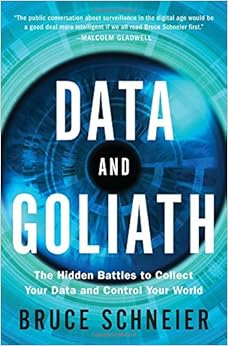
GoliathThe BLS Library has many titles in its collection on the subject of data security. One of the latest is Data and Goliath: The Hidden Battles to Collect Your Data and Control Your World by Bruce Schneier (Call # HM846 .S362 2015). The publisher of the 383 page NY Times bestseller says “Your cell phone provider tracks your location and knows who’s with you. Your online and in-store purchasing patterns are recorded, and reveal if you’re unemployed, sick, or pregnant. Your e-mails and texts expose your intimate and casual friends. Google knows what you’re thinking because it saves your private searches. Facebook can determine your sexual orientation without you ever mentioning it.

“The powers that surveil us do more than simply store this information. Corporations use surveillance to manipulate not only the news articles and advertisements we each see, but also the prices we’re offered. Governments use surveillance to discriminate, censor, chill free speech, and put people in danger worldwide. And both sides share this information with each other or, even worse, lose it to cybercriminals in huge data breaches.

“Much of this is voluntary: we cooperate with corporate surveillance because it promises us convenience, and we submit to government surveillance because it promises us protection. The result is a mass surveillance society of our own making. But have we given up more than we’ve gained? In Data and Goliath, security expert Bruce Schneier offers another path, one that values both security and privacy. He shows us exactly what we can do to reform our government surveillance programs and shake up surveillance-based business models, while also providing tips for you to protect your privacy every day. You’ll never look at your phone, your computer, your credit cards, or even your car in the same way again.”

This post has no comments.

A sandwich with lettuce tomatoes and bacon

AI-generated content may be incorrect. On Thursday, June 18 at CALIcon 2015 held at the University of Denver’s Sturm College of Law, one of the opening sessions was called Incorporating Technology, Business Development and Marketing in the Law School Curriculum. The session by Brooklyn Law School Reference Librarian Harold O’Grady and Brooklyn Law School Technology Educator Lloyd Carew-Reid examined how law schools are now incorporating technology, business development and marketing in the law school curriculum. Using Google Hangouts, Harold and Lloyd were joined by Brooklyn Law School Professor Jonathan Askin and MIT’s Danza Greenwood to discuss their ABA-MIT Online Legal Appathon which took place at the ABA Tech Show 2015 in April.

Three BLS students participated remotely in the session: Alex Goldman, Class of 2014, Patrick Mock, Class of 2017 and Paula Collins, Class of 2017. Alex discussed his project on Technical Standards for Warrant Canaries. Patrick and Paula talked about their awards at the second annual Center for Urban Business Entrepreneurship (CUBE) Innovators Competition held in April 2015. Patrick won 1st Prize for his proposal, Buoy, which addresses the problem of student loan debt by incorporating a crowdfunding model into a student loan service. Paula won 3rd prize for her FLIC (Film Legal Information Center) app, which would deliver a virtual law practice, direct client services, and business/entrepreneurial services to a community of Indie film artists in Brooklyn and surrounding areas.

A video of the hour-long session is available on YouTube at this link.

This post has no comments.
03/12/2014
profile-icon BLS Reference Desk

happy_birthday_with_stares

The Pew Research Center, the nonpartisan fact tank that informs the public about the issues, attitudes and trends shaping America and the world,  recently released the report, The Web at 25 in the U.S. 

What were the report’s findings?   “The internet has been a plus for society and an especially good thing for individual users” proclaims its subtitle. But we all knew that.

Here are some highlights from the report:

  • 87% of American adults use the internet
  • 90% of internet users say the internet has been a good thing for them personally
  • 6% say it has been a bad thing, while 3% volunteer that it has been some of both
  • 76% say the internet has been a good thing for society
  • 15% say it has been a bad thing and 8% say it has been equally good and bad
  • 53%  say the internet would be, at minimum, “very hard” to give up
  • 49% of cell phone owners say the same thing about their cell phone
  • 35% of all adults say their television would be very hard to give up (44% in 2006)
  • 28% of landline telephone owners say their phone would be very hard to give up (48% in 2006)
  • 70% report positive treatment by others online
  • 24% report negative treatment

Social media did not command as great an appreciation.   Only 10% reported that they would find it very hard to give up social media.

This post has no comments.
02/14/2014
profile-icon BLS Reference Desk

The Court of Justice of the European Union (CJEU), Europe’s highest court, ruled that website owners can hyperlink to “freely accessible” copyrighted material without seeking rights holders’ permission. The decision in Svensson and Others v Retriever Sverige AB arises out of a case from Sweden’s Court of Appeal that is of interest to Internet users as it deals with the mechanism holding the web together. The dispute involved Retriever Sverige AB, an Internet-based subscription service that indexes links to articles found elsewhere online for free. It posted links to articles published on a newspaper’s website. The articles were written by Swedish journalists. Retriever took the position that it did not have to compensate the journalists for linking to their articles and that embedding the links within its site did not constitute to copyright infringement. The journalists, on the other hand, felt that Retriever, by linking to their articles, had “communicated” their works to the public without permission. The journalists took their case to the Stockholm District Court where they lost their case in 2010 and decided to take the case to appeal. From there the Svea Court of Appeal sought advice from the EU Court.

The CJEU wrote: “In the circumstances of this case, it must be observed that making available the works concerned by means of a clickable link, such as that in the main proceedings, does not lead to the works in question being communicated to a new public. The public targeted by the initial communication consisted of all potential visitors to the site concerned, since, given that access to the works on that site was not subject to any restrictive measures, all Internet users could therefore have free access to them. Therefore, since there is no new public, the authorization of the copyright holders is not required for a communication to the public such as that in the main proceedings.”

The ruling makes clear that while publishing a link to freely available content does not amount to infringement, there are circumstances where that would not be the case. “Where a clickable link makes it possible for users of the site on which that link appears to circumvent restrictions put in place by the site on which the protected work appears in order to restrict public access to that work to the latter site’s subscribers only, and the link accordingly constitutes an intervention without which those users would not be able to access the works transmitted, all those users must be deemed to be a new public,” the Court wrote. The decision is good news for those who want to embed a YouTube video in a blog or Facebook page, and bad news for those who feel that embedding should result in the payment of a licensing fee.

Peer to Peer

The Brooklyn Law School Library has in its collection Peer-to-Peer File Sharing and Secondary Liability in Copyright Law by Alain Strowel (Call #K1420.5 .P44 2009). Chapter 3, titled Secondary Liability for Copyright Infringement with Regard to Hyperlinks,  states:

“Without hyperlinks, the World Wide Web would not be so compelling. Hyperlinks are, in a way, the threads with which the Web is spun. Instead of users getting tangled in information overload, they find what they are looking for by following links for further reference. Without these links, and without the search engines based on hyperlinking, the information posted online would lose much of its value as it would not be easy to find.

Despite their clear utility, hyperlinks can raise legal liability issues in certain circumstances.”

This post has no comments.
Field is required.