The Brooklyn Law School logo

BLS Library Blog

Showing 10 of 24 Results

02/13/2020
profile-icon Loreen Peritz

According to a recent Law.com article, for the first time ever, female law students are sitting in top law review editor positions at each top 16 law school, including Harvard, Yale, and Stanford. 

According to the article, this achievement is due, in part, to the progress that many law schools have made toward cultivating a more hospitable environment for women, people of color, and first-generation law students. 

The advancement of women to law review leadership positions has been a growing priority in law schools since a 2012 study spotlighted the dearth of women in these roles. In fact, the Cornell Law Review made headlines last year when it elected an all-female executive board, believed to be the first in history for a flagship journal at a top law school.

The article concludes that women in leadership positions at law reviews is part of a growing movement which shows that “women are a strong force in the legal field and will continue to prove themselves.”

This post has no comments.
07/02/2019
profile-icon Sue Silverman

This past weekend marked the 50th Anniversary of the Stonewall Riots, a pivotal point in LGBTQ history.  The New York Public Library is commemorating this event with an exhibition featuring photographs by two photojournalists, Kay Tobin Lahusen and Diana Davies, that captured major events in the gay rights movement in the 60s and 70s, alongside ephemera, periodicals, and other items from the library’s archival holdings.  The exhibition is free and open until July 13th at the Stephen A. Schwarzman Building in Manhattan.   Be sure to check it out before it closes!  The NYPL has also provided book recommendations, podcasts, and other resources to learn more about the LGBTQ civil rights movement.  (https://www.nypl.org/stonewall50)

The BLS Library also has several LGBTQ resources. Check out our research guide for books, journals, major federal cases, legislation and a list of organizations advocating for LGBTQ rights.  

A neon sign with a couple kissing

Description automatically generatedA person holding signs and a person holding a sign

Description automatically generated


This post has no comments.
05/26/2018
profile-icon BLS Reference Desk

Memorial Day festivities are now 150 years old. At the end of the Civil War, Americans faced a formidable challenge: how to memorialize 625,000 dead soldiers, Northern and Southern. As Walt Whitman mused, it was “the dead, the dead, the dead — our dead — or South or North, ours all” that preoccupied the country. After all, if the same number of Americans per capita had died in Vietnam as died in the Civil War, four million names would be on the Vietnam Veterans Memorial, instead of 58,000.

In the North, Memorial Day emerged in 1868 when the Grand Army of the Republic called on communities to conduct grave-decorating ceremonies. On May 30, funereal events attracted thousands of people at hundreds of cemeteries in countless towns, cities and mere crossroads. By the 1870s, one could not live in an American town, North or South, and be unaware of the spring ritual. The practice of decorating graves which gave rise to an alternative name, Decoration Day did not start with the 1868 events, nor was it an exclusively Northern practice. In 1866 the Ladies’ Memorial Association of Columbus, Ga., chose April 26, the anniversary of Gen. Joseph Johnston’s final surrender to Gen. William T. Sherman, to commemorate fallen Confederate soldiers. Later, both May 10, the anniversary of Gen. Stonewall Jackson’s death, and June 3, the birthday of Jefferson Davis, were designated Confederate Memorial Day in different states.

Memorial Days were initially occasions of sacred bereavement, and from the war’s end to the early 20th century they helped forge national reconciliation around soldierly sacrifice, regardless of cause. In North and South, orators and participants frequently called Memorial Day an “American All Saints Day,” likening it to the European Catholic tradition of whole towns marching to churchyards to honor dead loved ones.

The ritual quickly became the tool of partisan memory, at least through the violent Reconstruction years. In the South, Memorial Day was a means of confronting the Confederacy’s defeat without repudiating its cause. Some Southern orators stressed Christian notions of noble sacrifice. Others, however, used the ritual for Confederate vindication and renewed assertions of white supremacy. Blacks had a place in this Confederate narrative, but only as time-warped loyal slaves who were supposed to remain frozen in the past. Yankee Memorial Day orations often righteously claimed the high ground of blood sacrifice to save the Union and destroy slavery.

But for the earliest and most remarkable Memorial Day, we must return to where the war began. By the spring of 1865, after a long siege and prolonged bombardment, the beautiful port city of Charleston, S.C., lay in ruin and occupied by Union troops. Among the first soldiers to enter and march up Meeting Street singing liberation songs was the 21st United States Colored Infantry; their commander accepted the city’s official surrender.

Whites had largely abandoned the city, but thousands of blacks, mostly former slaves, had remained, and they conducted a series of commemorations to declare their sense of the meaning of the war. The largest of these took place on May 1, 1865. During the final year of the war, the Confederates had converted the city’s Washington Race Course and Jockey Club into an outdoor prison. Union captives were kept in horrible conditions in the interior of the track; at least 257 died of disease and were hastily buried in a mass grave behind the grandstand. After the Confederate evacuation of Charleston black workmen went to the site, reburied the Union dead properly, and built a high fence around the cemetery. They whitewashed the fence and built an archway over an entrance on which they inscribed the words, “Martyrs of the Race Course.”

The symbolic power of this Low Country planter aristocracy’s bastion was not lost on the freedpeople, who then, in cooperation with white missionaries and teachers, staged a parade of 10,000 on the track. A New York Tribune correspondent witnessed the event, describing “a procession of friends and mourners as South Carolina and the United States never saw before.” The procession was led by 3,000 black schoolchildren carrying armloads of roses and singing the Union marching song “John Brown’s Body.” Several hundred black women followed with baskets of flowers, wreaths and crosses. Then came black men marching in cadence, followed by contingents of Union infantrymen. Within the cemetery enclosure a black children’s choir sang “We’ll Rally Around the Flag,” the “Star-Spangled Banner” and spirituals before a series of black ministers read from the Bible.

After the dedication the crowd dispersed into the infield and did what many of us do on Memorial Day: enjoyed picnics, listened to speeches and watched soldiers drill. Among the full brigade of Union infantrymen participating were the famous 54th Massachusetts and the 34th and 104th United States Colored Troops, who performed a special double-columned march around the gravesite. The war was over, and Memorial Day had been founded by African-Americans in a ritual of remembrance and consecration. The war, they had boldly announced, had been about the triumph of their emancipation over a slaveholders’ republic. They were themselves the true patriots.

Hat tip: David W. Blight, NY Times

This post has no comments.
04/12/2018
profile-icon BLS Reference Desk

Earlier this month, Oprah Winfrey reported on 60 Minutes on the Alabama memorial dedicated to thousands of African-American men, women and children lynched over a 70-year period following the Civil War. The project is being led by criminal defense attorney Bryan Stevenson who wants to shed light on a dark period in our past that most people would rather forget. These hangings were not isolated murders committed only by men in white hoods in the middle of the night. Often, they were public crimes, witnessed by thousands of people. Stevenson believes to heal racial divisions we must educate Americans of every color and creed. See the episode here.

The National Memorial for Peace and Justice, opening to the public on April 26, 2018, will become the nation’s first memorial dedicated to the legacy of enslaved black people, those terrorized by lynching, African Americans humiliated by racial segregation and Jim Crow, and people of color burdened with contemporary presumptions of guilt and police violence. Read the report, Lynching in America: Confronting the Legacy of Racial Terror, which documents more than 4400 lynchings of black people in the United States between 1877 and 1950.

A book cover with white text

Description automatically generated

The Brooklyn Law School Library has in its collection a related title, The Lynching: The Epic Courtroom Battle That Brought Down the Klan by Laurence Leamer (Call No. HV6465.A2 L43 2016). It is the powerful story of a brutal race-based killing in 1981 and the dramatic two trials during which the United Klans of America, the largest and most dangerous Klan organization in America, was exposed for the evil it represented. Leamer tells a gripping story of figures such as legendary civil rights lawyer Morris Dees, Alabama governor George Wallace, and Klan Imperial Wizard Robert Shelton and describes the Klan’s lingering effect on race relations in America today.

The story begins in March 1981, when Henry Hays and James Knowles, members of Klavern 900 of the UKA, picked up nineteen-year-old Michael Donald on the streets of Mobile, Alabama. They were seeking to retaliate after a largely black jury failed to convict a black man accused of murdering a white policeman. Hays and Knowles beat Donald, cut his throat, and left his body hanging from a tree branch in a racially mixed residential neighborhood. Arrested, charged, and convicted, Hays was sentenced to death, the first time in more than half a century that the state of Alabama had given that penalty to a white man for killing a black man.

Morris Dees, co-founder of the Southern Poverty Law Center, saw the case as an opportunity to file a lawsuit against the UKA. His colleagues told him that his lawsuit was impossible to win. Nevertheless, on behalf of Michael’s grieving mother, Mrs. Beulah Donald, Dees filed a first-of-its-kind civil suit and charged the Klan organization and its leaders with conspiracy. He proceeded to put the Klan leaders on trial, which produced some of the most audacious testimony of any civil rights trial as well as a stunning and precedent-setting verdict. Dees destroyed the UKA and created a weapon that the SPLC used time and again against other racist organizations. The Lynching is a suspenseful true story that takes us into the heart of darkness, but finally shows that Michael Donald and other civil rights martyrs did not die in vain.

This post has no comments.
01/31/2018
profile-icon BLS Reference Desk

awakening

The right of same-sex couples to marry triggered decades of intense conflict before the U.S. Supreme Court upheld it in the 2015 decision Obergefell v. Hodges. Some of the most divisive contests shaping the quest for marriage equality occurred within the ranks of LGBTQ advocates. In the Brooklyn Law School Library copy of the encyclopedia-like 441-page book Awakening: How Gays and Lesbians Brought Marriage Equality to America (Harvard University Press, April 2017), author Nathaniel Frank, internationally recognized authority on LGBTQ equality and public policy, tells the dramatic story of how an idea that once seemed unfathomable became a legal and moral right in just half a century.

Awakening begins in the 1950s, when millions of gays and lesbians were afraid to come out, let alone fight for equality. Across the social upheavals of the next two decades, a gay rights movement emerged with the rising awareness of the equal dignity of same-sex love. A corps of  lawyers soon began to focus on legal recognition for same-sex couples, if not yet on marriage itself. It was only after being pushed by a small set of committed lawyers and grassroots activists that established movement groups created a successful strategy to win marriage in the courts. Marriage equality proponents then had to win over members of their own LGBTQ community who declined to make marriage a priority, while seeking to rein in others who charged ahead heedless of their carefully laid plans. All the while, they had to fight against virulent anti-gay opponents and capture the American center by spreading the simple message that love is love, ultimately propelling the LGBTQ community immeasurably closer to justice.

See the YouTube video about the book.

This post has no comments.
08/03/2017
profile-icon BLS Reference Desk

Policing

The Brooklyn Law School Library’s August New Books List (24 print titles and 12 eBook titles) has among its titles an interesting one, Policing the Black Man: Arrest, Prosecution, and Imprisonment, (Call No. HV9950 .P64 2017). Edited by Angela J. Davis, professor of law at American University’s Washington College of Law, an expert in criminal law and procedure with a specific focus on prosecutorial power and racism in the criminal justice system, it is 352 pages. The book explores the many ways the criminal justice system impacts the lives of African American boys and men at every stage of the criminal process, from arrest through sentencing.  Essays range from an explication of the historical roots of racism in the criminal justice system to an examination of modern-day police killings of unarmed black men. The contributors discuss and explain racial profiling, the power and discretion of police and prosecutors, the role of implicit bias, the racial impact of police and prosecutorial decisions, the disproportionate imprisonment of black men, the collateral consequences of mass incarceration, and the Supreme Court’s failure to provide meaningful remedies for the injustices in the criminal justice system. This book is an enlightening must-read for anyone interested in the critical issues of race and justice in America.

The collection of eleven essays is from a variety of scholars and writers. Providing useful context, the editor points out that black males have never fared well when confronted by police and prosecutors across the U.S. For a couple of centuries, in fact, black men could rarely convince white authorities of the breadth and depth of the injustices. In recent decades, new technology, including smartphones and body cameras, combined with the sounding board of social media have removed doubt about the credibility of many victims. In the introduction, Davis invokes the names of numerous dead black males, placing special emphasis on the killing of Trayvon Martin five years ago by George Zimmerman. While soliciting the essays, Davis offered an expanded definition of the word “policing,” showing how much of the foundation of policing black males rests on racial profiling by law enforcement. In her powerful essay, law professor Renée McDonald Hutchins explains what the law does and does not say about racial profiling, how police agency policies are drafted in light of the law, and how the on-the-street practices of racial profiling sometimes violate both the letter and spirit of laws and policies. While many of the essays focus on the police, Davis focuses on her specialty, prosecutors, and how their untrammeled authority is a major part of the problems within the criminal justice system. While the essays lean toward narrating the problems rather than proposing comprehensive solutions, the final essay links multigenerational poverty of black males with violence and an absurd level of incarceration. Other contributors include Bryan Stevenson. His chapter, A Presumption of Guilt: The Legacy of America’s History of Racial Injustice, tells of an experience in Atlanta when a white police officer pulled a gun on him and threatened to “blow my head off.” He says “What threatened to kill me on the streets of Atlanta when I was a young attorney wasn’t just a misguided police officer with a gun, it was the force of America’s history of racial injustice and the presumption of guilt it created.”

This post has no comments.
07/27/2017
profile-icon BLS Reference Desk

There has been considerable commentary on the Justice Department’s filing of an amicus brief saying that Title VII of the Civil Rights Act of 1964 does not cover employment “discrimination based on sexual orientation.” The DOJ filed the brief in the case of Donald Zarda, who filed suit against his former employer Altitude Express in a case that questions whether sexual orientation is included in Title VII’s protections. Title VII prohibits employment discrimination based on race, color, religion, sex and national origin. Zarda was a skydiving instructor who said he was fired after disclosing his sexual orientation to a customer. He died in a skydiving accident before the case went to trial, and executors of his estate have continued the lawsuit on his behalf. The DOJ’s brief states “the sole question here is whether, as a matter of law, Title VII reaches sexual orientation discrimination. It does not, as has been settled for decades. Any efforts to amend Title VII’s scope should be directed to Congress rather than the courts”. It concludes “Title VII does not prohibit discrimination because of sexual orientation.”

The question is, of course, not that simple and has been the subject of commentary for some time. See, for example, Sex and Sexual Orientation: Title VII after Macy v. Holder by Cody Perkins, 65 Administrative Law Review 427 (Spring 2013). This article examines the EEOC’s treatment of sexual orientation as somewhat convoluted. While there is binding precedent from the Commission that “Title VII’s prohibition of discrimination based on sex does not include sexual preference or sexual orientation”, it cites two decisions issued through the Office of Federal Operations indicating that discrimination based on sexual orientation is discrimination based on sex for Title VII purposes under a Hopkins sex stereotyping theory. See Veretto v. Donahoe, where the Office of Federal Operations found that discrimination against a man for marrying another man was a valid sex stereotyping claim, because it was discrimination based on the stereotype that “marrying a woman is an essential part of being a man,” and Castello v. Donahoe, where the Office of Federal Operations found that discrimination against a woman for being attracted to other women was a valid sex stereotyping claim under Title VII, because it was discrimination based on the stereotype that women should only be attracted to and have relationships with men. These decisions, while not binding on federal agencies, indicate that the EEOC intends to allow claims based on sexual orientation under a sex stereotyping theory under Title VII. While there may be no binding precedent from the EEOC stating that sexual orientation is covered under Tide VII, there is binding precedent regarding transgender people. In Macy v. Holder, the plaintiff, a police detective from Phoenix who was still presenting as a man had applied for and been given assurances that she would be hired for a position with the Bureau of Alcohol, Tobacco, Firearms and Explosives (ATF). After going through steps in the hiring process and being told repeatedly that she would be hired, Ms. Macy disclosed to ATF that she was in the process of transitioning from male to female and was informed that the position she had applied for was no longer available due to budget constraints. Upon further investigation, Ms. Macy learned that the position had in fact been offered to someone else and filed a formal Equal Employment Opportunity complaint with ATF, alleging discrimination in hiring based on sex. When the agency failed to identify her claim as sex discrimination, instead creating a separate claim of “discrimination based on gender identity,” Ms. Macy appealed her case to the EEOC. In a reversal of its previous position, the full Commission held that “discrimination based on gender identity, change of sex, and/or transgender status” is discrimination “because of sex” under Title VII. In making this determination, the EEOC utilized two important theories: a traditional “sex stereotyping” theory and a new “per se because of sex” theory, both based on the Supreme Court’s decision in Hopkins.

Controversies

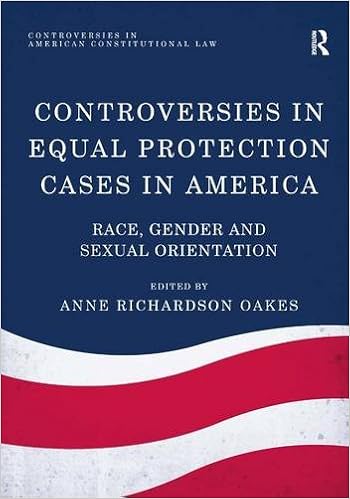
More recently, In April 2017, the en banc Seventh Circuit Court of Appeals overruled its own precedent and became the first Circuit to hold that discrimination on the basis of sexual orientation can constitute unlawful sex discrimination under Title VII. See Hively v. Ivy Tech. Cmty. College of Indiana, II, 853 F.3d 339, 351 (7th Cir. 2017) (overruling Hively v. Ivy Tech. Cmty. College of Indiana, I 830 F.3d 698, 709 (7th Cir. July 28, 2016).). All other Circuits that have addressed the issue have held sexual orientation is not protected under Title VII. The EEOC previously adopted the position in 2015 now taken by the Seventh Circuit. The Supreme Court and the Circuit Courts have held that Title VII protects employees who are discriminated against because they do not conform to the stereotype for their gender and this often may overlap with sexual orientation. For more on the subject, see Brooklyn Law School Library’s copy of Controversies in Equal Protection Cases in America: Race, Gender and Sexual Orientation (Controversies in American Constitutional Law) by Anne Richardson Oakes (Call No. KF4755 .C664 2015).

This post has no comments.
04/06/2017
profile-icon Eric Yap

On April 4, 2017, as part of the Legal Lunches series, BLS professors Liz Schneider and Susan Hazeldean led a lively townhall discussion on the impact of the Trump administration on women’s rights, reproductive rights, and LGBTQ rights.  

A group of people standing around a desk

Description automatically generated
President Kennedy signs Equal Pay Act into law in 1963

One of the topics discussed was equal pay. When the Equal Pay Act was signed into law in 1963, women received 59 cents for every dollar earned by a man. Despite progress over the years, women who work full-time currently earn only about 80% of what their male counterparts earn. Among other efforts, President Obama had issued Executive Order 13673 (Fair Pay and Safe Workplaces) on July 31, 2014, which was aimed, in part, at narrowing that gap.

Trump’s revocation of the Obama executive order on March 27, 2017 nullifies rules that required paycheck transparency, and that barred federal contractors from imposing mandatory arbitration when their workers raised claims of sexual assault or sexual harassment.  The revocation is particularly harmful to women workers. Prof. Schneider also pointed out that the Trump administration has deleted the White House webpage on equal pay. Where the Obama White House once had information about the Lilly Ledbetter Fair Pay Act and the Equal Pay Pledge, all that remains is a landing page with the terse “Thank you for your interest in this subject. Stay tuned as we continue to update whitehouse.gov

April 4, 2017 also happened to be Equal Pay Day.  This is the day that symbolizes how far into the next year a woman has to work, in order to earn what a man did during the preceding year. Equal Pay Day is always commemorated on a Tuesday, to further represent how far into the following work week women have to work, to reach the level earned by men the previous week.

BLS Library has various print and digital resources on the subject of equal pay.  Our collection includes the following:

A sign on a wall

Description automatically generated

Susan Omilian & Jean Kamp, Sex-Based Employment Discrimination (updated through Sept 2016). This treatise is available electronically through Westlaw. It includes comprehensive treatment of claims brought under the Equal Pay Act, including making a prima facie case, defenses, enforcement, and remedies. Citations are kept current, with the most recent update in September 2016. The library also has the looseleaf version of the title in print, updated through June 2014.

Nyla Jo Hubbard, The rape of the American working woman: How the law and attitude violate your paycheck (2016).   Hubbard, a non-lawyer, combines anecdotes from her personal experience with analysis of how women are placed at a systematic disadvantage under our laws. She discusses a wide range of laws and policies, ranging from Social Security, to healthcare, to childcare subsidies, in order to explain the causes of pay inequality. This title is available as an e-book through ProQuest.  

Susan Bisom-Rapp & Malcolm Sargeant. Lifetime disadvantage, discrimination, and the gendered workforce (2016).  The authors, who are law professors in the U.S. and U.K. respectively, examine the disadvantages faced by women at work, including equal pay issues, in light of inadequacies in the law in both countries. They contend that the piecemeal, incremental approaches built into the legal systems of the U.S. and U.K. do not work and that a more holistic solution is required. This title is available as an e-book through ProQuest.

Christianne Corbett & Catherine Hill, Graduating to a pay gap: The earnings of women and men one year after college graduation (2012). The American Association of University Women (AAUW) has long been engaged in studying, analyzing, and providing policy direction on equal pay issues. In this publication, they explain how pay inequality among college graduates begins immediately after graduation. While discrimination is an important factor, the AAUW study recognizes that gender differences in willingness and ability to negotiate salary contribute to the pay gap, recommending that this issue also be addressed.

A book cover of a book

Description automatically generated
Chen, Compliance and Compromise


Cher Weixia Chen, Compliance and compromise: The jurisprudence of gender pay equity (2011).  In this book, Chen, a legally-trained professor of international studies, approaches the topic of pay equality from an international law perspective. She focuses in particular on International Labour Organization (ILO) Convention No. 100 on Equal Remuneration, and how ratifying states have complied or failed to comply with its mandate. This is an interesting read on pay equality laws in countries other than the U.S.: while 173 of the 187 ILO members have ratified ILO Convention No. 100 to date, the U.S. is not one of them.

This post has no comments.
10/28/2016
profile-icon BLS Reference Desk

On Monday, October 31, the Supreme Court will hear oral argument in Fry v. Napoleon Community Schools, an appeal by a 12-year-old Michigan girl with cerebral palsy who was not allowed to bring her service dog to school. The Court will consider whether Ehlena Fry’s family can sue the school district for violations of federal disability laws. Fry’s family obtained a goldendoodle, Wonder, to help her open doors and retrieve items. Her school district initially refused to allow Wonder at school. Officials relented a bit in 2010, but they placed many restrictions on Wonder. Ehlena and her dog later transferred to another school.

The family sued the school district in the US District Court for the Eastern District of Michigan for violations of the Americans with Disabilities Act (ADA) and the Rehabilitation Act. In January 2014, the court in EF ex rel. Fry v. Napoleon Community Schools, 2014 WL 106624 (subscription required) granted the defendant’s motion to dismiss the complaint ruling that the plaintiffs first had to seek an administrative hearing. In June 2015, the 6th Circuit Court of Appeals in Fry v. Napoleon Community Schools, 788 F. 3d 622 upheld that decision 2-1. The American Civil Liberties Union is representing the family. School districts around the country have repeatedly denied children with disabilities their right to bring service dogs to school often claiming the service animals are not necessary and that the schools can help the children through other means. The ACLU wants the justices to declare that children prevented from using service animals at school can proceed directly to court without having to go through administrative hearings that can be costly, time consuming and burdensome. The ACLU Petition for Certiorari is available here.  See also Ehlena and Wonder the Service Dog’s Incredible Journey to the Supreme Court and the video that the ACLU posted about her.

The school argues that exhausting administrative remedies encourages parents and schools to work together to determine the best plan for each child and are a cheaper way to resolve educational disputes. The Obama administration has backed the Fry family, saying the appeals court’s decision was wrong and “leads to unsound results.” The government said when the lawsuit was filed, Ehlena had already moved to a new school district and there was no ongoing dispute to compromise. Requiring her to go through administrative proceedings “would waste time and resources without offering any chance of resolving their actual dispute,” the Justice Department said in a brief to the court.

On the subject of service pets, SARA, the Brooklyn Law School Library catalog links to an online resource by the Office of the New York State Attorney General Civil Rights Bureau titled Freedom on Four Legs: Service Animals, Individuals with Disabilities, and the Law.

This post has no comments.
06/22/2016
profile-icon BLS Reference Desk

UNHCR 

This week, Brooklyn Law School Library Associate Librarian Linda Holmes created a display of library material marking World Refugee Day. In December 2000, the United Nations General Assembly passed a resolution, A/RES/55/76, designating June 20 as World Refugee Day to commemorate the 50th anniversary of the 1951 Convention relating to the Status of Refugees. Among the titles in the display case located on the first floor of the BLS Library opposite the elevator is The UNHCR and the Supervision of International Refugee Law edited by James C. Simeon (Call No. K3230.R45 U54 2013). The 384 page book is an in-depth analysis of the UNHCR’s supervisory role in the international refugee protection regime. It examines the part played by key institutions, organizations and actors in the supervision of international refugee law and provides suggestions and recommendations on how the UNHCR’s supervisory role can be strengthened to ensure greater State Parties’ compliance to their obligations under these international refugee rights treaties. Another title in the display is Green Card Stories by Saundra Amrhein and Ariana Lindquist (Call No. JV6455 .A826 2011), a coffee table style book that depicts 50 recent U.S. immigrants—each with permanent residence or citizenship—in powerfully written short narratives and compelling portraits.

According to the United Nations High Commissioner for Refugees (UNHCR), in 2016, 65.3 million people are considered refugees, the largest count since WWII. Due to rising conflict in the Middle East and ISIS’ intent to destroy Christians and non-Muslims, the world now has a record number of people who have been displaced from their homes and have nowhere to go. Unfortunately, many countries have no desire to help them, especially displaced Christians from the Middle East. One reason is because many fear that ISIS members are disguising themselves. The UNHCR estimates that 24 persons are displaced from their home every minute due to conflict and persecution with 16 million qualifying as refugees due to persecution. It released its latest analysis of global displacement trends in a 68-page report. To help understand its key findings, see this 90-second video:


This post has no comments.
Field is required.