Skip to Main Content

History of Mass Incarceration
-
 Crime and Justice in Historical Perspective
by
Michael Tonry (Editor)
Since 1979 the Crime and Justice series has presented a review of the latest international research, providing expertise to enhance the work of sociologists, psychologists, criminal lawyers, justice scholars, and political scientists. The series explores a full range of issues concerning crime, its causes, and its cures. In both the review and the thematic volumes, Crime and Justice offers an interdisciplinary approach to address core issues in criminology.
Crime and Justice in Historical Perspective
by
Michael Tonry (Editor)
Since 1979 the Crime and Justice series has presented a review of the latest international research, providing expertise to enhance the work of sociologists, psychologists, criminal lawyers, justice scholars, and political scientists. The series explores a full range of issues concerning crime, its causes, and its cures. In both the review and the thematic volumes, Crime and Justice offers an interdisciplinary approach to address core issues in criminology.
Publication Date: 2025
-
-
-
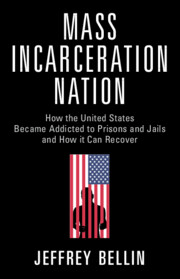 Mass Incarceration Nation: How the United States Became Addicted to Prisons and Jails and How It Can Recover
by
Jeffrey Bellin
The United States imprisons a higher proportion of its population than any other nation. Mass Incarceration Nation offers a novel, in-the-trenches perspective to explain the factors – historical, political, and institutional – that led to the current system of mass imprisonment. The book examines the causes and impacts of mass incarceration on both the political and criminal justice systems. With accessible language and straightforward statistical analysis, former prosecutor turned law professor Jeffrey Bellin provides a formula for reform to return to the low incarceration rates that characterized the United States prior to the 1970s.
Mass Incarceration Nation: How the United States Became Addicted to Prisons and Jails and How It Can Recover
by
Jeffrey Bellin
The United States imprisons a higher proportion of its population than any other nation. Mass Incarceration Nation offers a novel, in-the-trenches perspective to explain the factors – historical, political, and institutional – that led to the current system of mass imprisonment. The book examines the causes and impacts of mass incarceration on both the political and criminal justice systems. With accessible language and straightforward statistical analysis, former prosecutor turned law professor Jeffrey Bellin provides a formula for reform to return to the low incarceration rates that characterized the United States prior to the 1970s.
Publication Date: 2023
-
-
 Handbook on Pretrial Justice
by
Christine S. Scott-Hayward; Jennifer E. Copp; Stephen Demuth
The Handbook on Pretrial Justice covers the front end of the criminal legal system from pretrial diversion to pretrial detention or release. Often overlooked, the decisions made at the earliest phases of the criminal legal system have huge implications for defendants and their families, the community, and the system itself, and impact the entire criminal legal system. This collection of essays and reports of original research explores the complexities of pretrial decisions and practices and includes chapters in the following broad areas: the consequences of detention, pretrial decision-making, community supervision, and risk assessment. The book also includes a section looking at pretrial justice outside of the U.S. Each chapter summarizes what is known, identifies the gaps in the research, and discusses the theoretical, empirical, and policy implications of the research findings.3. Does Jail Derail? The State of the Literature on Cumulative Disadvantage and Pretrial Detention; 4. Why Individuals Who Are Held Pretrial Have Worse Case Outcomes: How Our Reliance on Cash Bail Degrades Our Criminal Legal System; and 5. Exploring the Causal Mechanisms Linking Pretrial Detention and Future Penal System Involvement.
Handbook on Pretrial Justice
by
Christine S. Scott-Hayward; Jennifer E. Copp; Stephen Demuth
The Handbook on Pretrial Justice covers the front end of the criminal legal system from pretrial diversion to pretrial detention or release. Often overlooked, the decisions made at the earliest phases of the criminal legal system have huge implications for defendants and their families, the community, and the system itself, and impact the entire criminal legal system. This collection of essays and reports of original research explores the complexities of pretrial decisions and practices and includes chapters in the following broad areas: the consequences of detention, pretrial decision-making, community supervision, and risk assessment. The book also includes a section looking at pretrial justice outside of the U.S. Each chapter summarizes what is known, identifies the gaps in the research, and discusses the theoretical, empirical, and policy implications of the research findings.3. Does Jail Derail? The State of the Literature on Cumulative Disadvantage and Pretrial Detention; 4. Why Individuals Who Are Held Pretrial Have Worse Case Outcomes: How Our Reliance on Cash Bail Degrades Our Criminal Legal System; and 5. Exploring the Causal Mechanisms Linking Pretrial Detention and Future Penal System Involvement.
Publication Date: 2022
-
 This Is My Jail: Local Politics and the Rise of Mass Incarceration
by
Melanie Newport
While state and federal prisons like Attica and Alcatraz occupy a central place in the national consciousness, most incarceration in the United States occurs within the walls of local jails. In This Is My Jail, Melanie D. Newport situates the late twentieth-century escalation of mass incarceration in a longer history of racialized, politically repressive jailing. Centering the political actions of people until now overlooked—jailed people, wardens, corrections officers, sheriffs, and the countless community members who battled over the functions and impact of jails—Newport shows how local, grassroots contestation shaped the rise of the carceral state.
This Is My Jail: Local Politics and the Rise of Mass Incarceration
by
Melanie Newport
While state and federal prisons like Attica and Alcatraz occupy a central place in the national consciousness, most incarceration in the United States occurs within the walls of local jails. In This Is My Jail, Melanie D. Newport situates the late twentieth-century escalation of mass incarceration in a longer history of racialized, politically repressive jailing. Centering the political actions of people until now overlooked—jailed people, wardens, corrections officers, sheriffs, and the countless community members who battled over the functions and impact of jails—Newport shows how local, grassroots contestation shaped the rise of the carceral state.
Call Number: Ebook
Publication Date: 2022
-
 The Supreme Court's Role in Mass Incarceration
by
William T. Pizzi
The Supreme Court’s Role in Mass Incarceration illuminates the role of the United States Supreme Court’s criminal procedure revolution as a contributing factor to the rise in U.S. incarceration rates. Noting that the increase in mass incarceration began climbing just after the Warren Court years and continued to climb for the next four decades—despite the substantial decline in the crime rate—the author posits that part of the explanation is the Court’s failure to understand that a trial system with robust rights for defendants is not a strong trial system unless it is also reliable and efficient.
The Supreme Court's Role in Mass Incarceration
by
William T. Pizzi
The Supreme Court’s Role in Mass Incarceration illuminates the role of the United States Supreme Court’s criminal procedure revolution as a contributing factor to the rise in U.S. incarceration rates. Noting that the increase in mass incarceration began climbing just after the Warren Court years and continued to climb for the next four decades—despite the substantial decline in the crime rate—the author posits that part of the explanation is the Court’s failure to understand that a trial system with robust rights for defendants is not a strong trial system unless it is also reliable and efficient.
Publication Date: 2021
-
 The Insidious Momentum of American Mass Incarceration
by
Franklin E. Zimring
The phenomenal growth of penal confinement in the United States in the last quarter of the twentieth century is still a public policy mystery. Why did it happen when it happened? What explains the unprecedented magnitude of prison and jail expansion? Why are the current levels of penal confinement so very close to the all-time peak rate reached in 2007? What is the likely course of levels of penal confinement in the next generation of American life? Are there changes in government or policy that can avoid the prospect of mass incarceration as a chronic element of governance in the United States? This study is organized around four major concerns: What happened in the 33 years after 1973? Why did these extraordinary changes happen in that single generation? What is likely to happen to levels of penal confinement in the next three decades? What changes in law or practice might reduce this likely penal future?
The Insidious Momentum of American Mass Incarceration
by
Franklin E. Zimring
The phenomenal growth of penal confinement in the United States in the last quarter of the twentieth century is still a public policy mystery. Why did it happen when it happened? What explains the unprecedented magnitude of prison and jail expansion? Why are the current levels of penal confinement so very close to the all-time peak rate reached in 2007? What is the likely course of levels of penal confinement in the next generation of American life? Are there changes in government or policy that can avoid the prospect of mass incarceration as a chronic element of governance in the United States? This study is organized around four major concerns: What happened in the 33 years after 1973? Why did these extraordinary changes happen in that single generation? What is likely to happen to levels of penal confinement in the next three decades? What changes in law or practice might reduce this likely penal future?
Call Number: Ebook
Publication Date: 2020
-
 We Are Not Slaves: State Violence, Coerced Labor, and Prisoners' Rights in Postwar America
by
Robert T. Chase
In the early twentieth century, the brutality of southern prisons became a national scandal. Prisoners toiled in grueling, violent conditions while housed in crude dormitories on what were effectively slave plantations. This system persisted until the 1940s when, led by Texas, southern states adopted northern prison design reforms. Texas presented the reforms to the public as modern, efficient, and disciplined. Inside prisons, however, the transition to penitentiary cells only made the endemic violence more secretive, intensifying the labor division that privileged some prisoners with the power to accelerate state-orchestrated brutality and the internal sex trade. Reformers' efforts had only made things worse--now it was up to the prisoners to fight for change. Drawing from three decades of legal documents compiled by prisoners, Robert T. Chase narrates the struggle to change prison from within.
We Are Not Slaves: State Violence, Coerced Labor, and Prisoners' Rights in Postwar America
by
Robert T. Chase
In the early twentieth century, the brutality of southern prisons became a national scandal. Prisoners toiled in grueling, violent conditions while housed in crude dormitories on what were effectively slave plantations. This system persisted until the 1940s when, led by Texas, southern states adopted northern prison design reforms. Texas presented the reforms to the public as modern, efficient, and disciplined. Inside prisons, however, the transition to penitentiary cells only made the endemic violence more secretive, intensifying the labor division that privileged some prisoners with the power to accelerate state-orchestrated brutality and the internal sex trade. Reformers' efforts had only made things worse--now it was up to the prisoners to fight for change. Drawing from three decades of legal documents compiled by prisoners, Robert T. Chase narrates the struggle to change prison from within.
Call Number: Ebook
Publication Date: 2020
-
 From Asylum to Prison: Deinstitutionalization and the Rise of Mass Incarceration After 1945
by
Anne E. Parsons
To many, asylums are a relic of a bygone era. State governments took steps between 1950 and 1990 to minimize the involuntary confinement of people in psychiatric hospitals, and many mental health facilities closed down. Yet, as Anne Parsons reveals, the asylum did not die during deinstitutionalization. Instead, it returned in the modern prison industrial complex as the government shifted to a more punitive, institutional approach to social deviance. Focusing on Pennsylvania, the state that ran one of the largest mental health systems in the country, Parsons tracks how the lack of community-based services, a fear-based politics around mental illness, and the economics of institutions meant that closing mental hospitals fed a cycle of incarceration that became an epidemic.
From Asylum to Prison: Deinstitutionalization and the Rise of Mass Incarceration After 1945
by
Anne E. Parsons
To many, asylums are a relic of a bygone era. State governments took steps between 1950 and 1990 to minimize the involuntary confinement of people in psychiatric hospitals, and many mental health facilities closed down. Yet, as Anne Parsons reveals, the asylum did not die during deinstitutionalization. Instead, it returned in the modern prison industrial complex as the government shifted to a more punitive, institutional approach to social deviance. Focusing on Pennsylvania, the state that ran one of the largest mental health systems in the country, Parsons tracks how the lack of community-based services, a fear-based politics around mental illness, and the economics of institutions meant that closing mental hospitals fed a cycle of incarceration that became an epidemic.
Call Number: Ebook
Publication Date: 2018
-
 From the War on Poverty to the War on Crime: The Making of Mass Incarceration in America
In the United States today, one in every thirty-one adults is under some form of penal control, including one in eleven African American men. How did the “land of the free” become the home of the world’s largest prison system? Challenging the belief that America’s prison problem originated with the Reagan administration’s War on Drugs, Elizabeth Hinton traces the rise of mass incarceration to an ironic source: the social welfare programs of Lyndon Johnson’s Great Society at the height of the civil rights era.
From the War on Poverty to the War on Crime: The Making of Mass Incarceration in America
In the United States today, one in every thirty-one adults is under some form of penal control, including one in eleven African American men. How did the “land of the free” become the home of the world’s largest prison system? Challenging the belief that America’s prison problem originated with the Reagan administration’s War on Drugs, Elizabeth Hinton traces the rise of mass incarceration to an ironic source: the social welfare programs of Lyndon Johnson’s Great Society at the height of the civil rights era.
Publication Date: 2016
-
 Liberty's Prisoners: Carceral Culture in Early America
by
Jennifer Manion
Liberty's Prisoners examines how changing attitudes about work, freedom, property, and family shaped the creation of the penitentiary system in the United States. The first penitentiary was founded in Philadelphia in 1790, a period of great optimism and turmoil in the Revolution's wake. Those who were previously dependents with no legal standing—women, enslaved people, and indentured servants—increasingly claimed their own right to life, liberty, and happiness. A diverse cast of women and men, including immigrants, African Americans, and the Irish and Anglo-American poor, struggled to make a living. Vagrancy laws were used to crack down on those who visibly challenged longstanding social hierarchies while criminal convictions carried severe sentences for even the most trivial property crimes.
Liberty's Prisoners: Carceral Culture in Early America
by
Jennifer Manion
Liberty's Prisoners examines how changing attitudes about work, freedom, property, and family shaped the creation of the penitentiary system in the United States. The first penitentiary was founded in Philadelphia in 1790, a period of great optimism and turmoil in the Revolution's wake. Those who were previously dependents with no legal standing—women, enslaved people, and indentured servants—increasingly claimed their own right to life, liberty, and happiness. A diverse cast of women and men, including immigrants, African Americans, and the Irish and Anglo-American poor, struggled to make a living. Vagrancy laws were used to crack down on those who visibly challenged longstanding social hierarchies while criminal convictions carried severe sentences for even the most trivial property crimes.
Call Number: Ebook
Publication Date: 2015
-
 Captive Nation: Black Prison Organizing in the Civil Rights Era
by
Dan Berger
In this pathbreaking book, Dan Berger offers a bold reconsideration of twentieth century black activism, the prison system, and the origins of mass incarceration. Throughout the civil rights era, black activists thrust the prison into public view, turning prisoners into symbols of racial oppression while arguing that confinement was an inescapable part of black life in the United States. Black prisoners became global political icons at a time when notions of race and nation were in flux. Showing that the prison was a central focus of the black radical imagination from the 1950s through the 1980s, Berger traces the dynamic and dramatic history of this political struggle.
Captive Nation: Black Prison Organizing in the Civil Rights Era
by
Dan Berger
In this pathbreaking book, Dan Berger offers a bold reconsideration of twentieth century black activism, the prison system, and the origins of mass incarceration. Throughout the civil rights era, black activists thrust the prison into public view, turning prisoners into symbols of racial oppression while arguing that confinement was an inescapable part of black life in the United States. Black prisoners became global political icons at a time when notions of race and nation were in flux. Showing that the prison was a central focus of the black radical imagination from the 1950s through the 1980s, Berger traces the dynamic and dramatic history of this political struggle.
Call Number: Ebook
Publication Date: 2014
-
 The First Civil Right: How Liberals Built Prison America
by
Naomi Murakawa
The explosive rise in the U.S. incarceration rate in the second half of the twentieth century, and the racial transformation of the prison population from mostly white at mid-century to sixty-five percent black and Latino in the present day, is a trend that cannot easily be ignored. Many believe that this shift began with the "tough on crime" policies advocated by Republicans and southern Democrats beginning in the late 1960s, which sought longer prison sentences, more frequent use of the death penalty, and the explicit or implicit targeting of politically marginalized people. In The First Civil Right, Naomi Murakawa inverts the conventional wisdom by arguing that the expansion of the federal carceral state-a system that disproportionately imprisons blacks and Latinos-was, in fact, rooted in the civil-rights liberalism of the 1940s and early 1960s, not in the period after.
The First Civil Right: How Liberals Built Prison America
by
Naomi Murakawa
The explosive rise in the U.S. incarceration rate in the second half of the twentieth century, and the racial transformation of the prison population from mostly white at mid-century to sixty-five percent black and Latino in the present day, is a trend that cannot easily be ignored. Many believe that this shift began with the "tough on crime" policies advocated by Republicans and southern Democrats beginning in the late 1960s, which sought longer prison sentences, more frequent use of the death penalty, and the explicit or implicit targeting of politically marginalized people. In The First Civil Right, Naomi Murakawa inverts the conventional wisdom by arguing that the expansion of the federal carceral state-a system that disproportionately imprisons blacks and Latinos-was, in fact, rooted in the civil-rights liberalism of the 1940s and early 1960s, not in the period after.
Publication Date: 2014
-
 Imprisoning Communities: How Mass Incarceration Makes Disadvantaged Neighborhoods Worse
by
Todd R. Clear
Demonstrating that the current incarceration policy in urban America does more harm than good, from increasing crime to widening racial disparities and diminished life chances for youths, Todd Clear argues that we cannot overcome the problem of mass incarceration concentrated in poor places without incorporating an idea of community justice into our failing correctional and criminal justice systems.
Imprisoning Communities: How Mass Incarceration Makes Disadvantaged Neighborhoods Worse
by
Todd R. Clear
Demonstrating that the current incarceration policy in urban America does more harm than good, from increasing crime to widening racial disparities and diminished life chances for youths, Todd Clear argues that we cannot overcome the problem of mass incarceration concentrated in poor places without incorporating an idea of community justice into our failing correctional and criminal justice systems.
Publication Date: 2009
-
 The Crisis of Imprisonment: Protest, Politics, and the Making of the American Penal State, 1776–1941
by
Rebecca M. McLennan
America's prison-based system of punishment has not always enjoyed the widespread political and moral legitimacy it has today. In this groundbreaking reinterpretation of penal history, Rebecca McLennan covers the periods of deep instability, popular protest, and political crisis that characterized early American prisons. She details the debates surrounding prison reform, including the limits of state power, the influence of market forces, the role of unfree labor, and the 'just deserts' of wrongdoers. McLennan also explores the system that existed between the War of 1812 and the Civil War, where private companies relied on prisoners for labor. Finally, she discusses the rehabilitation model that has primarily characterized the penal system in the twentieth century. Unearthing fresh evidence from prison and state archives, McLennan shows how, in each of three distinct periods of crisis, widespread dissent culminated in the dismantling of old systems of imprisonment.
The Crisis of Imprisonment: Protest, Politics, and the Making of the American Penal State, 1776–1941
by
Rebecca M. McLennan
America's prison-based system of punishment has not always enjoyed the widespread political and moral legitimacy it has today. In this groundbreaking reinterpretation of penal history, Rebecca McLennan covers the periods of deep instability, popular protest, and political crisis that characterized early American prisons. She details the debates surrounding prison reform, including the limits of state power, the influence of market forces, the role of unfree labor, and the 'just deserts' of wrongdoers. McLennan also explores the system that existed between the War of 1812 and the Civil War, where private companies relied on prisoners for labor. Finally, she discusses the rehabilitation model that has primarily characterized the penal system in the twentieth century. Unearthing fresh evidence from prison and state archives, McLennan shows how, in each of three distinct periods of crisis, widespread dissent culminated in the dismantling of old systems of imprisonment.
Call Number: Ebook
Publication Date: 2008
-
 Imprisoning America: The Social Effects of Mass Incarceration
by
Mary Pattillo, Bruce Western, David Weiman, eds.
Over the last thirty years, the U.S. penal population increased from around 300,000 to more than two million, with more than half a million prisoners returning to their home communities each year. What are the social costs to the communities from which this vast incarcerated population comes? And what happens to these communities when former prisoners return as free men and women in need of social and economic support? In Imprisoning America, an interdisciplinary group of leading researchers in economics, criminal justice, psychology, sociology, and social work goes beyond a narrow focus on crime to examine the connections between incarceration and family formation, labor markets, political participation, and community well-being.
Imprisoning America: The Social Effects of Mass Incarceration
by
Mary Pattillo, Bruce Western, David Weiman, eds.
Over the last thirty years, the U.S. penal population increased from around 300,000 to more than two million, with more than half a million prisoners returning to their home communities each year. What are the social costs to the communities from which this vast incarcerated population comes? And what happens to these communities when former prisoners return as free men and women in need of social and economic support? In Imprisoning America, an interdisciplinary group of leading researchers in economics, criminal justice, psychology, sociology, and social work goes beyond a narrow focus on crime to examine the connections between incarceration and family formation, labor markets, political participation, and community well-being.
Publication Date: 2004
-
 The Rise of the Penitentiary: Prisons and Punishment in Early America
by
Adam J. Hirsch
Before the nineteenth century, American prisons were used to hold people for trial and not to incarcerate them for wrong-doing. Only after independence did American states begin to reject such public punishment as whipping and pillorying and turn to imprisonment instead. In this legal, social, and political history, Adam J. Hirsch explores the reasons behind this change. Hirsch draws on evidence from throughout the early Republic and examines European sources to establish the American penitentiary's ideological origins and parallel development abroad. He focuses on Massachusetts as a case study of the transformation and presents in-depth data from that state. He challenges the notion that the penitentiary came as a by-product of Enlightenment thought, contending instead that the ideological foundations for criminal incarceration had been laid long before the eighteenth century and were premised upon old criminological theories.
The Rise of the Penitentiary: Prisons and Punishment in Early America
by
Adam J. Hirsch
Before the nineteenth century, American prisons were used to hold people for trial and not to incarcerate them for wrong-doing. Only after independence did American states begin to reject such public punishment as whipping and pillorying and turn to imprisonment instead. In this legal, social, and political history, Adam J. Hirsch explores the reasons behind this change. Hirsch draws on evidence from throughout the early Republic and examines European sources to establish the American penitentiary's ideological origins and parallel development abroad. He focuses on Massachusetts as a case study of the transformation and presents in-depth data from that state. He challenges the notion that the penitentiary came as a by-product of Enlightenment thought, contending instead that the ideological foundations for criminal incarceration had been laid long before the eighteenth century and were premised upon old criminological theories.
Publication Date: 1992
-
Regional Histories of Incarceration
-
 Prison Capital: Mass Incarceration and Struggles for Abolition Democracy in Louisiana
by
Lydia Pelot-Hobbs
Every year between 1998 to 2020 except one, Louisiana had the highest per capita rate of incarceration in the nation and thus the world. This is the first detailed account of Louisiana’s unprecedented turn to mass incarceration from 1970 to 2020. Through extensive research, Lydia Pelot-Hobbs illuminates how policy makers enlarged Louisiana’s carceral infrastructures with new prisons and jail expansions alongside the bulking up of police and prosecutorial power. At the same time, these infrastructures were the products of multiscalar crises: the swings of global oil capitalism, liberal federal court and policy interventions, the rise of neoliberal governance and law-and-order austerity, and racist and patriarchal moral panics surrounding “crime.” However, these crises have also created fertile space for anticarceral social movements. From incarcerated people filing conditions of confinement lawsuits and Angola activists challenging life without parole to grassroots organizers struggling to shrink the New Orleans jail following Hurricane Katrina and LGBTQ youth of color organizing against police sexual violence, grassroots movements stretch us toward new geographies of freedom in the lineage of abolition democracy. Understanding Louisiana’s carceral crisis extends our understanding of the interplay between the crises of mass criminalization and racial capitalism while highlighting the conditions of possibility for dismantling carceral power in all its forms.
Prison Capital: Mass Incarceration and Struggles for Abolition Democracy in Louisiana
by
Lydia Pelot-Hobbs
Every year between 1998 to 2020 except one, Louisiana had the highest per capita rate of incarceration in the nation and thus the world. This is the first detailed account of Louisiana’s unprecedented turn to mass incarceration from 1970 to 2020. Through extensive research, Lydia Pelot-Hobbs illuminates how policy makers enlarged Louisiana’s carceral infrastructures with new prisons and jail expansions alongside the bulking up of police and prosecutorial power. At the same time, these infrastructures were the products of multiscalar crises: the swings of global oil capitalism, liberal federal court and policy interventions, the rise of neoliberal governance and law-and-order austerity, and racist and patriarchal moral panics surrounding “crime.” However, these crises have also created fertile space for anticarceral social movements. From incarcerated people filing conditions of confinement lawsuits and Angola activists challenging life without parole to grassroots organizers struggling to shrink the New Orleans jail following Hurricane Katrina and LGBTQ youth of color organizing against police sexual violence, grassroots movements stretch us toward new geographies of freedom in the lineage of abolition democracy. Understanding Louisiana’s carceral crisis extends our understanding of the interplay between the crises of mass criminalization and racial capitalism while highlighting the conditions of possibility for dismantling carceral power in all its forms.
Publication Date: 2023
-
 Captives: How Rikers Island Took New York City Hostage
by
Jarrod Shanahan
Captives combines a thrilling narrative account of Rikers Island’s descent into infamy with a dramatic retelling of the last seventy years of New York and American politics from the vantage point of its jails. It is a story of a crowded field of contending powers–city bureaucrats and unions, black power activists and correction offices, crooked cops and elected leaders– struggle for the right to run our cities, a story that culminates in the triumph of of the twin figures we today call neoliberalism and mass incarceration. It is the history of how the Rikers Island of today–and the social order it represents–came to be.
Captives: How Rikers Island Took New York City Hostage
by
Jarrod Shanahan
Captives combines a thrilling narrative account of Rikers Island’s descent into infamy with a dramatic retelling of the last seventy years of New York and American politics from the vantage point of its jails. It is a story of a crowded field of contending powers–city bureaucrats and unions, black power activists and correction offices, crooked cops and elected leaders– struggle for the right to run our cities, a story that culminates in the triumph of of the twin figures we today call neoliberalism and mass incarceration. It is the history of how the Rikers Island of today–and the social order it represents–came to be.
Call Number: Ebook
Publication Date: 2022
-
 Coal, Cages, Crisis: The Rise of the Prison Economy in Central Appalachia
by
Judah Schept
As the United States began the project of mass incarceration, rural communities turned to building prisons as a strategy for economic development. More than 350 prisons have been built in the U.S. since 1980, with certain regions of the country accounting for large shares of this dramatic growth. Central Appalachia is one such region; there are eight prisons alone in Eastern Kentucky. If Kentucky were its own country, it would have the seventh highest incarceration rate in the world. In Coal, Cages, Crisis, Judah Schept takes a closer look at this stunning phenomenon, providing insight into prison growth, jail expansion and rising incarceration rates in America’s hinterlands. Drawing on interviews, site visits, and archival research, Schept traces recent prison growth in the region to the rapid decline of its coal industry.
Coal, Cages, Crisis: The Rise of the Prison Economy in Central Appalachia
by
Judah Schept
As the United States began the project of mass incarceration, rural communities turned to building prisons as a strategy for economic development. More than 350 prisons have been built in the U.S. since 1980, with certain regions of the country accounting for large shares of this dramatic growth. Central Appalachia is one such region; there are eight prisons alone in Eastern Kentucky. If Kentucky were its own country, it would have the seventh highest incarceration rate in the world. In Coal, Cages, Crisis, Judah Schept takes a closer look at this stunning phenomenon, providing insight into prison growth, jail expansion and rising incarceration rates in America’s hinterlands. Drawing on interviews, site visits, and archival research, Schept traces recent prison growth in the region to the rapid decline of its coal industry.
Publication Date: 2022
-
This Is My Jail: Local Politics and the Rise of Mass Incarceration
by
Melanie Newport
While state and federal prisons like Attica and Alcatraz occupy a central place in the national consciousness, most incarceration in the United States occurs within the walls of local jails. In This Is My Jail, Melanie D. Newport situates the late twentieth-century escalation of mass incarceration in a longer history of racialized, politically repressive jailing. Centering the political actions of people until now overlooked—jailed people, wardens, corrections officers, sheriffs, and the countless community members who battled over the functions and impact of jails—Newport shows how local, grassroots contestation shaped the rise of the carceral state. As ground zero for struggles over criminal justice reform, particularly in the latter half of the twentieth century, jails in Chicago and Cook County were models for jailers and advocates across the nation who aimed to redefine jails as institutions of benevolent transformation. From a slave sale on the jail steps to new jail buildings to electronic monitoring, from therapy to job training, these efforts further criminalized jailed people and diminished their capacity to organize for their civil rights. With prisoners as famous as Al Capone, Dick Gregory, and Harold Washington, and a place in culture ranging from Upton Sinclair’s The Jungle to B. B. King’s Live in Cook County Jail, This Is My Jail places jails at the heart of twentieth-century urban life and politics.
Call Number: Ebook
Publication Date: 2022
-
 City of Inmates: Conquest, Rebellion, and the Rise of Human Caging in Los Angeles, 1771-1965 (ebook)
by
Kelly Lytle Hernández
Los Angeles incarcerates more people than any other city in the United States, which imprisons more people than any other nation on Earth. This book explains how the City of Angels became the capital city of the world’s leading incarcerator. Marshaling more than two centuries of evidence, historian Kelly Lytle Hernández unmasks how histories of native elimination, immigrant exclusion, and black disappearance drove the rise of incarceration in Los Angeles. In this telling, which spans from the Spanish colonial era to the outbreak of the 1965 Watts Rebellion, Hernández documents the persistent historical bond between the racial fantasies of conquest, namely its settler colonial form, and the eliminatory capacities of incarceration. But City of Inmates is also a chronicle of resilience and rebellion, documenting how targeted peoples and communities have always fought back. They busted out of jail, forced Supreme Court rulings, advanced revolution across bars and borders, and, as in the summer of 1965, set fire to the belly of the city. With these acts those who fought the rise of incarceration in Los Angeles altered the course of history in the city, the borderlands, and beyond. This book recounts how the dynamics of conquest met deep reservoirs of rebellion as Los Angeles became the City of Inmates, the nation’s carceral core. It is a story that is far from over.
City of Inmates: Conquest, Rebellion, and the Rise of Human Caging in Los Angeles, 1771-1965 (ebook)
by
Kelly Lytle Hernández
Los Angeles incarcerates more people than any other city in the United States, which imprisons more people than any other nation on Earth. This book explains how the City of Angels became the capital city of the world’s leading incarcerator. Marshaling more than two centuries of evidence, historian Kelly Lytle Hernández unmasks how histories of native elimination, immigrant exclusion, and black disappearance drove the rise of incarceration in Los Angeles. In this telling, which spans from the Spanish colonial era to the outbreak of the 1965 Watts Rebellion, Hernández documents the persistent historical bond between the racial fantasies of conquest, namely its settler colonial form, and the eliminatory capacities of incarceration. But City of Inmates is also a chronicle of resilience and rebellion, documenting how targeted peoples and communities have always fought back. They busted out of jail, forced Supreme Court rulings, advanced revolution across bars and borders, and, as in the summer of 1965, set fire to the belly of the city. With these acts those who fought the rise of incarceration in Los Angeles altered the course of history in the city, the borderlands, and beyond. This book recounts how the dynamics of conquest met deep reservoirs of rebellion as Los Angeles became the City of Inmates, the nation’s carceral core. It is a story that is far from over.
Call Number: Ebook
Publication Date: 2017
-
 Blood in the Water: The Attica Prison Uprising of 1971 and Its Legacy
by
Heather Ann Thompson
On September 9, 1971, nearly 1,300 prisoners took over the Attica Correctional Facility in upstate New York to protest years of mistreatment. Holding guards and civilian employees hostage, the prisoners negotiated with officials for improved conditions during the four long days and nights that followed. Drawing from more than a decade of extensive research, historian Heather Ann Thompson sheds new light on every aspect of the uprising and its legacy, giving voice to all those who took part in this forty-five-year fight for justice: prisoners, former hostages, families of the victims, lawyers and judges, and state officials and members of law enforcement. Blood in the Water is the searing and indelible account of one of the most important civil rights stories of the last century.
Blood in the Water: The Attica Prison Uprising of 1971 and Its Legacy
by
Heather Ann Thompson
On September 9, 1971, nearly 1,300 prisoners took over the Attica Correctional Facility in upstate New York to protest years of mistreatment. Holding guards and civilian employees hostage, the prisoners negotiated with officials for improved conditions during the four long days and nights that followed. Drawing from more than a decade of extensive research, historian Heather Ann Thompson sheds new light on every aspect of the uprising and its legacy, giving voice to all those who took part in this forty-five-year fight for justice: prisoners, former hostages, families of the victims, lawyers and judges, and state officials and members of law enforcement. Blood in the Water is the searing and indelible account of one of the most important civil rights stories of the last century.
Publication Date: 2016
-
 Prison Nation
by
Paul Wright, Tara Herivel, eds.
Prison Nation is a distant dispatch from a foreign and forbidden place--the world of America's prisons. Written by prisoners, social critics and luminaries of investigative reporting, Prison Nation testifies to the current state of America's prisoners' living conditions and political concerns. These concerns are not normally the concerns of most Americans, but they should be. From substandard medical care the inadequacy of resources for public defenders to the death penalty, the issues covered in this volume grow more urgent every day. Articles by outstanding writers such as Mumia Abu-Jamal, Noam Chomsky, Mark Dow, Judy Green, Tracy Huling and Christian Parenti chronicle the injustices of prison privatization, class and race in the justice system, our quixotic drug war, the rarely discussed prison AIDS crisis and a judicial system that rewards mostly those with significant resources or the desire to name names. Correctional facilities have become a profitable growth industry, for companies like Wackenhut that run them and companies like Boeing that use cheap prison labor. With fascinating narratives, shocking tales and small stories of hope, Prison Nation paints a picture of a world many Americans know little or nothing about.
Prison Nation
by
Paul Wright, Tara Herivel, eds.
Prison Nation is a distant dispatch from a foreign and forbidden place--the world of America's prisons. Written by prisoners, social critics and luminaries of investigative reporting, Prison Nation testifies to the current state of America's prisoners' living conditions and political concerns. These concerns are not normally the concerns of most Americans, but they should be. From substandard medical care the inadequacy of resources for public defenders to the death penalty, the issues covered in this volume grow more urgent every day. Articles by outstanding writers such as Mumia Abu-Jamal, Noam Chomsky, Mark Dow, Judy Green, Tracy Huling and Christian Parenti chronicle the injustices of prison privatization, class and race in the justice system, our quixotic drug war, the rarely discussed prison AIDS crisis and a judicial system that rewards mostly those with significant resources or the desire to name names. Correctional facilities have become a profitable growth industry, for companies like Wackenhut that run them and companies like Boeing that use cheap prison labor. With fascinating narratives, shocking tales and small stories of hope, Prison Nation paints a picture of a world many Americans know little or nothing about.
Call Number: Ebook
Publication Date: 2013
-
 Golden Gulag: Prisons, Surplus, Crisis, and Opposition in Globalizing California (ebook)
by
Ruth Wilson Gilmore
Since 1980, the number of people in U.S. prisons has increased more than 450%. Despite a crime rate that has been falling steadily for decades, California has led the way in this explosion, with what a state analyst called “the biggest prison building project in the history of the world.” Golden Gulag provides the first detailed explanation for that buildup by looking at how political and economic forces, ranging from global to local, conjoined to produce the prison boom. In an informed and impassioned account, Ruth Wilson Gilmore examines this issue through statewide, rural, and urban perspectives to explain how the expansion developed from surpluses of finance capital, labor, land, and state capacity. Detailing crises that hit California’s economy with particular ferocity, she argues that defeats of radical struggles, weakening of labor, and shifting patterns of capital investment have been key conditions for prison growth. The results—a vast and expensive prison system, a huge number of incarcerated young people of color, and the increase in punitive justice such as the “three strikes” law—pose profound and troubling questions for the future of California, the United States, and the world. Golden Gulag provides a rich context for this complex dilemma, and at the same time challenges many cherished assumptions about who benefits and who suffers from the state’s commitment to prison expansion.
Golden Gulag: Prisons, Surplus, Crisis, and Opposition in Globalizing California (ebook)
by
Ruth Wilson Gilmore
Since 1980, the number of people in U.S. prisons has increased more than 450%. Despite a crime rate that has been falling steadily for decades, California has led the way in this explosion, with what a state analyst called “the biggest prison building project in the history of the world.” Golden Gulag provides the first detailed explanation for that buildup by looking at how political and economic forces, ranging from global to local, conjoined to produce the prison boom. In an informed and impassioned account, Ruth Wilson Gilmore examines this issue through statewide, rural, and urban perspectives to explain how the expansion developed from surpluses of finance capital, labor, land, and state capacity. Detailing crises that hit California’s economy with particular ferocity, she argues that defeats of radical struggles, weakening of labor, and shifting patterns of capital investment have been key conditions for prison growth. The results—a vast and expensive prison system, a huge number of incarcerated young people of color, and the increase in punitive justice such as the “three strikes” law—pose profound and troubling questions for the future of California, the United States, and the world. Golden Gulag provides a rich context for this complex dilemma, and at the same time challenges many cherished assumptions about who benefits and who suffers from the state’s commitment to prison expansion.
Call Number: Ebook
Publication Date: 2007
-
 Newjack: Guarding Sing Sing
by
Ted Conover
When Ted Conover’s request to shadow a recruit at the New York State Corrections Officer Academy was denied, he decided to apply for a job as a prison officer himself. The result is an unprecedented work of eyewitness journalism: the account of Conover's year-long passage into storied Sing Sing prison as a rookie guard, or "newjack." As he struggles to become a good officer, Conover angers inmates, dodges blows, and attempts, in the face of overwhelming odds, to balance decency with toughness. Through his insights into the harsh culture of prison, the grueling and demeaning working conditions of the officers, and the unexpected ways the job encroaches on his own family life, we begin to see how our burgeoning prison system brutalizes everyone connected with it. An intimate portrait of a world few readers have ever experienced, Newjack is a haunting journey into a dark undercurrent of American life.
Newjack: Guarding Sing Sing
by
Ted Conover
When Ted Conover’s request to shadow a recruit at the New York State Corrections Officer Academy was denied, he decided to apply for a job as a prison officer himself. The result is an unprecedented work of eyewitness journalism: the account of Conover's year-long passage into storied Sing Sing prison as a rookie guard, or "newjack." As he struggles to become a good officer, Conover angers inmates, dodges blows, and attempts, in the face of overwhelming odds, to balance decency with toughness. Through his insights into the harsh culture of prison, the grueling and demeaning working conditions of the officers, and the unexpected ways the job encroaches on his own family life, we begin to see how our burgeoning prison system brutalizes everyone connected with it. An intimate portrait of a world few readers have ever experienced, Newjack is a haunting journey into a dark undercurrent of American life.
Publication Date: 2000
-
 Worse Than Slavery: Parchman Farm and the Ordeal of Jim Crow Justice
by
David M. Oshinksy
Immortalized in blues songs and movies like Cool Hand Luke and The Defiant Ones, Mississippi’s infamous Parchman State Penitentiary was, in the pre-civil rights south, synonymous with cruelty. Now, noted historian David Oshinsky gives us the true story of the notorious prison, drawing on police records, prison documents, folklore, blues songs, and oral history, from the days of cotton-field chain gangs to the 1960s, when Parchman was used to break the wills of civil rights workers who journeyed south on Freedom Rides.
Worse Than Slavery: Parchman Farm and the Ordeal of Jim Crow Justice
by
David M. Oshinksy
Immortalized in blues songs and movies like Cool Hand Luke and The Defiant Ones, Mississippi’s infamous Parchman State Penitentiary was, in the pre-civil rights south, synonymous with cruelty. Now, noted historian David Oshinsky gives us the true story of the notorious prison, drawing on police records, prison documents, folklore, blues songs, and oral history, from the days of cotton-field chain gangs to the 1960s, when Parchman was used to break the wills of civil rights workers who journeyed south on Freedom Rides.
Publication Date: 1996
-

 Crime and Justice in Historical Perspective
by
Since 1979 the Crime and Justice series has presented a review of the latest international research, providing expertise to enhance the work of sociologists, psychologists, criminal lawyers, justice scholars, and political scientists. The series explores a full range of issues concerning crime, its causes, and its cures. In both the review and the thematic volumes, Crime and Justice offers an interdisciplinary approach to address core issues in criminology.
Crime and Justice in Historical Perspective
by
Since 1979 the Crime and Justice series has presented a review of the latest international research, providing expertise to enhance the work of sociologists, psychologists, criminal lawyers, justice scholars, and political scientists. The series explores a full range of issues concerning crime, its causes, and its cures. In both the review and the thematic volumes, Crime and Justice offers an interdisciplinary approach to address core issues in criminology.
 The Prison Before the Panopticon: Incarceration in Ancient and Modern Political Philosophy
by
A groundbreaking history of philosophy and punishment, The Prison before the Panopticon traces the influence of ancient political philosophy on the modern institution of the prison, showing how prevailing theories of carceral rehabilitation and common justifications for the denial of liberty developed in classical and early modern thought.
The Prison Before the Panopticon: Incarceration in Ancient and Modern Political Philosophy
by
A groundbreaking history of philosophy and punishment, The Prison before the Panopticon traces the influence of ancient political philosophy on the modern institution of the prison, showing how prevailing theories of carceral rehabilitation and common justifications for the denial of liberty developed in classical and early modern thought.
 Prisoners After War: Veterans in the Age of Mass Incarceration
by
Excerpt from Amazon book description: "Identifying the previously unrecognized connections between American wars and mass incarceration, Prisoners after War reaches across lines of race, class, and gender to record the untold history of incarcerated veterans over the past six decades."
Prisoners After War: Veterans in the Age of Mass Incarceration
by
Excerpt from Amazon book description: "Identifying the previously unrecognized connections between American wars and mass incarceration, Prisoners after War reaches across lines of race, class, and gender to record the untold history of incarcerated veterans over the past six decades."
 Mass Supervision: Probation, Parole, and the Illusion of Safety and Freedom
by
The most comprehensive critique of probation and parole—and a provocative and compelling argument for abolishing both—from the former Probation Commissioner of New York City
Mass Supervision: Probation, Parole, and the Illusion of Safety and Freedom
by
The most comprehensive critique of probation and parole—and a provocative and compelling argument for abolishing both—from the former Probation Commissioner of New York City
 Handbook on Pretrial Justice
by
The Handbook on Pretrial Justice covers the front end of the criminal legal system from pretrial diversion to pretrial detention or release. Often overlooked, the decisions made at the earliest phases of the criminal legal system have huge implications for defendants and their families, the community, and the system itself, and impact the entire criminal legal system. This collection of essays and reports of original research explores the complexities of pretrial decisions and practices and includes chapters in the following broad areas: the consequences of detention, pretrial decision-making, community supervision, and risk assessment. The book also includes a section looking at pretrial justice outside of the U.S. Each chapter summarizes what is known, identifies the gaps in the research, and discusses the theoretical, empirical, and policy implications of the research findings.3. Does Jail Derail? The State of the Literature on Cumulative Disadvantage and Pretrial Detention; 4. Why Individuals Who Are Held Pretrial Have Worse Case Outcomes: How Our Reliance on Cash Bail Degrades Our Criminal Legal System; and 5. Exploring the Causal Mechanisms Linking Pretrial Detention and Future Penal System Involvement.
Handbook on Pretrial Justice
by
The Handbook on Pretrial Justice covers the front end of the criminal legal system from pretrial diversion to pretrial detention or release. Often overlooked, the decisions made at the earliest phases of the criminal legal system have huge implications for defendants and their families, the community, and the system itself, and impact the entire criminal legal system. This collection of essays and reports of original research explores the complexities of pretrial decisions and practices and includes chapters in the following broad areas: the consequences of detention, pretrial decision-making, community supervision, and risk assessment. The book also includes a section looking at pretrial justice outside of the U.S. Each chapter summarizes what is known, identifies the gaps in the research, and discusses the theoretical, empirical, and policy implications of the research findings.3. Does Jail Derail? The State of the Literature on Cumulative Disadvantage and Pretrial Detention; 4. Why Individuals Who Are Held Pretrial Have Worse Case Outcomes: How Our Reliance on Cash Bail Degrades Our Criminal Legal System; and 5. Exploring the Causal Mechanisms Linking Pretrial Detention and Future Penal System Involvement.
 This Is My Jail: Local Politics and the Rise of Mass Incarceration
by
While state and federal prisons like Attica and Alcatraz occupy a central place in the national consciousness, most incarceration in the United States occurs within the walls of local jails. In This Is My Jail, Melanie D. Newport situates the late twentieth-century escalation of mass incarceration in a longer history of racialized, politically repressive jailing. Centering the political actions of people until now overlooked—jailed people, wardens, corrections officers, sheriffs, and the countless community members who battled over the functions and impact of jails—Newport shows how local, grassroots contestation shaped the rise of the carceral state.
This Is My Jail: Local Politics and the Rise of Mass Incarceration
by
While state and federal prisons like Attica and Alcatraz occupy a central place in the national consciousness, most incarceration in the United States occurs within the walls of local jails. In This Is My Jail, Melanie D. Newport situates the late twentieth-century escalation of mass incarceration in a longer history of racialized, politically repressive jailing. Centering the political actions of people until now overlooked—jailed people, wardens, corrections officers, sheriffs, and the countless community members who battled over the functions and impact of jails—Newport shows how local, grassroots contestation shaped the rise of the carceral state.
 The First Civil Right: How Liberals Built Prison America
by
The explosive rise in the U.S. incarceration rate in the second half of the twentieth century, and the racial transformation of the prison population from mostly white at mid-century to sixty-five percent black and Latino in the present day, is a trend that cannot easily be ignored. Many believe that this shift began with the "tough on crime" policies advocated by Republicans and southern Democrats beginning in the late 1960s, which sought longer prison sentences, more frequent use of the death penalty, and the explicit or implicit targeting of politically marginalized people. In The First Civil Right, Naomi Murakawa inverts the conventional wisdom by arguing that the expansion of the federal carceral state-a system that disproportionately imprisons blacks and Latinos-was, in fact, rooted in the civil-rights liberalism of the 1940s and early 1960s, not in the period after.
The First Civil Right: How Liberals Built Prison America
by
The explosive rise in the U.S. incarceration rate in the second half of the twentieth century, and the racial transformation of the prison population from mostly white at mid-century to sixty-five percent black and Latino in the present day, is a trend that cannot easily be ignored. Many believe that this shift began with the "tough on crime" policies advocated by Republicans and southern Democrats beginning in the late 1960s, which sought longer prison sentences, more frequent use of the death penalty, and the explicit or implicit targeting of politically marginalized people. In The First Civil Right, Naomi Murakawa inverts the conventional wisdom by arguing that the expansion of the federal carceral state-a system that disproportionately imprisons blacks and Latinos-was, in fact, rooted in the civil-rights liberalism of the 1940s and early 1960s, not in the period after.
 Imprisoning Communities: How Mass Incarceration Makes Disadvantaged Neighborhoods Worse
by
Demonstrating that the current incarceration policy in urban America does more harm than good, from increasing crime to widening racial disparities and diminished life chances for youths, Todd Clear argues that we cannot overcome the problem of mass incarceration concentrated in poor places without incorporating an idea of community justice into our failing correctional and criminal justice systems.
Imprisoning Communities: How Mass Incarceration Makes Disadvantaged Neighborhoods Worse
by
Demonstrating that the current incarceration policy in urban America does more harm than good, from increasing crime to widening racial disparities and diminished life chances for youths, Todd Clear argues that we cannot overcome the problem of mass incarceration concentrated in poor places without incorporating an idea of community justice into our failing correctional and criminal justice systems.
 The Crisis of Imprisonment: Protest, Politics, and the Making of the American Penal State, 1776–1941
by
America's prison-based system of punishment has not always enjoyed the widespread political and moral legitimacy it has today. In this groundbreaking reinterpretation of penal history, Rebecca McLennan covers the periods of deep instability, popular protest, and political crisis that characterized early American prisons. She details the debates surrounding prison reform, including the limits of state power, the influence of market forces, the role of unfree labor, and the 'just deserts' of wrongdoers. McLennan also explores the system that existed between the War of 1812 and the Civil War, where private companies relied on prisoners for labor. Finally, she discusses the rehabilitation model that has primarily characterized the penal system in the twentieth century. Unearthing fresh evidence from prison and state archives, McLennan shows how, in each of three distinct periods of crisis, widespread dissent culminated in the dismantling of old systems of imprisonment.
The Crisis of Imprisonment: Protest, Politics, and the Making of the American Penal State, 1776–1941
by
America's prison-based system of punishment has not always enjoyed the widespread political and moral legitimacy it has today. In this groundbreaking reinterpretation of penal history, Rebecca McLennan covers the periods of deep instability, popular protest, and political crisis that characterized early American prisons. She details the debates surrounding prison reform, including the limits of state power, the influence of market forces, the role of unfree labor, and the 'just deserts' of wrongdoers. McLennan also explores the system that existed between the War of 1812 and the Civil War, where private companies relied on prisoners for labor. Finally, she discusses the rehabilitation model that has primarily characterized the penal system in the twentieth century. Unearthing fresh evidence from prison and state archives, McLennan shows how, in each of three distinct periods of crisis, widespread dissent culminated in the dismantling of old systems of imprisonment.
 Imprisoning America: The Social Effects of Mass Incarceration
by
Over the last thirty years, the U.S. penal population increased from around 300,000 to more than two million, with more than half a million prisoners returning to their home communities each year. What are the social costs to the communities from which this vast incarcerated population comes? And what happens to these communities when former prisoners return as free men and women in need of social and economic support? In Imprisoning America, an interdisciplinary group of leading researchers in economics, criminal justice, psychology, sociology, and social work goes beyond a narrow focus on crime to examine the connections between incarceration and family formation, labor markets, political participation, and community well-being.
Imprisoning America: The Social Effects of Mass Incarceration
by
Over the last thirty years, the U.S. penal population increased from around 300,000 to more than two million, with more than half a million prisoners returning to their home communities each year. What are the social costs to the communities from which this vast incarcerated population comes? And what happens to these communities when former prisoners return as free men and women in need of social and economic support? In Imprisoning America, an interdisciplinary group of leading researchers in economics, criminal justice, psychology, sociology, and social work goes beyond a narrow focus on crime to examine the connections between incarceration and family formation, labor markets, political participation, and community well-being.
 Prison Capital: Mass Incarceration and Struggles for Abolition Democracy in Louisiana
by
Every year between 1998 to 2020 except one, Louisiana had the highest per capita rate of incarceration in the nation and thus the world. This is the first detailed account of Louisiana’s unprecedented turn to mass incarceration from 1970 to 2020. Through extensive research, Lydia Pelot-Hobbs illuminates how policy makers enlarged Louisiana’s carceral infrastructures with new prisons and jail expansions alongside the bulking up of police and prosecutorial power. At the same time, these infrastructures were the products of multiscalar crises: the swings of global oil capitalism, liberal federal court and policy interventions, the rise of neoliberal governance and law-and-order austerity, and racist and patriarchal moral panics surrounding “crime.” However, these crises have also created fertile space for anticarceral social movements. From incarcerated people filing conditions of confinement lawsuits and Angola activists challenging life without parole to grassroots organizers struggling to shrink the New Orleans jail following Hurricane Katrina and LGBTQ youth of color organizing against police sexual violence, grassroots movements stretch us toward new geographies of freedom in the lineage of abolition democracy. Understanding Louisiana’s carceral crisis extends our understanding of the interplay between the crises of mass criminalization and racial capitalism while highlighting the conditions of possibility for dismantling carceral power in all its forms.
Prison Capital: Mass Incarceration and Struggles for Abolition Democracy in Louisiana
by
Every year between 1998 to 2020 except one, Louisiana had the highest per capita rate of incarceration in the nation and thus the world. This is the first detailed account of Louisiana’s unprecedented turn to mass incarceration from 1970 to 2020. Through extensive research, Lydia Pelot-Hobbs illuminates how policy makers enlarged Louisiana’s carceral infrastructures with new prisons and jail expansions alongside the bulking up of police and prosecutorial power. At the same time, these infrastructures were the products of multiscalar crises: the swings of global oil capitalism, liberal federal court and policy interventions, the rise of neoliberal governance and law-and-order austerity, and racist and patriarchal moral panics surrounding “crime.” However, these crises have also created fertile space for anticarceral social movements. From incarcerated people filing conditions of confinement lawsuits and Angola activists challenging life without parole to grassroots organizers struggling to shrink the New Orleans jail following Hurricane Katrina and LGBTQ youth of color organizing against police sexual violence, grassroots movements stretch us toward new geographies of freedom in the lineage of abolition democracy. Understanding Louisiana’s carceral crisis extends our understanding of the interplay between the crises of mass criminalization and racial capitalism while highlighting the conditions of possibility for dismantling carceral power in all its forms.
 Captives: How Rikers Island Took New York City Hostage
by
Captives combines a thrilling narrative account of Rikers Island’s descent into infamy with a dramatic retelling of the last seventy years of New York and American politics from the vantage point of its jails. It is a story of a crowded field of contending powers–city bureaucrats and unions, black power activists and correction offices, crooked cops and elected leaders– struggle for the right to run our cities, a story that culminates in the triumph of of the twin figures we today call neoliberalism and mass incarceration. It is the history of how the Rikers Island of today–and the social order it represents–came to be.
Captives: How Rikers Island Took New York City Hostage
by
Captives combines a thrilling narrative account of Rikers Island’s descent into infamy with a dramatic retelling of the last seventy years of New York and American politics from the vantage point of its jails. It is a story of a crowded field of contending powers–city bureaucrats and unions, black power activists and correction offices, crooked cops and elected leaders– struggle for the right to run our cities, a story that culminates in the triumph of of the twin figures we today call neoliberalism and mass incarceration. It is the history of how the Rikers Island of today–and the social order it represents–came to be.
 Coal, Cages, Crisis: The Rise of the Prison Economy in Central Appalachia
by
As the United States began the project of mass incarceration, rural communities turned to building prisons as a strategy for economic development. More than 350 prisons have been built in the U.S. since 1980, with certain regions of the country accounting for large shares of this dramatic growth. Central Appalachia is one such region; there are eight prisons alone in Eastern Kentucky. If Kentucky were its own country, it would have the seventh highest incarceration rate in the world. In Coal, Cages, Crisis, Judah Schept takes a closer look at this stunning phenomenon, providing insight into prison growth, jail expansion and rising incarceration rates in America’s hinterlands. Drawing on interviews, site visits, and archival research, Schept traces recent prison growth in the region to the rapid decline of its coal industry.
Coal, Cages, Crisis: The Rise of the Prison Economy in Central Appalachia
by
As the United States began the project of mass incarceration, rural communities turned to building prisons as a strategy for economic development. More than 350 prisons have been built in the U.S. since 1980, with certain regions of the country accounting for large shares of this dramatic growth. Central Appalachia is one such region; there are eight prisons alone in Eastern Kentucky. If Kentucky were its own country, it would have the seventh highest incarceration rate in the world. In Coal, Cages, Crisis, Judah Schept takes a closer look at this stunning phenomenon, providing insight into prison growth, jail expansion and rising incarceration rates in America’s hinterlands. Drawing on interviews, site visits, and archival research, Schept traces recent prison growth in the region to the rapid decline of its coal industry.
 City of Inmates: Conquest, Rebellion, and the Rise of Human Caging in Los Angeles, 1771-1965 (ebook)
by
Los Angeles incarcerates more people than any other city in the United States, which imprisons more people than any other nation on Earth. This book explains how the City of Angels became the capital city of the world’s leading incarcerator. Marshaling more than two centuries of evidence, historian Kelly Lytle Hernández unmasks how histories of native elimination, immigrant exclusion, and black disappearance drove the rise of incarceration in Los Angeles. In this telling, which spans from the Spanish colonial era to the outbreak of the 1965 Watts Rebellion, Hernández documents the persistent historical bond between the racial fantasies of conquest, namely its settler colonial form, and the eliminatory capacities of incarceration. But City of Inmates is also a chronicle of resilience and rebellion, documenting how targeted peoples and communities have always fought back. They busted out of jail, forced Supreme Court rulings, advanced revolution across bars and borders, and, as in the summer of 1965, set fire to the belly of the city. With these acts those who fought the rise of incarceration in Los Angeles altered the course of history in the city, the borderlands, and beyond. This book recounts how the dynamics of conquest met deep reservoirs of rebellion as Los Angeles became the City of Inmates, the nation’s carceral core. It is a story that is far from over.
City of Inmates: Conquest, Rebellion, and the Rise of Human Caging in Los Angeles, 1771-1965 (ebook)
by
Los Angeles incarcerates more people than any other city in the United States, which imprisons more people than any other nation on Earth. This book explains how the City of Angels became the capital city of the world’s leading incarcerator. Marshaling more than two centuries of evidence, historian Kelly Lytle Hernández unmasks how histories of native elimination, immigrant exclusion, and black disappearance drove the rise of incarceration in Los Angeles. In this telling, which spans from the Spanish colonial era to the outbreak of the 1965 Watts Rebellion, Hernández documents the persistent historical bond between the racial fantasies of conquest, namely its settler colonial form, and the eliminatory capacities of incarceration. But City of Inmates is also a chronicle of resilience and rebellion, documenting how targeted peoples and communities have always fought back. They busted out of jail, forced Supreme Court rulings, advanced revolution across bars and borders, and, as in the summer of 1965, set fire to the belly of the city. With these acts those who fought the rise of incarceration in Los Angeles altered the course of history in the city, the borderlands, and beyond. This book recounts how the dynamics of conquest met deep reservoirs of rebellion as Los Angeles became the City of Inmates, the nation’s carceral core. It is a story that is far from over.
 Blood in the Water: The Attica Prison Uprising of 1971 and Its Legacy
by
On September 9, 1971, nearly 1,300 prisoners took over the Attica Correctional Facility in upstate New York to protest years of mistreatment. Holding guards and civilian employees hostage, the prisoners negotiated with officials for improved conditions during the four long days and nights that followed. Drawing from more than a decade of extensive research, historian Heather Ann Thompson sheds new light on every aspect of the uprising and its legacy, giving voice to all those who took part in this forty-five-year fight for justice: prisoners, former hostages, families of the victims, lawyers and judges, and state officials and members of law enforcement. Blood in the Water is the searing and indelible account of one of the most important civil rights stories of the last century.
Blood in the Water: The Attica Prison Uprising of 1971 and Its Legacy
by
On September 9, 1971, nearly 1,300 prisoners took over the Attica Correctional Facility in upstate New York to protest years of mistreatment. Holding guards and civilian employees hostage, the prisoners negotiated with officials for improved conditions during the four long days and nights that followed. Drawing from more than a decade of extensive research, historian Heather Ann Thompson sheds new light on every aspect of the uprising and its legacy, giving voice to all those who took part in this forty-five-year fight for justice: prisoners, former hostages, families of the victims, lawyers and judges, and state officials and members of law enforcement. Blood in the Water is the searing and indelible account of one of the most important civil rights stories of the last century.
 Prison Nation
by
Prison Nation is a distant dispatch from a foreign and forbidden place--the world of America's prisons. Written by prisoners, social critics and luminaries of investigative reporting, Prison Nation testifies to the current state of America's prisoners' living conditions and political concerns. These concerns are not normally the concerns of most Americans, but they should be. From substandard medical care the inadequacy of resources for public defenders to the death penalty, the issues covered in this volume grow more urgent every day. Articles by outstanding writers such as Mumia Abu-Jamal, Noam Chomsky, Mark Dow, Judy Green, Tracy Huling and Christian Parenti chronicle the injustices of prison privatization, class and race in the justice system, our quixotic drug war, the rarely discussed prison AIDS crisis and a judicial system that rewards mostly those with significant resources or the desire to name names. Correctional facilities have become a profitable growth industry, for companies like Wackenhut that run them and companies like Boeing that use cheap prison labor. With fascinating narratives, shocking tales and small stories of hope, Prison Nation paints a picture of a world many Americans know little or nothing about.
Prison Nation
by
Prison Nation is a distant dispatch from a foreign and forbidden place--the world of America's prisons. Written by prisoners, social critics and luminaries of investigative reporting, Prison Nation testifies to the current state of America's prisoners' living conditions and political concerns. These concerns are not normally the concerns of most Americans, but they should be. From substandard medical care the inadequacy of resources for public defenders to the death penalty, the issues covered in this volume grow more urgent every day. Articles by outstanding writers such as Mumia Abu-Jamal, Noam Chomsky, Mark Dow, Judy Green, Tracy Huling and Christian Parenti chronicle the injustices of prison privatization, class and race in the justice system, our quixotic drug war, the rarely discussed prison AIDS crisis and a judicial system that rewards mostly those with significant resources or the desire to name names. Correctional facilities have become a profitable growth industry, for companies like Wackenhut that run them and companies like Boeing that use cheap prison labor. With fascinating narratives, shocking tales and small stories of hope, Prison Nation paints a picture of a world many Americans know little or nothing about.
 Newjack: Guarding Sing Sing
by
When Ted Conover’s request to shadow a recruit at the New York State Corrections Officer Academy was denied, he decided to apply for a job as a prison officer himself. The result is an unprecedented work of eyewitness journalism: the account of Conover's year-long passage into storied Sing Sing prison as a rookie guard, or "newjack." As he struggles to become a good officer, Conover angers inmates, dodges blows, and attempts, in the face of overwhelming odds, to balance decency with toughness. Through his insights into the harsh culture of prison, the grueling and demeaning working conditions of the officers, and the unexpected ways the job encroaches on his own family life, we begin to see how our burgeoning prison system brutalizes everyone connected with it. An intimate portrait of a world few readers have ever experienced, Newjack is a haunting journey into a dark undercurrent of American life.
Newjack: Guarding Sing Sing
by
When Ted Conover’s request to shadow a recruit at the New York State Corrections Officer Academy was denied, he decided to apply for a job as a prison officer himself. The result is an unprecedented work of eyewitness journalism: the account of Conover's year-long passage into storied Sing Sing prison as a rookie guard, or "newjack." As he struggles to become a good officer, Conover angers inmates, dodges blows, and attempts, in the face of overwhelming odds, to balance decency with toughness. Through his insights into the harsh culture of prison, the grueling and demeaning working conditions of the officers, and the unexpected ways the job encroaches on his own family life, we begin to see how our burgeoning prison system brutalizes everyone connected with it. An intimate portrait of a world few readers have ever experienced, Newjack is a haunting journey into a dark undercurrent of American life.
 Worse Than Slavery: Parchman Farm and the Ordeal of Jim Crow Justice
by
Immortalized in blues songs and movies like Cool Hand Luke and The Defiant Ones, Mississippi’s infamous Parchman State Penitentiary was, in the pre-civil rights south, synonymous with cruelty. Now, noted historian David Oshinsky gives us the true story of the notorious prison, drawing on police records, prison documents, folklore, blues songs, and oral history, from the days of cotton-field chain gangs to the 1960s, when Parchman was used to break the wills of civil rights workers who journeyed south on Freedom Rides.
Worse Than Slavery: Parchman Farm and the Ordeal of Jim Crow Justice
by
Immortalized in blues songs and movies like Cool Hand Luke and The Defiant Ones, Mississippi’s infamous Parchman State Penitentiary was, in the pre-civil rights south, synonymous with cruelty. Now, noted historian David Oshinsky gives us the true story of the notorious prison, drawing on police records, prison documents, folklore, blues songs, and oral history, from the days of cotton-field chain gangs to the 1960s, when Parchman was used to break the wills of civil rights workers who journeyed south on Freedom Rides.
 Attica: The Official Report of the New York State Special Commission on Attica
by
Official Report of the New York State Special Commission on Attica, including 64 on-the-scene photographs.
Attica: The Official Report of the New York State Special Commission on Attica
by
Official Report of the New York State Special Commission on Attica, including 64 on-the-scene photographs.