


With aggressive policing of potential copyright infringement, media companies use automated software that ignores fair use rights often misidentifying music and videos as copyrighted. Another controversial section of the DMCA aims to protect against copyright infringers who employ tools that enable them to circumvent access controls that protect a copyright holder, 17 USC 1201 prohibits the use of tool to “circumvent a technological measure” like those that descramble a scrambled work, decrypt an encrypted work, or otherwise impair a technological measure, without the authority of the copyright owner.
Provisions of the DMCA dealing with both take down notices and the “anti-circumvention” rule now face legal challenges that may lead to review by the US Supreme Court. The take down provisions were the subject of a federal appeals court decision in Lenz v. Universal Music Corp., 801 F. 3d 1126 (9th Cir., 2015). Plaintiff posted on YouTube a home video of her children dancing to Prince’s song “Let’s Go Crazy”. Universal Music Corporation sent YouTube a DMCA take down notice claiming that Lenz’s video violated their copyright in the song. Lenz claimed fair use of the copyrighted material and sued Universal for misrepresentation of a DMCA claim. The district court in Lenz v. Universal Music Corp., 572 F. Supp. 2d 1150 (N.D. Cal., 2008) rejected a motion to dismiss the claim, and held that Universal must consider fair use when filing a take down notice, but noted that to prevail a plaintiff would need to show bad faith by a rights holder. The 9th Circuit affirmed, holding that while fair use arises procedurally as an affirmative defense, copyright holders have a “duty to consider—in good faith and prior to sending a take down notification—whether allegedly infringing material constitutes fair use”. This week, the Electronic Frontier Foundation filed a petition with the Supreme Court, arguing that this standard rendered fair use protections against the DMCA “all but meaningless.”
As for the 17 USC 1201 prohibition on anti-circumvention tools, the EFF filed a complaint in the US District Court for the District of Columbia challenging its constitutionality claiming the section restricts people’s ability to access, use, and even speak out about copyrighted materials. The “Digital Rights Management” provision of the law bans activities that weaken copyright access-control systems, including re-configuring software-enabled devices. This imposes a legal cloud over the rights to tinker with or repair devices, to convert or remix videos, or conduct independent security research to reveal dangerous security flaws in computers. If the complaint succeeds, one of the most controversial technology laws will be struck down. Other countries that have been pressured by the US trade representative to adopt this rule will decide whether they will still enforce it, even after the US has given up on it.
Brooklyn Law School Library has a large collection of material on copyright including the 3d edition of Copyright Law for Librarians and Educators by Kenneth D. Crews (Call No. KF2995 .C74 2012) with 18 discrete areas of copyright, including specialized and controversial music and sound recording issues. The easy-to-use guide has tools that information professionals need to take control of their rights and responsibilities as copyright owners and users.
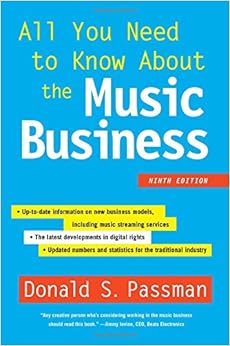 The Brooklyn Law School Library has in its collection several items related to copyright and music. See for example
  See the Brooklyn Law Library item
  The Brooklyn Law School Library has a wealth of material on the subject of copyright often called a “limited monopoly.” When copyrights grow old and die, the works they protect fall into the public domain. Subject to certain exceptions, public domain works may be freely copied or used in the creation of derivative works without permission, or authorization, of the former copyright owners. One book in the BLS Library collection on copyright and the public domain is


This summer, attorney and BLS Library volunteer Grace Pickering worked with BLS librarians to substantially revise Researching Copyright Law and to create Researching Trademark & Unfair Competition Law.
The home pages of these two guides feature introductory sources in guide boxes Copyright 101 and Trademarks 101. The home pages also highlight sources (examples: podcasts, hearings, case trackers and books) on selected hot topics. Moreover, these guides feature: casebooks, study aids and legal encyclopedia entries; treatises and practice guides; current awareness sources to help law students choose paper topics; sources of scholarly articles; starting points in Bloomberg Law, Lexis+ and Westlaw Precision; and WIPO’s resources.
Tip: Both guides link to key BLS subscription sources like: The Fashion Law (TFL) and Law360.com > topic: Intellectual Property. (In BLS Library’s SARA catalog records, click: ACCESS ONLINE VERSION.) BLS students: remote access to these sources requires implementation of the BLS proxy server instructions for one web browser. BLS librarians recommend the instructions for Firefox.
Tip: BLS librarians are happy to support your paper topic research–feel free to email us at: askthelibrary@brooklaw.edu or to text us at: (718) 734-2432.
Thank you, Grace Pickering, for your hard work!
Note: If you are an MLIS student who wishes to learn about BLS Library’s fellowship program, please contact Associate Librarian for Public Services/Adjunct Professor Kathleen Darvil at: kathleen.darvil@brooklaw.edu.
Commenting on blog posts requires an account.
Login is required to interact with this comment. Please and try again.
If you do not have an account, Register Now.