The Brooklyn Law School logo

BLS Library Blog

Showing 10 of 11 Results

This summer, attorney and BLS Library volunteer Grace Pickering worked with BLS librarians to substantially revise Researching Copyright Law and to create Researching Trademark & Unfair Competition Law

A screenshot of a computer

Description automatically generated

The home pages of these two guides feature introductory sources in guide boxes Copyright 101 and Trademarks 101. The home pages also highlight sources (examples: podcasts, hearings, case trackers and books) on selected hot topics. Moreover, these guides feature: casebooks, study aids and legal encyclopedia entries; treatises and practice guides; current awareness sources to help law students choose paper topics; sources of scholarly articles; starting points in Bloomberg Law, Lexis+ and Westlaw Precision; and WIPO’s resources. 

Tip: Both guides link to key BLS subscription sources like: The Fashion Law (TFL) and Law360.com > topic: Intellectual Property. (In BLS Library’s SARA catalog records, click: ACCESS ONLINE VERSION.) BLS students: remote access to these sources requires implementation of the BLS proxy server instructions for one web browser. BLS librarians recommend the instructions for Firefox

Tip: BLS librarians are happy to support your paper topic research–feel free to email us at: askthelibrary@brooklaw.edu or to text us at: (718) 734-2432.

Thank you, Grace Pickering, for your hard work! 

Note: If you are an MLIS student who wishes to learn about BLS Library’s fellowship program, please contact Associate Librarian for Public Services/Adjunct Professor Kathleen Darvil at: kathleen.darvil@brooklaw.edu.


This post has no comments.

Fair Use Index On April 28, 2015, Register of Copyrights Maria A. Pallante announced the launch of the U.S. Copyright Office’s Fair Use Index, designed to provide the public with searchable summaries of major fair use decisions. The Index was undertaken in support of the 2013 Joint Strategic Plan on Intellectual Property Enforcement prepared by the U.S. Intellectual Property Enforcement Coordinator within the Executive Office of the President.

Copyright and Fair Use are challenging areas of law with so many nuances and changes that make it difficult to know whether the use of an image or video is allowed or not and under what circumstances something can be used. The legal doctrine of Fair use promotes freedom of expression by permitting the unlicensed use of copyright-protected works in certain circumstances. Section 107 of the Copyright Act provides the statutory framework for determining whether something is a fair use and identifies certain types of uses—such as criticism, comment, news reporting, teaching, scholarship, and research—as examples of activities that may qualify as fair use.

Hopefully the Fair Use Index will help make the issue a little bit clearer. Users can search cases that deal exclusively with Fair Use and quickly see whether Fair Use was found or not. Users can narrow a search by jurisdiction and, importantly, by format (text, audio, computer, etc.) The Index is searchable by court and subject matter and provides a helpful starting point for those wishing to better understand how the federal courts have applied the fair use doctrine to particular categories of works or types of use, for example, music, internet/digitization, or parody.

The Index has been added to Brooklyn Law Library’s catalog and is available at this link.
This post has no comments.

Listen to this episode on BrooklynWorks.

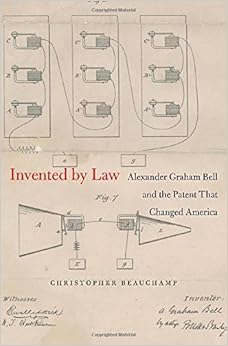
In this interview. Brooklyn Law School’s Associate Professor of Law Invented by LawChristopher Beauchamp speaks about his first book, Invented by Law: Alexander Graham Bell and the Patent That Changed America (Call# KF 3116.B43 2015). Published by Harvard University Press, the book explores questions of ownership and legal power raised by the invention of the telephone, and tells of a forgotten history with wide relevance for today’s patent crisis. Using the  invention of the telephone in 1876 as one of the great touchstones of American technological achievement, Beauchamp sheds new light on that history, and examines the legal battles that raged over Bell’s telephone patent, perhaps the most consequential patent right ever granted. Prof. Beauchamp shows that the telephone was as much a creation of American law as of scientific innovation.

On March 7, 1876, the U.S. Patent & Trademark Office approved Alexander Graham Bell’s patent for Improvement of Telegraphy (No. 174,465) in an unusually fast approval process, with three applications hand-delivered by Bell’s lawyer on February 14, mere hours before a competing application was submitted by engineer Elisha Gray. Bell’s legal maneuvering strongly suggested that an unknown informant within the PTO was assisting efforts to beat Gray to the telephone patent. Subsequent litigation reached the U.S. Supreme Court twice in 1888, first with The Telephone Cases (126 U.S. 1), and then with United States v. American Bell Telephone Corp. (128 U.S. 315). Prof. Beauchamp untangles these lawsuits and analyzes their aftermath in a way that should appeal to both intellectual property experts and novices.

Reconstructing the world of nineteenth-century patent law, replete with inventors, capitalists, and charlatans, where rival claimants and political maneuvering loomed large in the contests that erupted over new technologies, the book challenges the popular myth of Bell as the telephone’s sole inventor, exposing that story’s origins in the arguments advanced by Bell’s lawyers. More than anyone else, it was the courts that anointed Bell father of the telephone, granting him a patent monopoly that decisively shaped the American telecommunications industry for a century to come. Prof. Beauchamp investigates the sources of Bell’s legal primacy in the United States, and looks across the Atlantic to Britain to consider how another legal system handled the same technology in very different ways.

This post has no comments.
08/22/2011
profile-icon BLS Reference Desk

An article Politicians and Pundits Make Some Noise About Patent Reform explains that the Senate is set to vote on the America Invents Act (which passed in the House by a vote of 304-107 in June), the first major revision of American patent law in more than 60 years. In March of this year, the Senate approved its version of the Patent Reform Act by a vote of 95-5. With few differences, the bills alter a wide range of current law and practices before the U.S. Patent and Trademark Office (USPTO) including a change in fundamental entitlement to a patent to a “first to file” system; codified limitations on potential recoverable damages for infringement and the procedure in which such damages must be assessed; codification of the requirements for establishing willful infringement; and new restrictions on the venue in which patent infringement actions may be filed.

Until now, the US has maintained an inventor-friendly patent system to favor whoever files for an application first. The proposed legislation changes US law from a patent system favoring the first-to-invent to one favoring first-to-file. This change is an attempt to harmonize U.S. law with the rest of the world by doing away with the granting of a patent to the first inventor. In March, Senator Diane Feinstein unsuccessfully introduced an amendment to the Patent Reform Act of 2011 to preserve the current first to invent process, protect small inventors and help preserve America’s patent leadership. Her remarks which conclude by saying “If it ain’t broke, don’t fix it.” are here.

Proponents of the bill, large mult-national companies and President Obama, say the measure could create high-paying jobs and protect US businesses’ advantage in high-tech and other industries. Many inventors and small businesses worry that the bill would give big companies an unfair advantage. In a blog post, The Prevent American Invention Act, at Foreign Policy, Clyde Prestowitz writes that America’s penchant for invention is due in large part to its patent system, which grants the original inventor patent rights even if another person or corporation files for the patent first. He explains “This is very helpful to individual inventors and small companies because it gives them time to test the viability and commercial potential of their inventions. It also protects them from those big corporations or others who might hear of their invention and rush to be first to patent it.”

In addition to favoring big corporations who can file patents as soon as they hear about a new invention, Prestowitz says that the bill would also give foreign inventors an advantage over Americans. “A German inventor files for a patent in Europe and then, under a bi-lateral treaty, a bit later for the same patent in the United States. Shortly afterward, an American files for a U.S. patent on a similar (not identical) invention. Under the proposed new legislation, the German application would be considered prior art that would block issuance of a U.S. patent to the American applicant. But the reverse situation would not block issuance of a European patent to the German applicant.”


For more on the pending legislation, see the Congressional Research Service Report Patent Reform in the 112th Congress: Innovation Issues and the authoritative insider’s perspective on the benefits and drawbacks of proposed U.S. patent reforms Understanding Patent Reform Implications: Leading Lawyers on Defining Key Issues, Interpreting Current Proposed Legislation, and Projecting Future Developments (Call #KF3114 .U534 2009) available at the Brooklyn Law School Library.
This post has no comments.

Listen to this episode on BrooklynWorks.

In this podcast, Serge Krimnus, Brooklyn Law School Class of 2010, talks about his career in patent law. He also discusses his article, The Doctrine of Foreign Equivalents at Death’s Door, 12 N.C. J.L. & Tech. 159 (2010), which he wrote with guidance from BLS Professor of Law Derek Bambauer. This semester, Brooklyn Law School offers a course in Patent Prosecution which Adjunct Assistant Professor of Law Serge Krimnus teaches. Serge talks about his work as a Patent Agent for The Farrell Law Firm located in Melville, New York. He also offers suggestions for students considering a career in patent prosecution.

This post has no comments.
01/22/2011
profile-icon BLS Reference Desk
The Brooklyn Law School Library’s latest New Book List dated January 12, 2011 includes The Patent Litigator’s Job: A Survival Guide by Jennifer L. Dzwonczyk (Call # KF3120 .D99 2010). Written as a guide for lawyers new to patent litigation, it helps with common procedural issues and teaches how to avoid frequent pitfalls of practice. The lifecycle of patent litigation is thoroughly detailed from beginning to the summary judgment stage. The book is in five main parts: 
 

1. Introduction including organizational tips
2. Pre-litigation strategy, initial pleadings and case schedule
3. Fact discovery
4. Expert discovery and summary judgment and notes on Markman hearings
5. Reexaminations, joint defense groups, mediations and settlement

Claim construction is a critical part of costly patent litigation. The 1996 Supreme Court case Markman v. Westview Instruments held that “judges, not jurors, are better suited to find the acquired meaning of patent terms.” District Court judges now often hold Markman hearings away from the jury to determine the scope of a patent’s claims. Markman hearings play a key and crucial role in the outcome of patent litigation and also in the drafting and prosecution of patent applications. The book supplies sample form documents to aid in the patent litigation process. This guide should be used for practical advice and guidance on how to approach patent litigation at a beginner to novice level.
The BLS Library has related material in its collection including Conducting Markman Hearings in Patent Infringement Lawsuits: Leading Lawyers on Interpreting Claims, Developing Court Presentations, and Making a Strong Argument (Call # KF3155.Z9 C66 2007) with these chapters by leading practitioners: Role of patent lawyers, both generally and in the context of Markman hearings / Kurt G. Calia — Making an impact on the entire case through effecting Markman hearings / Alexander J. Hadjis — Impact of Markman hearings on patent litigation / Richard T. Redano — Art of persuasion in Markman hearings / Matthew B. Lehr — Preparing for and conducting a Markman hearing for claim interpretation in U. S. patent infringement / John R. Crossan — Making a strong argument / Tim Headley — Marksmanship: hitting the bull’s eye in your patent case / James P. Flynn.
This post has no comments.
11/09/2010
profile-icon BLS Reference Desk

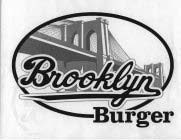
More than 50 years ago, the Dodgers left Brooklyn but, accordiing to a recent Notice of Opposition that Los Angeles Dodgers LLC filed in the U.S. Patent and Trademark Office, the team still wants to keep the city’s name. The controversy began in June of 2009 when a Brooklyn-based meat supplier, A. Stein Meat Products, Inc., applied for a logo for its Brooklyn Burger hamburger patties. Now the LA Dodgers team, which has marketed Brooklyn Dodgers memorabilia and novelty items and maintains several trademark registrations for Brooklyn Dodgers marks, argues that the logo will lead consumers to believe that the meat products are associated with the old Brooklyn Dodgers baseball team. 
The Dodgers have been protecting their rights to the Brooklyn Dodgers marks since the 1980s when they argued that the logo for The Brooklyn Dodger, a Brooklyn restaurant, was confusingly similar to the baseball team’s marks. In Major League Baseball v. Sed Non Olet Denarius, 817 F. Supp. 1103, Judge Constance Baker Motley found that the Los Angeles Dodgers made no effort for a quarter-century to protect the Brooklyn name, and added that the Brooklyn bar owners had promptly told the Califonia club they were using the name. Judge Baker’s ruling was later vacated pursuant to a settlement. For more, see Howard W. Brill, Name of the Departed Team: Who Can Use It, 15 Whittier L. Rev. 1003 (1994) available in HeinOnline.

A. Stein’s website says it will use the Brooklyn Burger logo on apparel including hats and polo shirts, and that Brooklyn Burger is the “official burger enjoyed by fans” at stadiums hosting the Brooklyn Cyclones, the New York Mets, and the New Jersey Nets. A. Stein’s answer is due December 4, 2010. Likely issues in the proceeding will be whether the Dodgers actually used their marks continuously and whether baseball apparel, beverage containers, printed matter and novelty items have anything to do with burger patties.

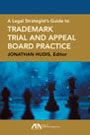
A Legal Strategist’s Guide to Trademark and Appeal Board Practice edited by Jonathan Hudis (Call #KF3193 .L44 2010) is on reserve in the Brooklyn Law School Library collection. The publisher, American Bar Association. Section of Intellectual Property Law, describes it as an essential resource for every trademark practitioner’s library. It has an analysis of each facet of Board practice, including: inter partes proceedings (such as Oppositions, Cancellations, and Concurrent Use Proceedings); ex parte appeals to the Board from refusals to register marks; disclosures and discovery; motion practice; presenting one’s evidence at trial; the use of experts; briefs on final hearing and oral argument; appeals from final Trademark Trial and Appeal Board decisions; settlement, alternative dispute resolution, and accelerated case resolution; and ethical issues when practicing before the Board.

This post has no comments.
04/12/2009
profile-icon BLS Reference Desk

Just in time to celebrate the 266th anniversary of the birth of Thomas Jefferson on April 13, 1743 in Albemarle County in the Virginia Colony, the BLS Library has added to its collection Jefferson vs. the Patent Trolls: a Populist Vision of Intellectual Property Rights by Jeffrey H. Matsuura (Call # KF2979 .M34 2008). This small, aesthetically pleasing 154 page volume published by the University of Virginia Press deals with a subject matter that is very important today: intellectual property, a hot topic in today’s world that Jefferson thought of 200 years ago. 

The book examines Jefferson’s perspective on the topic from the perspective of a practitioner, a world class scientist and inventor and the first Commissioner of Patents in his capacity as the nation’s first Secretary of State. Jefferson, who is best known as one of the Founding Fathers and the third President of the early republic, was active as an inventor who tinkered with the latest technical advances of his day, improving on the creations of other inventors. Jefferson s philosophy regarding intellectual property placed an emphasis on the practical benefits for people most in need. He favored encouraging widespread participation in the knowledge networks of his time.

His inquisitive nature and focus on practical applications made him an active mechanical tinkerer. He worked on improving agricultural devices like the plow. He also developed labor-saving devices like the polygraph, a device that enabled a writer to make multiple copies of a document at the same time. Jefferson was curious about a wide range of innovative devices. One of the most interesting is the wheel cipher, a cryptographic device for encrypting and decrypting messages for use in official US government communications. Like so many of Jefferson’s devices, the wheel cipher was a refinement on the work of several previous inventors. Jefferson never pursued commercial development of this device demonstrating his general lack of interest in commercialization of his inventive efforts.

This post has no comments.

Listen to this episode on BrooklynWorks. 

This podcast features BLS student Kiran Nasir Gore, Class of 2009, who won first place in the 2008 Hon. William C. Conner Intellectual Property Writing Competition sponsored by the New York Intellectual Property Law Association. Kiram discusses her note, “Trademark Battles in a Barbie Cyber World: Trademark Protection of Website Domain Names and the Anticybersquatting Consumer Protection Act”.

The note discusses the tension between Mattel’s intellectual property rights and the public’s right to invoke the imagery of the iconic Barbie doll and examines the recent dispute between Mattel and a pornographic website using the Barbie name. “Barbie has become an American icon and taken on additional meanings and status at a societal level, attracting the attention of artists, writers, academics, and commentators in a way that is beyond the scope of Mattel’s trademark property rights,” Gore says. The note is scheduled for publication in the winter 2009 issue of the COMM/ENT, Hastings Communication and Entertainment Law Journal, Volume 28, No. 2.

Gore is currently a Notes and Comments Editor of the Brooklyn Law Review.

This post has no comments.

A Nation Law Journal article reports on the PRO-IP Act (“Prioritizing Resources and Organization Intellectual Property Act“) which became law in October. This new legislation, codified at 15 U.S.C 8101 et seq., is a substantial change in current copyright law and strengthens prosecution for the theft of intellectual property in the US with new civil and criminal enforcement measures and reforms by:

· increasing the statutory damages for the sale of counterfeit goods to a inimum of $1000 per trademark to a maximum of $200,000 per trademark;
· increasing the ceiling on statutory damages for the willful sale of counterfeit goods to $2 million;
· expanding the availability of treble damages for providing the equipment or services necessary to commit a counterfeiting violation where the provider intends them to be used for such purposes;
· creating the position of a “IP Czar” or Intellectual Property Enforcement Coordinator (IPEC) within the White House to chair an committee overseeing anti-counterfeiting efforts; and
· making money available for criminal enforcement of intellectual property laws by the FBI, the DOJ and local law-enforcement

The sense of the Congress in passing the law in Section 602 of the PRO-IP Act was that “counterfeiting and infringement results in billions of dollars in lost revenue for United States companies each year and even greater losses to the United States economy in terms of reduced job growth, exports, and competitiveness”. The facts supporting this assertion are not clear as the only factual legislative history of this law is House Report 110-617 citing statistics provided by proponents of increased copyright protection like the US Chamber of Commerce, the Coalition Against Counterfeiting and Piracy (CACP) and the Recording Industry Association of America (RIAA).

Opponents of the PRO-IP Act like the Electronic Frontier Foundation (EFF) question those statistics and argue that while prosecuting commercial pirates is a good idea, copyright law should distinguish between commercial counterfeiters and private users – like those caught up in the RIAA’s anti-downloading litigation dragnet, urging lesser penalties for noncommercial, personal copying for the latter.

Speculation on whom President-Elect Obama will nominate as IP Czar and how the new Administration will act on these reforms is the subject of reports in a Reuters and the National Journal.

This post has no comments.
Field is required.